Can You Drive a Hybrid Car If the Battery Dies For Real
Yes, you can drive a hybrid car if the battery dies, but only in limited mode and only for a short distance. Your hybrid vehicle will switch to gas power alone, but you may lose acceleration and other features. Understanding how your hybrid car battery works can save you time, money, and a lot of stress on the road.
You are cruising down the highway, and suddenly a warning light flashes on your dashboard. Your heart drops. You own a hybrid car, and the thought hits you hard. Can you drive a hybrid car if the battery dies? This is a question many hybrid owners ask, especially when they hear horror stories about cars shutting down in the middle of traffic.
The short answer is yes. You can still drive a hybrid vehicle if the hybrid battery fails. But the experience will not feel normal. Your car will rely only on the gas engine, and you will notice a big drop in power and features. Let us walk through exactly what happens, what to watch for, and how to handle this situation like a pro.
Hybrid cars are smart machines. They use two power sources: a gas engine and an electric motor. The electric motor gets its energy from a high-voltage battery. Together, these systems work to give you great fuel economy and smooth acceleration. When one part fails, the other tries to pick up the slack. But there are limits to what a gas engine can do on its own.
Key Takeaways
- You can still drive on gas: A hybrid car can run on its gas engine alone if the hybrid battery dies, though performance drops.
- Warning signs are clear: Dashboard lights, reduced fuel economy, and odd noises often signal a failing battery before it dies completely.
- Replacement costs vary: Depending on the hybrid vehicle model, a new battery pack can cost anywhere from $1,000 to $6,000 or more.
- Maintenance matters: Simple habits like avoiding extreme temperatures and gentle driving can significantly extend your battery life.
- Roadside help is key: If your battery dies while driving, pull over safely and call for roadside assistance rather than pushing the car.
- Not all hybrids are the same: Plug-in hybrids, parallel hybrids, and series hybrids each behave differently when the battery fails.
📑 Table of Contents
- What Happens When Your Hybrid Battery Dies
- Can You Still Drive a Hybrid on Gas Alone
- Warning Signs Your Hybrid Battery Is Failing
- How Much Does Hybrid Battery Replacement Cost
- Tips to Extend Your Hybrid Battery Life
- What to Do If Your Hybrid Battery Dies on the Road
- Common Mistakes Hybrid Owners Make
- Final Thoughts
What Happens When Your Hybrid Battery Dies
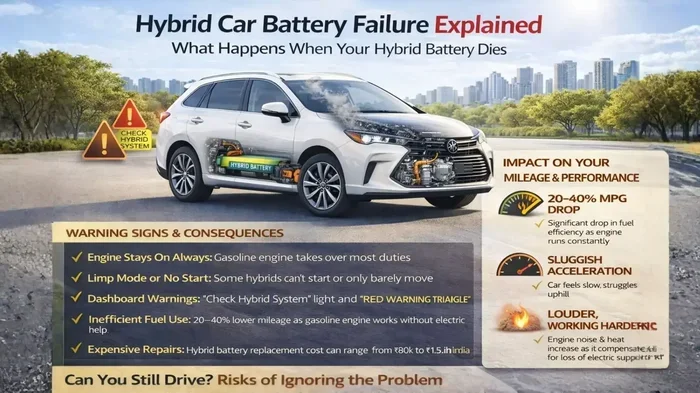
When your hybrid battery dies, your car does not just stop dead in its tracks. Most hybrid vehicles are designed with a backup plan. The gas engine takes over, but it cannot do everything the hybrid powertrain normally handles.
Loss of Electric Assist
The electric motor in a hybrid car helps the gas engine during acceleration and hill climbing. Without this assist, your car will feel sluggish. You may notice slower takeoffs from stoplights and a general lack of pep. This is the most common change drivers report when their battery fails.
Reduced Fuel Economy
One reason people buy hybrids is to save on gas. When the battery pack dies, you lose that advantage. The gas engine has to do all the work, which means you will fill up more often. Some drivers report their fuel economy dropping by 30 to 50 percent after the battery fails.
Regenerative Braking Stops Working
Hybrid cars use regenerative braking to recharge the battery while you slow down. When the battery is dead, this system shuts off. Your brakes will still work, but you lose the energy recovery feature. This also puts more wear on your traditional brake pads and rotors.
Warning Lights and Error Messages
Most hybrid vehicles will display warning lights on the dashboard. You might see a check engine light, a hybrid system warning, or a battery icon. These lights tell you something is wrong with the hybrid system. Do not ignore them. Addressing the problem early can prevent a complete battery failure.
Can You Still Drive a Hybrid on Gas Alone
The answer depends on the type of hybrid you own. Not all hybrid cars are built the same way. Some can run on gas alone just fine. Others may leave you stranded.
Parallel Hybrids
In a parallel hybrid design, both the gas engine and electric motor connect to the wheels. Examples include the Toyota Prius and Honda Insight models. If the battery dies in a parallel hybrid, the gas engine can still move the car. However, you will lose the electric boost and regenerative braking.
Series Hybrids
A series hybrid uses the electric motor to drive the wheels. The gas engine only generates electricity. Think of the Chevrolet Volt as a good example. If the battery dies in a series hybrid, the car may not move at all. The gas engine cannot directly power the wheels in this design.
Plug-In Hybrids (PHEVs)
Plug-in hybrids have larger batteries that you charge from an outlet. Models like the Toyota RAV4 Prime and Ford Escape PHEV can drive on electric power alone for many miles. If the battery dies in a PHEV, the car usually switches to gas mode. But the range and performance will be noticeably reduced.
Quick Tip: Check your owner manual to find out what type of hybrid system your car uses. This tells you what to expect if the battery fails.
Warning Signs Your Hybrid Battery Is Failing
Most hybrid batteries do not die overnight. They give you warning signs long before a complete failure. Knowing these signs can help you address the problem early and avoid getting stranded.
Decreased Fuel Economy
If you notice you are visiting the gas station more often, your hybrid battery might be struggling. A failing battery cannot hold a charge, which means the gas engine works harder. Track your fuel economy over time. A sudden drop is a red flag.
Unusual Noises
Listen to your car. A healthy hybrid vehicle is surprisingly quiet. If you hear humming, clicking, or whining sounds from the battery area, something is wrong. These noises often indicate internal damage to the battery cells.
Charge Won’t Hold
Your hybrid battery should maintain a steady charge during normal driving. If you notice the charge dropping quickly or the battery gauge bouncing around, the battery pack is likely degrading. This is one of the earliest signs of failure.
Dashboard Warning Lights
Never ignore warning lights. A hybrid system warning or check engine light means your car’s computer has detected a problem. Have a mechanic run a diagnostic scan as soon as possible. Early detection can save you from a roadside breakdown.
Rough Idling or Stalling
If your car idles roughly or stalls at intersections, the hybrid battery may not be providing enough power to support the gas engine. This is especially common during low-speed driving in traffic or parking lots.
How Much Does Hybrid Battery Replacement Cost
This is the question everyone wants answered. The cost of replacing a hybrid battery varies a lot depending on several factors. Let us break it down.
Factors That Affect the Price
- Car model and brand: A Toyota Prius battery costs less than a luxury hybrid like a Lexus.
- New vs. refurbished: A new OEM battery pack costs more than a refurbished one. But refurbished batteries may not last as long.
- Labor costs: Replacing a high-voltage battery requires specialized tools and training. Labor can add $500 to $1,500 to the total.
- Warranty coverage: Many hybrid vehicles come with an 8-year or 100,000-mile battery warranty. Check if your car is still covered.
Average Cost Ranges
Here is a general idea of what you might pay for hybrid battery replacement:
- Entry-level hybrids: $1,000 to $2,500 for a refurbished battery pack.
- Mid-range hybrids: $2,500 to $4,000 for a new or refurbished unit.
- Luxury and plug-in hybrids: $4,000 to $6,000 or more for a new OEM battery pack.
Expert Insight: Always get quotes from at least three shops. Some independent mechanics offer hybrid battery replacement at a fraction of dealership prices. Just make sure they have experience with your specific hybrid vehicle model.
Is Replacement Worth It
In most cases, yes. If your car is otherwise in good shape, replacing the hybrid battery can give you years of reliable service. The cost is significant, but it is usually less than buying a new car. Plus, you keep the fuel economy benefits that made you choose a hybrid in the first place.
Tips to Extend Your Hybrid Battery Life
The good news is you can take steps to keep your hybrid battery healthy for longer. Most hybrid vehicle batteries last between 100,000 and 150,000 miles with proper care. Here are some simple tips.
Drive Gently
Avoid hard acceleration and sudden braking. Smooth driving reduces stress on the battery pack and the hybrid drivetrain. Think of your hybrid battery like a bucket of energy. Gentle driving keeps the bucket full longer.
Avoid Extreme Temperatures
Hot and cold weather both hurt hybrid batteries. Park in shade during summer. Use a garage in winter when possible. Extreme temperatures speed up battery degradation and reduce battery life.
Keep the Battery Charged
Do not let your hybrid battery sit at a very low charge for long periods. If you drive short trips frequently, take your car on a longer drive once a week to allow the regenerative braking system to fully recharge the battery.
Follow the Maintenance Schedule
Stick to your manufacturer’s recommended hybrid maintenance schedule. Regular check-ups let mechanics spot small issues before they become big problems. This includes checking the battery coolant and inspecting the battery pack connections.
Use Eco Mode When Possible
Most hybrid vehicles have an eco mode. This setting limits power output to save energy and reduce strain on the hybrid battery. Using eco mode during daily driving can help extend the overall life of the battery system.
What to Do If Your Hybrid Battery Dies on the Road
It can happen to anyone. You are driving, and suddenly your hybrid car loses power. Here is exactly what you should do.
Step 1: Stay Calm and Pull Over Safely
Do not slam the brakes. Gently steer to the side of the road or a parking lot. Turn on your hazard lights to alert other drivers. A hybrid vehicle with a dead battery can still coast for a short distance using momentum, so use this to your advantage.
Step 2: Check the Dashboard
Look at the warning lights on your dashboard. If you see a hybrid system warning or a battery icon, note what it says. This information will help the mechanic diagnose the problem faster.
Step 3: Call for Roadside Assistance
Do not try to push the car or tow it yourself. The high-voltage battery in a hybrid vehicle can be dangerous if mishandled. Call roadside assistance or a tow truck. Tell them you have a hybrid vehicle so they can bring the right equipment.
Step 4: Get to a Safe Location
If you can still drive on gas power, carefully navigate to a nearby parking lot or safe spot. Turn off the engine and wait for help. Driving on a dead battery for too long can cause further damage to the hybrid system.
Step 5: Arrange for Diagnosis and Repair
Once you are safe, have the car towed to a trusted mechanic. Ask them to run a full diagnostic on the hybrid system. Sometimes the problem is not the battery itself but a faulty sensor, fuse, or wiring connection. A proper diagnosis saves you money.
Quick Tip: Keep a roadside assistance membership active. Many insurance plans and car manufacturers offer this service. It is a small cost that can save you hundreds in emergency situations.
Common Mistakes Hybrid Owners Make
Even the best hybrid vehicle owners make mistakes that shorten their battery life. Here are a few to avoid.
- Ignoring warning lights: Many drivers dismiss dashboard warnings until the problem becomes severe. Early action saves money.
- Skipping maintenance: Hybrid maintenance is just as important as regular car maintenance. Skipping oil changes or coolant checks hurts the battery.
- Draining the battery completely: Letting the hybrid battery sit at a low charge for weeks can cause permanent damage.
- Using the wrong charger: For plug-in hybrids, always use the charger recommended by the manufacturer. Cheap chargers can damage the battery pack.
- Overloading the car: Carrying heavy loads puts extra strain on the hybrid drivetrain and battery system. Stay within your vehicle’s weight limits.
Final Thoughts
So, can you drive a hybrid car if the battery dies? The answer is yes, but with limitations. Your car will switch to gas-only mode, and you will lose many of the features that make a hybrid special. Fuel economy drops, acceleration slows, and regenerative braking stops working.
The key is to stay informed. Watch for warning signs of a failing battery. Follow a regular hybrid maintenance schedule. And if your battery does die, know the steps to take to stay safe and get back on the road quickly.
A hybrid vehicle is a smart investment. Understanding how it works and what to do when things go wrong gives you confidence as a driver. Take care of your hybrid battery, and it will take care of you for many miles to come.
Frequently Asked Questions
How far can you drive a hybrid car if the battery dies?
Most hybrid vehicles can still move on gas power alone for a limited distance. The exact range depends on your gas tank size and the car model. However, you will lose electric assist, so the car will feel much weaker than normal.
Is it safe to drive a hybrid with a dead battery?
It is generally safe for a short distance. The high-voltage battery system is designed with safety features. However, driving on a dead battery for too long can damage the hybrid system. Get your car checked by a mechanic as soon as possible.
Can a hybrid battery be recharged instead of replaced?
Sometimes. If the battery is only partially damaged, a mechanic may be able to repair or recondition it. However, a fully failed battery pack usually needs to be replaced. The cost of reconditioning is lower than a full replacement.
How long does a hybrid battery last before it dies?
Most hybrid batteries last between 100,000 and 150,000 miles. Some last even longer with proper care. Driving habits, climate, and maintenance all play a role in how long your battery life will be.
Does hybrid battery replacement come with a warranty?
Many manufacturers offer an 8-year or 100,000-mile warranty on the hybrid battery. Check your specific vehicle’s warranty details. If your car is still under warranty, the replacement may be covered at no cost to you.
What is the difference between a hybrid battery and a regular car battery?
A regular car battery is a 12-volt battery that starts the engine. A hybrid battery is a high-voltage battery that powers the electric motor. They are completely different in size, voltage, and function. Never confuse the two when shopping for replacements.