Which Is the Fastest Car in the World and Why It Matters
The fastest car in the world is a topic that sparks endless debate among car enthusiasts and engineers alike. From the Bugatti Chiron Super Sport to the SSC Tuatara, extreme speed machines push the boundaries of what is possible. In this guide, you will learn which vehicle currently claims the top speed crown, how it achieves such incredible performance, and why speed records continue to matter in the automotive world.
There is something undeniably thrilling about the fastest car in the world. The idea of a machine pushing past 300 miles per hour stirs the imagination of gearheads and casual fans alike. Speed represents the pinnacle of automotive engineering. It is where raw power meets precision design. And it is a topic that never gets old.
So which car truly deserves the title of the fastest car in the world? The answer is not as simple as you might think. Different manufacturers make bold claims. Different organizations verify records. And the landscape of extreme speed is always changing. In this article, we will break it all down. You will learn about the current record holder, the cars that came close, and the technology that makes it all possible.
Whether you are a car enthusiast or just curious about extreme velocity, this guide covers everything. We will explore the engineering behind these machines. We will look at the history of speed records. And we will discuss why chasing top speed still matters today. Let us dive in.
Key Takeaways
- The current speed champion: The SSC Tuatara holds the official record for the fastest production car in the world.
- Engineering marvels: These cars use advanced aerodynamics, turbocharged engines, and lightweight materials to reach extreme velocities.
- Why speed matters: Top speed records drive innovation that benefits everyday vehicles on the road.
- Electric is coming: New electric hypercars are challenging traditional combustion engines for the speed record.
- Controversy exists: Speed record claims are often disputed, making verification a key part of the automotive world.
- Accessibility is growing: Cars that were once limited to billionaires are becoming more available to wealthy enthusiasts.
- Safety is critical: Achieving extreme speed requires advanced safety systems and rigorous testing.
📑 Table of Contents
Which Is the Fastest Car in the World Right Now
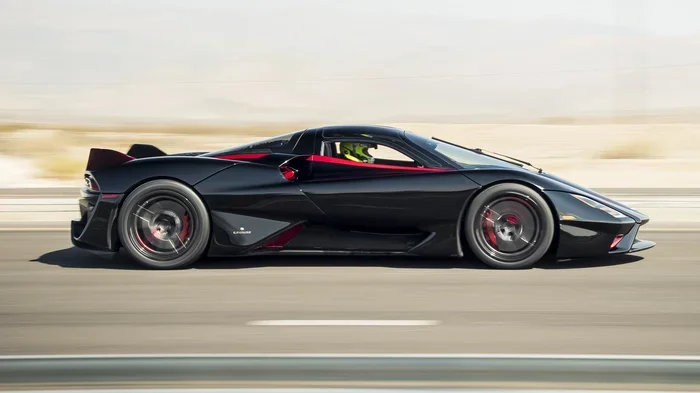
The current title holder for the fastest production car in the world is the SSC Tuatara. This American hypercar made headlines when it achieved an official two-way average top speed of 295 mph. That number was verified by independent testers and captured on video. It was a landmark moment for the automotive industry.
The Tuatara is built by SSC North America. The company is based in Washington State. Its founder, Jerod Shelby, has been obsessed with speed for decades. The Tuatara represents the culmination of years of engineering work. It is not just a fast car. It is a statement about what American manufacturers can achieve.
What Makes the SSC Tuatara So Fast
The Tuatara gets its incredible speed from several key factors. First, it has a twin-turbocharged V8 engine. This powerplant produces over 1,750 horsepower. That is an absurd amount of power for a road-legal car. Second, the aerodynamics are meticulously designed. Every curve and vent serves a purpose. The car slices through the air with minimal drag.
Third, the Tuatara uses a lightweight carbon fiber monocoque. This keeps the weight down despite its massive power output. Fourth, the transmission is a seven-speed automated manual. It shifts gears with lightning speed and precision. All of these elements work together to push the car to extreme velocities.
Here is a quick look at the Tuatara’s key specs:
- Engine: 5.9-liter twin-turbo V8
- Horsepower: 1,750 hp on E85 fuel
- Top Speed: 295 mph (verified)
- Weight: Approximately 2,950 pounds
- Transmission: 7-speed automated manual
- Acceleration (0-60 mph): 2.5 seconds
A Brief History of Speed Records
The quest for the fastest car in the world is not new. It has been going on for over a century. In the early days, speed records were set on open roads and beaches. The Bonneville Salt Flats became a famous testing ground. Cars like the Blue Flame rocket car pushed boundaries in the 1960s. These early efforts laid the groundwork for modern hypercars.
In the production car era, the competition heated up in the 1990s. The McLaren F1 claimed the top speed crown with 240 mph. It held that record for over a decade. Then Bugatti entered the scene with the Veyron. The Veyron Super Sport hit 267 mph in 2010. It was a game-changer for the automotive world.
After the Veyron, the competition continued. The Hennessey Venom GT reached 270 mph in 2014. The Koenigsegg Agera RS hit 277 mph in 2017. Each new record pushed manufacturers to innovate further. The SSC Tuatara’s 295 mph run in 2022 was the latest chapter in this ongoing story.
Key Milestones in Speed Record History
- 1960s: The Blue Flame sets land speed records at Bonneville.
- 1990s: The McLaren F1 becomes the fastest production car at 240 mph.
- 2005: The Bugatti Veyron 16.4 reaches 253 mph.
- 2010: The Bugatti Veyron Super Sport hits 267 mph.
- 2014: The Hennessey Venom GT achieves 270 mph.
- 2017: The Koenigsegg Agera RS reaches 277 mph.
- 2022: The SSC Tuatara records 295 mph.
How These Cars Achieve Extreme Speed
Building a car that can go over 300 mph is no simple task. It requires a deep understanding of physics, materials science, and powertrain engineering. Every component must be optimized for extreme performance. Let us look at the key elements that make the fastest car in the world possible.
Engine Power and Turbocharging
The heart of any speed record car is its engine. These hypercars use massive engines with forced induction. Turbochargers compress air into the combustion chamber. This allows the engine to burn more fuel. More fuel burned means more power. The SSC Tuatara’s V8 uses twin turbochargers to produce over 1,750 horsepower. That is more power than most sports cars have in their entire powertrain.
Fuel choice also matters. Many of these cars run on E85 ethanol fuel. This high-octane fuel allows for more aggressive tuning. It helps prevent engine knock at extreme power levels. Some manufacturers even develop custom fuel blends for their record attempts.
Aerodynamics and Downforce
At speeds above 200 mph, air resistance becomes the biggest enemy. Aerodynamics is the science of managing airflow around the car. The fastest car in the world must be shaped to cut through the air with minimal drag. Every surface is carefully designed using computational fluid dynamics.
Downforce is equally important. It pushes the car down onto the road. This improves traction at extreme speeds. Without enough downforce, a car could become airborne. The Tuatara uses an active aerodynamic system. Adjustable spoilers and vents change position based on speed and driving conditions. This ensures optimal balance between drag reduction and downforce generation.
Lightweight Materials
Power-to-weight ratio is critical for top speed. A lighter car accelerates faster and reaches higher speeds with the same engine power. That is why these hypercars use extensive carbon fiber construction. The chassis, body panels, and even structural elements are made from carbon fiber. Some cars also use titanium and exotic alloys for critical components.
The SSC Tuatara weighs around 2,950 pounds. That is remarkably light for a car with 1,750 horsepower. This gives it a power-to-weight ratio of about 593 hp per ton. Compare that to a typical family sedan, which might have 200 hp and weigh 3,500 pounds.
Advanced Transmissions
Shifting gears at extreme speeds requires precision and speed. These cars use advanced automated manual transmissions. They can change gears in milliseconds. This minimizes power loss during shifts. The SSC Tuatara uses a seven-speed unit that delivers power to the rear wheels efficiently. Some competing cars use dual-clutch transmissions for even faster shift times.
Top Contenders for the Speed Crown
While the SSC Tuatara currently holds the record, several other cars deserve mention. The competition in the hypercar world is fierce. Each manufacturer brings unique strengths to the table. Let us compare the top contenders.
| Car | Top Speed | Horsepower | 0-60 mph | Price |
|---|---|---|---|---|
| SSC Tuatara | 295 mph | 1,750 hp | 2.5 sec | $1.9M+ |
| Bugatti Chiron Super Sport | 273 mph | 1,578 hp | 2.3 sec | $3.9M+ |
| Koenigsegg Jesko Absolut | 330 mph (claimed) | 1,600 hp | 2.5 sec | $2.8M+ |
| Hennessey Venom F5 | 311 mph (claimed) | 1,817 hp | 2.4 sec | $1.6M+ |
| Rimac Nevera | 258 mph | 1,914 hp | 1.74 sec | $2.4M+ |
As you can see, the landscape is diverse. Each car brings something different to the table. The Bugatti Chiron Super Sport is a luxury grand tourer that happens to be incredibly fast. The Koenigsegg Jesko Absolut has claimed a theoretical top speed of 330 mph. However, that number has not been officially verified. The Hennessey Venom F5 makes similar claims. Independent verification remains a key issue in the speed record world.
The Rimac Nevera is a different kind of contender. It is an electric hypercar. It proves that the fastest car in the world does not need a combustion engine. The Nevera produces 1,914 horsepower from four electric motors. It accelerates to 60 mph in just 1.74 seconds. That makes it the quickest car off the line in the world, even if its top speed is lower than some combustion rivals.
Why Speed Records Still Matter
Some people wonder why speed records matter in a world where most cars go 120 mph at most. The answer lies in innovation. When manufacturers push the boundaries of speed, they develop new technologies. These technologies eventually make their way into everyday cars.
For example, aerodynamics research for hypercars improves the fuel efficiency of regular vehicles. Advanced materials developed for lightweight construction find use in mass-produced cars. Even turbocharging technology, which was once reserved for extreme speed machines, is now common in affordable performance cars.
Speed records also inspire the next generation of engineers. When young people see a car go 295 mph, it sparks their imagination. It shows them what is possible with science and engineering. That inspiration leads to careers in automotive design, aerospace, and materials science.
The Role of Electric Speed
Electric vehicles are changing the speed game. The Rimac Nevera proves that electric motors can deliver instant, massive power. Unlike combustion engines, electric motors deliver maximum torque from zero RPM. This gives electric hypercars incredible acceleration.
Companies like Rimac and Aspark are pushing the limits of electric speed. The Aspark Owl claims a 0-60 mph time of just 1.69 seconds. As battery technology improves, electric hypercars will likely challenge combustion cars for the top speed record too. The future of the fastest car in the world may be electric.
Common Mistakes People Make When Discussing Speed Records
There are several misconceptions about speed records that are worth addressing. Understanding these helps you become a more informed enthusiast.
- Assuming the highest claimed speed is always correct: Many manufacturers claim incredible speeds that are never independently verified. Always look for third-party confirmation.
- Confusing acceleration with top speed: A car can be incredibly quick off the line but have a lower top speed than a rival. These are different metrics.
- Ignoring the two-way average: The most credible speed records use a two-way average. This accounts for wind conditions. A one-way run is not considered a valid record.
- Thinking only combustion cars count: Electric hypercars are fully legitimate contenders for speed records. The technology is evolving rapidly.
- Overlooking production requirements: To qualify as the fastest production car, a manufacturer must build multiple road-legal units. Single prototypes do not count.
Expert Insights on Speed Record Verification
According to automotive journalists and speed record organizations, verification is everything. The Guinness World Records and the Guinness World Records for cars require strict criteria. Independent timing equipment must be used. The run must be conducted on a closed course. Weather conditions must be within specified parameters. These rules ensure that the title of fastest car in the world is earned fairly.
SSC North America worked with independent testers for the Tuatara’s record run. They used GPS-based speed measurement systems. The data was reviewed and verified by multiple parties. This level of rigor is what separates credible records from marketing claims.
What the Future Holds for Speed Records
The future of the fastest car in the world is exciting. Several manufacturers are working on new hypercars that could push past 300 mph. Koenigsegg has hinted at a successor to the Jesko that could reach even higher speeds. Hennessey continues to develop the Venom F5 platform. SSC is already planning improvements to the Tuatara.
On the electric side, companies like Rimac and Pininfarina are developing ever-faster machines. Battery energy density is improving every year. This means electric hypercars will become lighter and more powerful. The gap between electric and combustion speed machines is closing fast.
Some experts believe we could see a production car break the 350 mph barrier within the next decade. That would have been unimaginable just 20 years ago. The pace of innovation in the automotive industry is remarkable. Every year, engineers find new ways to extract more performance from their machines.
Key Technologies to Watch
- Solid-state batteries: These could revolutionize electric hypercar performance with higher energy density and faster charging.
- Active aerodynamics: Cars that reshape themselves in real time to optimize speed and stability.
- Advanced materials: Graphene and other next-gen materials that are lighter and stronger than carbon fiber.
- Hybrid powertrains: Combining electric motors with combustion engines for the best of both worlds.
- AI-driven design: Using artificial intelligence to optimize every aspect of a car’s design for maximum speed.
Conclusion
The fastest car in the world is more than just a number on a speedometer. It represents the absolute peak of automotive engineering. The SSC Tuatara currently holds the title with its verified 295 mph top speed. But the competition is fierce. Cars like the Bugatti Chiron Super Sport, Koenigsegg Jesko Absolut, and Rimac Nevera are all pushing boundaries in their own ways.
What makes this topic so fascinating is that it is always evolving. New technologies emerge. New players enter the market. The definition of the fastest car in the world is constantly being redefined. Whether you care about top speed, acceleration, or the engineering behind these machines, there has never been a more exciting time to be a car enthusiast.
Speed records drive innovation. They inspire engineers and dreamers around the world. They remind us that human ingenuity knows no limits. The next time you see a headline about a new speed record, you will know the full story behind it. And you will appreciate the incredible technology that makes it all possible.
So the next time someone asks you which is the fastest car in the world, you will have a clear and informed answer. You will understand the technology, the history, and the passion that drives this incredible pursuit. And that is what makes the world of extreme speed so captivating.
Frequently Asked Questions
What is the fastest car in the world as of 2024?
The SSC Tuatara is currently recognized as the fastest production car in the world. It achieved a verified two-way average top speed of 295 mph. This record was set in 2022 and has been independently confirmed by third-party testers.
How fast is the SSC Tuatara compared to the Bugatti Chiron?
The SSC Tuatara is faster than the Bugatti Chiron Super Sport. The Tuatara reached 295 mph while the Chiron Super Sport topped out at 273 mph. The Tuatara’s advantage comes from its lighter weight and more powerful engine.
Can an electric car be the fastest car in the world?
Yes, electric cars can compete for the speed record. The Rimac Nevera is an electric hypercar that reaches 258 mph. While it is not the current top speed champion, electric technology is advancing rapidly. Future electric hypercars could challenge combustion-powered record holders.
Why are speed records sometimes disputed?
Speed records are sometimes disputed because manufacturers may not follow standardized verification procedures. Independent testing is required for a record to be credible. Some companies claim speeds based on one-way runs or unverified data. The most respected records use a two-way average measured by independent equipment.
How much does the fastest car in the world cost?
The SSC Tuatara starts at around $1.9 million. However, fully optioned examples can cost significantly more. The Bugatti Chiron Super Sport is even pricier at over $3.9 million. These are among the most expensive production cars ever made.
Will the fastest car in the world ever go over 300 mph?
Many experts believe a production car will break the 300 mph barrier in the coming years. The Koenigsegg Jesko Absolut and Hennessey Venom F5 have claimed speeds above 300 mph. However, these claims have not been independently verified yet. The race to 300 mph continues.