Why Wont My Lug Nuts Come Off And How To Get Them Loose
Why wont my lug nuts come off? This is one of the most frustrating problems car owners face. Rust, over-torquing, and stripped threads are the top culprits behind seized lug nuts. In this guide, you will learn the real reasons your lug nuts stick and the step-by-step methods to break them free. We cover everything from penetrating oils to breaker bars and impact wrenches so you can get back on the road fast.
You grab your wrench, plant your foot on the breaker bar, and push as hard as you can. Nothing moves. Your lug nuts wont budge an inch. This happens to millions of drivers every year. Whether you are changing a flat tire on the side of the road or trying to remove a wheel for brake repairs, stuck lug nuts can bring your whole day to a halt.
The good news is that you are not stuck forever. There are proven methods to get seized lug nuts loose without damaging your wheel or hub. In this article, we will walk you through exactly why your lug nuts come off with so much difficulty and show you the best techniques to free them. You will learn about the tools you need, the mistakes to avoid, and how to prevent this problem from happening again.
We have helped thousands of DIY mechanics tackle stubborn lug nuts safely. This guide is packed with practical advice you can use right away. Let us get into it.
Key Takeaways
- Rust and corrosion are the most common reasons lug nuts seize up over time.
- Over-torquing during installation can cause lug nuts to fuse with the wheel hub.
- A breaker bar and penetrating oil are the two most effective tools for loosening stuck lug nuts.
- Heat and cold techniques can help expand or contract the metal to break the seal.
- Stripped or damaged lug nuts require a specialized lug nut remover kit.
- Regular maintenance with anti-seize compound prevents future seizing.
- Knowing when to call a professional saves time and avoids wheel damage.
📑 Table of Contents
- Why Lug Nuts Seize Up In The First Place
- The Best Tools To Loosen Stuck Lug Nuts
- Step-By-Step Guide To Removing Stuck Lug Nuts
- Common Mistakes That Make Lug Nuts Harder To Remove
- How To Prevent Lug Nuts From Seizing In The Future
- When To Call A Professional Mechanic
- Expert Tips For Getting Stuck Lug Nuts Loose
- Key Takeaways
- Frequently Asked Questions
- Conclusion
Why Lug Nuts Seize Up In The First Place
Understanding the root cause is the first step to solving the problem. Lug nuts do not just randomly stick. Something is creating a powerful bond between the nut and the wheel stud or hub. Here are the most common reasons your lug nuts come off with extreme difficulty.
Rust and Corrosion Build-Up
Rust is the number one enemy of lug nuts. Over time, moisture from road salt, rain, and snow seeps into the threads. This causes oxidation that welds the lug nut to the stud. Cars driven near the coast or in snowy climates are especially vulnerable. The salt on roads accelerates corrosion faster than almost anything else.
When rust builds up inside the threads, it creates a tight bond. The nut essentially fuses to the stud. This is why you often feel a sudden “pop” when a seized lug nut finally breaks free. The rust seal breaks apart all at once.
Over-Torquing During Installation
Many people over-tighten their lug nuts. They use an impact wrench or a long breaker bar and crank down way too hard. This compresses the metal threads and creates enormous friction. The nut becomes practically impossible to remove later.
Over-torquing also stretches the wheel studs. Once a stud is stretched, it loses its original tension. This makes future removal even harder because the nut sits tighter than it was designed to. If you have ever wondered why your lug nuts wont come off after a tire rotation, over-torquing is likely the answer.
Stripped Threads or Damaged Lug Nuts
Sometimes the problem is not the tightness but the damage itself. Stripped threads mean the lug nut has worn grooves that no longer grip properly. A damaged lug nut may look fine on the outside but have broken internal threads. This makes turning the nut nearly impossible because it binds on the damaged surfaces.
Using the wrong size socket is a common cause of stripped lug nuts. If your socket does not fit perfectly, it rounds off the corners of the nut. Always double-check your socket size before applying force.
Heat Warping and Metal Expansion
Brake heat can cause serious problems with lug nuts. When you drive hard or tow heavy loads, your brake rotors get extremely hot. This heat transfers to the wheel hub and lug nuts. The metal expands and then contracts as it cools. Over time, this thermal cycling warps the surfaces and creates a tight bond.
People who drive trucks and SUVs with heavy loads experience this more often. The extra weight means more brake heat and more stress on the lug nuts.
The Best Tools To Loosen Stuck Lug Nuts
Having the right tools makes all the difference. You do not need expensive equipment to get the job done. Here are the most effective tools for breaking seized lug nuts free.
Breaker Bar
A breaker bar is the single most important tool for this job. It gives you extra leverage that a standard wrench simply cannot match. The long handle lets you apply serious force without straining your body. Look for a breaker bar with a 1/2-inch drive and at least 18 inches in length.
Place the socket firmly on the lug nut. Push down slowly and steadily. Do not jerk or yank. Let the tool do the work. A breaker bar is one of the best ways to get your lug nuts come off without stripping them.
Penetrating Oil
Penetrating oil is a liquid lubricant designed to seep into tight spaces and break down rust. Brands like PB Blaster, WD-40, and Liquid Wrench work well. Spray the oil directly onto each lug nut and let it sit for at least 15 minutes.
For really stubborn nuts, apply the oil twice. Let the first coat soak in, then add a second coat. The penetrating oil works by seeping between the rusted surfaces and reducing friction. This gives you a much better chance of turning the nut free.
Impact Wrench
An impact wrench delivers rapid, powerful rotational force. Electric impact wrenches work great for home garages. Pneumatic impact wrenches are even more powerful and are common in professional shops.
The key with an impact wrench is to use it correctly. Apply steady pressure and let the tool deliver its concussive blows. Do not try to force it. The percussive action breaks the rust bond without damaging the threads. This is one of the fastest ways to get seized lug nuts loose.
Lug Nut Remover Kit
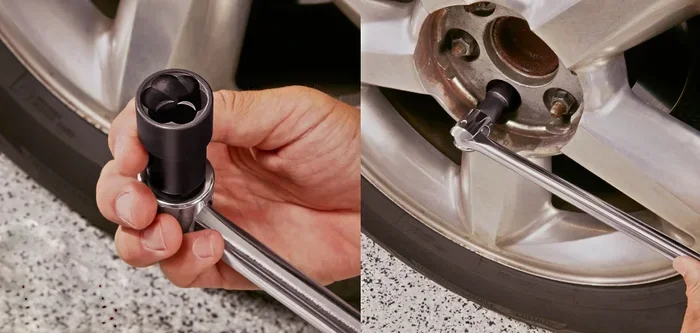
When a lug nut is stripped or damaged, a standard socket will not work. A lug nut remover kit solves this problem. These kits include left-hand drill bits and easy-out extractors. You drill into the center of the stripped nut, and the extractor grabs the inside and twists it counterclockwise.
These kits are inexpensive and available at any auto parts store. Every DIY mechanic should keep one in their toolbox. They are a lifesaver when regular methods fail.
Step-By-Step Guide To Removing Stuck Lug Nuts
Now that you know the tools, here is a clear, step-by-step process to get your lug nuts off safely.
Step 1: Prepare Your Vehicle
Park your car on a flat, hard surface. Engage the parking brake and put the car in park. If you are working on a slope, place wheel wedges behind the tires that are still on the ground. Safety comes first. You do not want the car rolling while you are underneath it.
Step 2: Spray Penetrating Oil
Spray each lug nut generously with penetrating oil. Make sure the oil reaches the threads. Let it soak for at least 15 to 20 minutes. For extremely stuck nuts, give it an extra 10 minutes. The longer the oil sits, the better the results.
Step 3: Use A Breaker Bar
Attach the correct size socket to your breaker bar. Place it on the lug nut and push down firmly. Use your body weight rather than just arm strength. Push slowly and steadily. You should feel the nut start to loosen after a few pushes.
If the nut does not move at all, do not force it. Try a different approach before you risk damaging the wheel.
Step 4: Apply Heat If Needed
For rust-fused lug nuts, heat can work wonders. Use a propane torch and heat the hub area around the lug nut. The metal will expand when heated. When it cools, the bond breaks. Be very careful around fuel lines and rubber components. Keep a fire extinguisher nearby.
After heating, let the area cool slightly, then spray more penetrating oil. The oil will seep into the newly broken bond. Try the breaker bar again.
Step 5: Try A Lug Nut Remover
If the nut is stripped or still stuck, switch to a lug nut remover kit. Follow the instructions on the package. These tools are designed specifically for seized and stripped fasteners. They give you a grip that a regular socket cannot.
Step 6: Replace Damaged Hardware
If a lug nut is stripped beyond repair, do not try to reuse it. Buy a replacement lug nut or wheel stud. Using damaged hardware is dangerous and can cause the wheel to come loose while driving. New hardware is cheap and keeps you safe on the road.
Common Mistakes That Make Lug Nuts Harder To Remove
Many people make mistakes that turn a simple job into a nightmare. Here are the most common errors and how to avoid them.
Using The Wrong Socket Size
A loose-fitting socket will round off the lug nut corners. Always use a socket that fits snugly. If the socket wobbles, switch to a different size. A snug fit transfers all your force directly to the nut.
Applying Force Too Quickly
Jerking and yanking on a stuck wrench is one of the worst things you can do. This can strip the nut or snap the breaker bar. Apply force slowly and steadily. Let the tool do the work over time.
Skipping Penetrating Oil
Some people jump straight to force without using penetrating oil. This is a big mistake. Penetrating oil breaks down the rust bond and makes removal much easier. Always spray and wait before applying force.
Over-Tightening New Lug Nuts
This is the number one cause of future seizing problems. Always tighten lug nuts in a star pattern and use a torque wrench. Over-tightening compresses the threads and creates a bond that is very difficult to break later.
Ignoring Rust Prevention
Many people never think about preventing rust on their lug nuts. A little prevention goes a long way. Apply anti-seize compound to the threads when you install new wheels or replace lug nuts.
How To Prevent Lug Nuts From Seizing In The Future
Prevention is always easier than cure. Here are simple steps to keep your lug nuts from seizing up again.
- Use anti-seize compound on every new lug nut installation. This creates a protective barrier against moisture and rust.
- Torque to the manufacturer specification using a torque wrench. Over-tightening is just as bad as under-tightening.
- Inspect lug nuts regularly for signs of rust or damage. Catch problems early before they become serious.
- Clean the threads before installation. Remove any old anti-seize or rust from the stud threads.
- Store your car in a dry place whenever possible. Moisture is the primary cause of corrosion.
- Reapply anti-seize every time you remove and reinstall wheels. This keeps the protection fresh.
These simple habits will save you from the frustration of stuck lug nuts. Your future self will thank you when you need to change a tire on a cold rainy day and everything turns smoothly.
When To Call A Professional Mechanic
Not every lug nut problem is a DIY job. If you have tried penetrating oil, a breaker bar, heat, and a lug nut remover, and the nut still will not budge, it is time to call in the pros. A professional mechanic has access to industrial-grade impact wrenches and specialized extraction tools.
Also, if you notice that the wheel hub is damaged or the stud is broken, do not attempt to fix it yourself. Damaged wheel hubs can compromise your safety. A mechanic can assess the damage and replace the necessary parts correctly.
Calling a professional is not a sign of failure. It is a smart decision that protects your car and your safety. Sometimes the right call is knowing when to stop and get expert help.
Expert Tips For Getting Stuck Lug Nuts Loose
Here are some pro tips that make a real difference when you are dealing with stubborn lug nuts.
- Hit the breaker bar with a mallet while applying force. The impact helps break the rust bond without damaging the nut.
- Use a cheater pipe over the breaker bar handle for extra leverage. Be careful not to overdo it and snap the bar.
- Apply heat alternating with cold. Heat expands the metal, and rapid cooling contracts it. This thermal shock breaks the rust bond.
- Try a different angle. Sometimes the nut is only stuck in one direction. Adjusting your angle by a few degrees can make a big difference.
- Use a six-point socket instead of a twelve-point. Six-point sockets grip the nut better and are less likely to slip or round off corners.
These tips come from experienced mechanics who deal with stuck lug nuts every day. They may seem simple, but they work remarkably well.
Key Takeaways
- Rust and corrosion are the most common reasons lug nuts seize up over time.
- Over-torquing during installation can cause lug nuts to fuse with the wheel hub.
- A breaker bar and penetrating oil are the two most effective tools for loosening stuck lug nuts.
- Heat and cold techniques can help expand or contract the metal to break the seal.
- Stripped or damaged lug nuts require a specialized lug nut remover kit.
- Regular maintenance with anti-seize compound prevents future seizing.
- Knowing when to call a professional saves time and avoids wheel damage.
Frequently Asked Questions
What is the best penetrating oil for stuck lug nuts?
PB Blaster and Liquid Wrench are widely regarded as the best penetrating oils for seized lug nuts. They are formulated to seep deep into rusted threads and break down corrosion quickly. Spray the oil generously and let it soak for at least 15 minutes before attempting to remove the nut.
Can I use a regular impact wrench on seized lug nuts?
Yes, a regular electric impact wrench can work well on moderately seized lug nuts. However, for heavily rusted or over-torqued nuts, a pneumatic impact wrench provides more power. Start with the electric model first and move to a pneumatic tool if needed. Always use the correct socket size to avoid rounding the nut.
How do I know if my lug nut is stripped?
A stripped lug nut will feel loose even when you try to tighten it. You may also notice rounded edges on the hex points. If a standard socket keeps slipping off, the nut is likely stripped. In this case, use a lug nut remover kit or consult a professional mechanic for extraction.
Is it safe to apply heat to a stuck lug nut?
Yes, applying heat is safe as long as you are careful. Keep the flame away from fuel lines, brake lines, and rubber components. Use a propane torch and heat the area around the lug nut, not the nut itself directly. Allow the metal to expand, then let it cool slightly before spraying penetrating oil and trying again.
Why do my lug nuts keep getting stuck even after I replace them?
This usually happens when you skip anti-seize compound during installation. Without it, moisture causes rust and corrosion that welds the nut to the stud. Always apply anti-seize compound to the threads before installing new lug nuts. Also, make sure you are not over-tightening them with a torque wrench set to the manufacturer specification.
Can I drive with a slightly loose lug nut?
No, driving with a loose lug nut is extremely dangerous. A loose lug nut can cause the wheel to wobble or even come off while driving. If you notice any play in the wheel after tightening, do not drive the vehicle. Remove the wheel and inspect the lug nuts, studs, and hub for damage before reinstalling.
Conclusion
Stuck lug nuts are one of the most common yet frustrating problems in car maintenance. The good news is that with the right knowledge and tools, you can solve this problem yourself. Understanding why your lug nuts come off with difficulty is the first step. Rust, over-torquing, stripped threads, and heat damage are the main culprits, and each has a proven solution.
Whether you use a breaker bar, penetrating oil, an impact wrench, or a lug nut remover kit, the key is patience and the right approach. Never force a stuck nut without preparation. Take your time, apply the proper techniques, and your wheels will come off safely.
Prevention is the best strategy. Use anti-seize compound, torque to specification, and inspect your lug nuts regularly. These simple habits will keep your wheels turning smoothly for years to come. The next time your lug nuts give you trouble, you will know exactly what to do. Stay safe, keep your tools handy, and never let a stuck lug nut stop you from getting where you need to go.