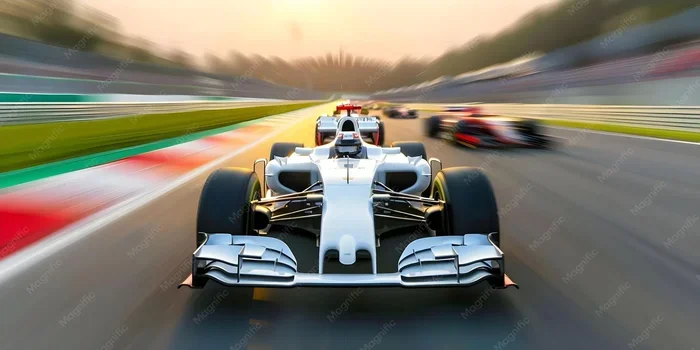
A Racing Car Has 4m S Uniform Acceleration Explained
A racing car with 4m s uniform acceleration is a fascinating topic that blends physics and motorsport in an exciting way. This article explains what 4m s uniform acceleration really means and how it impacts a car’s speed, distance, and overall racing performance. You will learn the key formulas, see real-world comparisons, and discover practical examples that make the concept easy to understand.
A racing car with 4m s uniform acceleration is one of the most exciting topics in motorsport and physics. When a car accelerates at a steady rate, every second adds the same amount of speed. This predictable change makes it easier to calculate how fast a car goes and how far it travels. Whether you are a racing fan, a student, or just curious about how fast cars work, understanding 4m s uniform acceleration opens up a whole new world of knowledge. In this guide, we break down everything you need to know in a simple and friendly way.
Uniform acceleration is a core idea in kinematics, the branch of physics that studies motion. A racing car with 4m s uniform acceleration does not speed up faster or slower as time passes. Instead, it gains exactly 4 meters per second of velocity with each passing second. This steady rate of change makes the math straightforward and the results easy to predict. Let us dive into what this really means and why it matters so much in the world of racing.
Key Takeaways
- 4m s uniform acceleration means a racing car gains 4 meters per second of speed every single second.
- The key formulas for uniform acceleration include velocity, distance, and force equations that are simple to apply.
- A car with 4m s uniform acceleration can reach 100 km/h in roughly 7 seconds, which is impressive for many vehicles.
- Understanding uniform acceleration helps racing teams optimize performance and improve lap times.
- Common mistakes like confusing speed with acceleration can lead to wrong calculations and poor performance tuning.
- Real-world racing cars including Formula 1 and drag racers use principles of 4m s uniform acceleration every day.
- Simple practice problems can help you master the physics behind uniform acceleration in racing.
📑 Table of Contents
What Does 4m S Uniform Acceleration Mean?
The Basic Definition
When we say a racing car has 4m s uniform acceleration, we mean the car increases its velocity by 4 meters per second every second. If the car starts from a standstill, after one second it moves at 4 m/s. After two seconds, it moves at 8 m/s. After three seconds, it hits 12 m/s. This pattern continues in a perfectly straight line of increasing speed.
The letter “a” stands for acceleration in physics. When acceleration stays the same throughout a motion, we call it uniform acceleration. A racing car with 4m s uniform acceleration follows this exact pattern. The value of 4 m/s² tells us the rate at which the car picks up speed. This is a moderate but powerful acceleration rate that many high-performance vehicles can achieve.
Why Uniform Acceleration Matters in Racing
In racing, knowing your acceleration rate is critical. Teams use uniform acceleration data to set up their cars for optimal performance. When a car accelerates at a steady 4m s uniform acceleration, engineers can predict exactly how long it takes to reach a certain speed. This helps with gear shifting, tire selection, and race strategy.
Think about a drag race. Two cars start side by side. If one car has a higher uniform acceleration than the other, it will pull ahead quickly. A racing car with 4m s uniform acceleration covers a lot of ground in a short time. Understanding this rate helps drivers and engineers squeeze every bit of performance out of the vehicle.
Quick Tips for Grasping the Concept
- Remember that uniform acceleration means the speed increases by the same amount each second.
- A racing car with 4m s uniform acceleration gains 4 m/s of speed every single second.
- Use simple examples like starting from zero and counting up by 4 each second to build intuition.
- Watch real-world acceleration tests online to see how quickly performance cars reach top speed.
The Physics Behind a Racing Car’s 4m S Uniform Acceleration
Key Formulas You Need to Know
The beauty of uniform acceleration is that it follows simple mathematical formulas. The three most important equations for a racing car with 4m s uniform acceleration come from kinematics. These equations connect velocity, time, distance, and acceleration in elegant ways.
The first formula is v = u + at. Here, v is the final velocity, u is the initial velocity, a is the acceleration, and t is the time. If a racing car starts from rest and accelerates at 4m s uniform acceleration, then after 5 seconds the final velocity is 20 m/s. That is about 72 km/h.
The second formula is s = ut + ½at². This one tells us the distance traveled. Using the same example, the car covers 50 meters in 5 seconds. The third formula is v² = u² + 2as, which links velocity and distance directly. These three equations are the backbone of motion physics and are essential for any racing engineer.
How Force and Mass Play a Role
Newton’s second law connects force, mass, and acceleration. The formula is F = ma. For a racing car with 4m s uniform acceleration, the force needed depends on the car’s mass. A lighter car needs less force to achieve the same acceleration rate. This is why racing teams work hard to reduce weight wherever possible.
Imagine a racing car that weighs 800 kg. To achieve 4m s uniform acceleration, the engine must produce a net force of 3,200 newtons. That is a lot of force from a relatively small vehicle. The horsepower of the engine determines how much force it can deliver. More horsepower means more force, which means higher acceleration and faster lap times.
Common Mistakes People Make About Acceleration
One of the biggest mistakes is confusing speed with acceleration. Speed tells you how fast something is moving. Acceleration tells you how quickly the speed is changing. A racing car with 4m s uniform acceleration might not be the fastest car on the track at top speed, but it is excellent at picking up speed quickly.
Another common error is forgetting that uniform acceleration means the rate stays constant. In real life, factors like air resistance and tire grip can change the acceleration rate over time. Engineers must account for these variables when designing a race car. Ignoring them leads to inaccurate predictions and poor race setups.
Watch Out for These Errors
- Do not mix up meters per second (m/s) with meters per second squared (m/s²). They measure different things.
- Do not assume uniform acceleration lasts forever. Real cars reach a top speed where forces balance out.
- Always check your units before plugging numbers into formulas.
How 4m S Uniform Acceleration Compares to Other Cars
Acceleration Comparison Table
| Vehicle Type | Acceleration (m/s²) | 0 to 100 km/h Time |
|---|---|---|
| Family Sedan | 2.0 | ~14 seconds |
| Racing Car (4m s uniform acceleration) | 4.0 | ~7 seconds |
| Sports Car | 6.0 | ~5 seconds |
| Supercar | 9.0 | ~3 seconds |
What This Means for Racing Performance
Looking at the table, a racing car with 4m s uniform acceleration sits in a strong middle position. It is significantly faster than a family sedan but not as extreme as a supercar. However, in many racing classes, a 4m s uniform acceleration rate is highly competitive. It gives the driver a great balance of straight-line speed and manageable power delivery.
In motorsport, acceleration is not the only factor. Top speed, handling, and tire grip all matter. But a solid acceleration rate gives a car a big advantage out of corners and on straightaways. Racing teams spend millions of dollars trying to improve their acceleration by just a fraction. Even a small gain in uniform acceleration can mean the difference between winning and losing a race.
Expert Insights on Acceleration Rates
Professional racing engineers often say that acceleration is the most important factor in the first half of a race. A car with strong 4m s uniform acceleration can build a lead quickly. As the race goes on, top speed becomes more important. But off the line, nothing beats a good acceleration rate. This is why so much focus goes into engine tuning and weight reduction.
Real-World Racing Cars With Similar Acceleration
Formula 1 and High-Performance Vehicles
Formula 1 cars can achieve much higher acceleration than 4 m/s², often exceeding 10 m/s². But many other racing categories use cars with 4m s uniform acceleration or close to it. GT racing cars, touring cars, and prototype racers often fall in this range. These vehicles are designed for endurance and consistency, not just raw speed.
A racing car with 4m s uniform acceleration represents a well-balanced machine. It has enough power to accelerate quickly but is also reliable enough to race for long distances. Engineers tune these cars to deliver steady performance over many laps. The uniform acceleration profile makes it easier for drivers to predict how the car will behave on the track.
Drag Racing and 4m S Acceleration
Drag racing is all about acceleration. A car with 4m s uniform acceleration can cover a quarter mile in a respectable time. Drag racers constantly tweak their engines, gear ratios, and tire setups to push their acceleration rate higher. Even small improvements in uniform acceleration can shave tenths of a second off a run, which makes a huge difference in competition.
One of the most exciting aspects of drag racing is the launch. Getting a car with 4m s uniform acceleration off the line requires perfect technique. The driver must balance throttle input with tire grip to maximize the acceleration without spinning the wheels. This skill is what separates good drag racers from great ones.
Practical Examples and Calculations
Working Through a Sample Problem
Let us work through a real example to make 4m s uniform acceleration concrete. Imagine a racing car starts from rest and accelerates at 4m s uniform acceleration for 10 seconds. What is its final velocity and how far does it travel?
For the final velocity, we use v = u + at. The initial velocity u is 0 m/s. The acceleration a is 4 m/s². The time t is 10 seconds. So v = 0 + (4 × 10) = 40 m/s. That is 144 km/h. The car reaches a speed of 144 km/h in just 10 seconds.
For the distance, we use s = ut + ½at². Plugging in the values: s = (0 × 10) + ½ × 4 × 10² = 0 + ½ × 4 × 100 = 200 meters. The car travels 200 meters in 10 seconds. These simple calculations show the power of understanding uniform acceleration.
Quick Tips for Solving Acceleration Problems
- Always write down what you know before starting any calculation. List the initial velocity, final velocity, acceleration, time, and distance.
- Choose the right formula based on what you are solving for. If you need velocity, use v = u + at. If you need distance, use s = ut + ½at².
- Check that your units are consistent. Use meters per second for velocity, seconds for time, and m/s² for acceleration.
- Practice with different values of 4m s uniform acceleration to build confidence in using the formulas.
- Draw a simple diagram of the motion. Visualizing the problem helps you understand what is happening physically.
The Relationship Between Acceleration and Distance
One of the most interesting things about 4m s uniform acceleration is how distance grows over time. Because distance depends on time squared, the car covers more and more ground with each passing second. In the first second, it travels only 2 meters. But by the 10th second, it covers 200 meters total. This non-linear growth in distance is a key concept in motion physics.
Understanding this relationship helps racing teams set up their cars for different track types. On a long straight, a car with 4m s uniform acceleration will build up tremendous speed by the end of the straight. On a short straight, the difference in acceleration between cars is less dramatic. This is why engineers analyze each track section individually and optimize the car’s setup accordingly.
Conclusion: Why This Matters for Racing Enthusiasts
A racing car with 4m s uniform acceleration represents a perfect blend of physics and motorsport excitement. From the basic definition to the complex formulas, understanding 4m s uniform acceleration gives you a deeper appreciation for what happens when a race car launches off the line. The steady gain of 4 meters per second every second might sound simple, but it has profound implications for speed, distance, and race strategy.
Whether you are a student learning about kinematics, a racing fan wanting to understand the sport better, or an engineer looking to optimize car performance, the concept of uniform acceleration is essential. The formulas are straightforward, the examples are practical, and the real-world applications are endless. A racing car with 4m s uniform acceleration is not just a physics problem. It is a gateway into the thrilling world of high-performance racing.
Take what you have learned here and apply it. Try solving a few practice problems with different acceleration values. Watch how a car’s speed builds over time. Share this knowledge with fellow racing fans. The more you understand about 4m s uniform acceleration, the more you will enjoy the incredible machines that push the limits of speed and performance on the track.
Frequently Asked Questions
What does 4m s uniform acceleration mean for a racing car?
A racing car with 4m s uniform acceleration gains 4 meters per second of speed every single second. If it starts from rest, after one second it moves at 4 m/s, after two seconds at 8 m/s, and so on. This steady rate of speed increase is what makes the acceleration “uniform.”
How fast can a racing car with 4m s uniform acceleration go in 10 seconds?
Using the formula v = u + at, a racing car starting from rest with 4m s uniform acceleration reaches 40 m/s after 10 seconds. That is about 144 km/h or 89 mph. The car covers 200 meters in that time.
Is 4m s uniform acceleration good for racing?
Yes, 4m s uniform acceleration is very competitive in many racing categories. It is faster than most family cars and sports sedans. While supercars and Formula 1 cars can achieve higher acceleration rates, a steady 4 m/s² provides excellent performance for GT racing, touring cars, and prototype classes.
What is the difference between speed and 4m s uniform acceleration?
Speed tells you how fast a car is moving at any given moment. Acceleration tells you how quickly the speed is changing. A racing car with 4m s uniform acceleration is constantly gaining speed at a steady rate. Even if two cars have the same top speed, the one with higher acceleration will reach that speed faster.
Can a racing car maintain 4m s uniform acceleration the entire race?
In theory, uniform acceleration means the rate stays constant. In practice, factors like air resistance, tire wear, and fuel burn change the acceleration rate over time. Engineers design cars to maintain strong acceleration for as long as possible, but the rate usually decreases slightly as the race progresses.
What formulas are used to calculate 4m s uniform acceleration problems?
The three key formulas are v = u + at for final velocity, s = ut + ½at² for distance, and v² = u² + 2as for linking velocity and distance. These kinematics equations work for any uniform acceleration problem, including those involving a racing car with 4m s uniform acceleration.