Car Glass Cleaning Tips That Actually Make A Difference
Car glass cleaning is more than just a cosmetic task — it directly impacts your safety and driving experience. Clean car windows reduce glare, improve visibility in rain, and make your entire vehicle look polished. In this guide, we share real, tested tips that deliver a streak-free finish every time. Whether you clean your glass weekly or monthly, these methods work for any budget and skill level.
There is nothing more frustrating than a dirty windshield on a sunny day. The glare bounces off every smudge, every streak, and every fingerprint. You squint. You wipe. And somehow, the glass still looks worse than before.
Car glass cleaning does not have to be a never-ending battle. With the right approach, the right tools, and a few simple habits, you can achieve a streak-free finish that lasts for weeks. This guide covers everything from the best products to the most common mistakes people make. By the end, you will know exactly how to get crystal-clear windows on your vehicle.
Clean auto glass is not just about looks. It is about safety. A clear windshield improves your visibility during rain, at night, and when the sun hits at a low angle. Let us dive into the tips and tricks that actually make a difference.
Key Takeaways
- Clean glass improves safety: Streak-free windows reduce glare and give you better visibility on the road.
- Use the right products: Ammonia-free cleaners and quality microfiber cloths make the biggest difference.
- Clean inside and outside: Both sides of your glass collect grime, and ignoring one side leads to quick re-soiling.
- Avoid common mistakes: Cleaning in direct sunlight or using paper towels causes streaks and residue.
- Add a rain-repellent treatment: Glass coatings and water-repellent products extend the time between cleanings.
- Follow a simple routine: A regular cleaning schedule keeps your auto glass looking great with minimal effort.
📑 Table of Contents
- Why Clean Car Glass Matters More Than You Think
- The Best Products for Car Glass Cleaning
- Step-by-Step Guide to Cleaning Car Glass Inside and Out
- Common Mistakes That Leave Streaks and Residue
- Pro Tips for Long-Lasting Streak-Free Glass
- How Often Should You Clean Your Car Glass?
- Final Thoughts on Car Glass Cleaning
Why Clean Car Glass Matters More Than You Think
Safety Comes First
Most drivers underestimate how much dirty glass affects their vision. A film of dust or grease on your windshield cleaning path creates glare, especially during sunrise and sunset. This glare can temporarily blind you and increase the risk of accidents.
Here is why clean car windows matter for safety:
- Better night vision: Clean glass reduces reflections from oncoming headlights.
- Less glare in rain: A treated or clean windshield helps water bead and roll off faster.
- Clearer mirrors: When your side and rear glass are clean, your peripheral vision improves.
- Reduced eye strain: Streak-free glass means your eyes do not have to work as hard during long drives.
Appearance and Resale Value
Let us be honest. Clean glass makes your whole car look better. A detailed car with sparkling windows stands out immediately. If you ever plan to sell your vehicle, clean automotive glass creates a strong first impression. Buyers notice details, and dirty windows suggest neglect.
Regular car glass care also protects the glass itself. Over time, acid from bird droppings, tree sap, and hard water spots can etch into the surface. Removing these contaminants early prevents permanent damage.
The Best Products for Car Glass Cleaning
Commercial Cleaners Worth Your Money
The market is full of glass cleaners, but not all of them are created equal. Many contain harsh chemicals that leave a residue or damage tinted windows. Here are some top-rated auto glass cleaners that deliver real results:
- Ammonia-free sprays: These are safe for all glass types, including tinted windows and defroster lines.
- Foaming glass cleaners: Foam clings to vertical surfaces, giving you more time to wipe before it drips.
- Concentrated formulas: A little goes a long way. You dilute these with water and save money.
- Waterless glass cleaners: Great for quick touch-ups between full wash sessions.
DIY Cleaning Solutions
You do not need to spend a lot on specialty products. Some of the best car glass cleaning solutions cost pennies to make at home.
- Vinegar and water: Mix one part white vinegar with three parts distilled water. This cuts through grease and water spots easily.
- Rubbing alcohol and water: Combine one cup of isopropyl alcohol with one cup of water. This dries fast and leaves no streaks.
- Dish soap and water: A few drops of mild dish soap in a bucket of water works well for initial heavy cleaning.
Always use distilled water in your DIY solutions. Tap water contains minerals that leave spots and film on your glass.
The Right Tools Make All the Difference
Even the best cleaner will not perform well with the wrong tools. Here is what you need for a professional-level clean car glass result:
- Microfiber cloths: These are the gold standard for glass cleaning. They trap dirt instead of pushing it around.
- Glass-specific scrubbers: Soft rubber or foam scrubbers lift grime without scratching.
- Squeegees: A good squeegee removes liquid quickly and evenly, reducing the chance of streaks.
- Detailing brushes: Small brushes help you reach edges, corners, and around defroster lines.
Avoid using paper towels, old rags, or cotton t-shirts. These leave lint and can create micro-scratches on your glass surface.
Step-by-Step Guide to Cleaning Car Glass Inside and Out
Step 1: Choose the Right Time and Place
Never clean your car glass in direct sunlight. The heat causes the cleaner to dry too fast, leaving streaks and residue. Find a shaded spot or clean your car in the early morning or late evening.
Work on a cool surface. If your car has been sitting in the sun all day, let it cool down first. This gives you more control over the cleaning process.
Step 2: Start with a Thorough Rinse
Before you apply any cleaner, rinse the glass with water. This removes loose dirt, dust, and debris that could scratch the surface during wiping. Use a gentle stream of water from a hose or a bucket of clean water.
For the interior glass, a quick wipe with a damp cloth removes loose particles. This step is easy to skip, but it makes a huge difference in the final result.
Step 3: Apply Your Cleaner
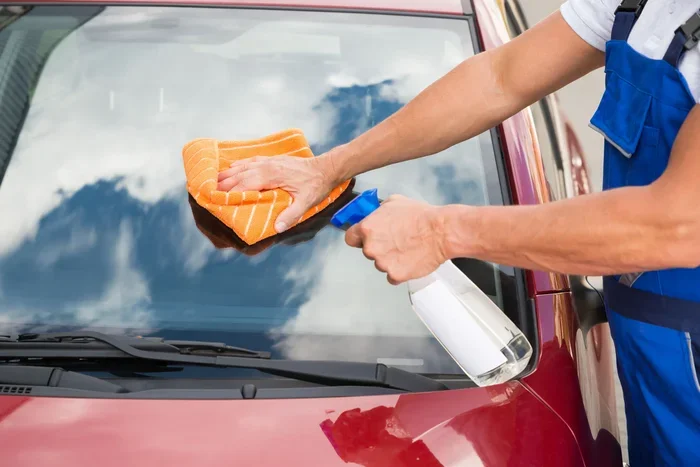
Spray your chosen glass cleaner onto the glass or onto your microfiber cloth. Spraying directly onto the glass can oversaturate the surface, and the cleaner may drip onto your dashboard or trim.
Work on one section at a time. Clean a four-inch-by-four-inch area, then wipe it immediately. This prevents the cleaner from drying on the glass.
Step 4: Wipe with a Microfiber Cloth
Use a clean, dry microfiber cloth to wipe the glass in a circular motion. Start from the top and work your way down. This gravity-assisted method prevents drips and ensures even coverage.
For the exterior glass, follow up with a squeegee to remove any remaining moisture. For the interior glass, a dry microfiber cloth is usually enough to achieve a streak-free finish.
Step 5: Buff and Inspect
After wiping, inspect the glass from different angles. Walk around the car and look at the glass in sunlight. Any remaining streaks or spots will be visible. Use a dry section of your microfiber cloth to buff away any final residue.
Pro tip: Hold a piece of black fabric behind the glass while inspecting. This makes it much easier to spot streaks that you might otherwise miss.
Step 6: Treat the Glass (Optional but Recommended)
Once your clean car windows are streak-free, consider applying a glass treatment. These products create a hydrophobic layer that repels water, bugs, and dirt.
- Rain-repellent coatings: These make water bead up and roll off your windshield, improving visibility in wet conditions.
- Ceramic glass coatings: These provide long-lasting protection and make future cleaning much easier.
- Anti-fog treatments: Great for the interior of your windshield during cold or humid weather.
Common Mistakes That Leave Streaks and Residue
Using the Wrong Cloth
This is the number one mistake people make. Paper towels and regular cloths shred fibers that stick to wet glass. They also scratch the surface over time. Always use a high-quality microfiber cloth designed for glass cleaning.
Skipping the Interior Glass
Many people focus only on the outside of their windows. But the interior glass collects just as much grime. Off-gassing from your dashboard, smoke residue, and fingerprints all build up on the inside surface. Ignoring it means your clean exterior glass gets re-soiled almost immediately.
Over-Spraying the Cleaner
More cleaner does not mean better results. Excess product leaves a film that attracts dust and creates streaks. Spray a light, even coat and wipe it off promptly.
Cleaning in Bad Conditions
Direct sunlight, high humidity, and dusty environments all work against you. The cleaner dries too fast in the sun, moisture slows evaporation in humidity, and dust particles scratch the glass in windy conditions. Always choose a calm, shaded environment for the best results.
Ignoring Hard Water Spots
If you live in an area with hard water, your glass likely has mineral deposits. These white spots are stubborn and cannot be removed with a simple wipe. You need an acidic cleaner like vinegar or a dedicated glass polish to dissolve the minerals.
Pro Tips for Long-Lasting Streak-Free Glass
Clean Your Glass Every Two Weeks
A regular cleaning schedule prevents buildup. If you clean your car glass every two weeks, you will spend less time on each session and get better results. Heavy buildup requires more effort and stronger products.
Use Two Different Cloths
Keep one cloth for applying cleaner and another for buffing. This prevents you from re-depositing dirt onto the glass. Many professional detailers use a three-cloth system: one for washing, one for rinsing, and one for drying.
Reach the Edges
The edges of your windshield and side windows collect the most dirt and grime. Use a small detailing brush or a folded microfiber cloth to clean these hard-to-reach areas. Neglecting the edges leads to visible buildup that ruins the overall look.
Protect Your Tinted Windows
If your car has tinted windows, be extra careful with the products you use. Avoid ammonia-based cleaners, as they can degrade the tint over time. Stick to ammonia-free glass cleaners and always test a small, hidden area first.
Keep a Glass Cleaning Kit in Your Trunk
Invest in a small portable kit that includes a spray bottle of glass cleaner, two microfiber cloths, and a mini squeegee. This kit lets you handle unexpected messes on the road — bird droppings, bug splatter, or rain spots — within minutes.
How Often Should You Clean Your Car Glass?
The frequency depends on your driving conditions and environment. If you drive daily on dusty roads, you may need to clean your auto glass every week. If you mostly drive on clean highways and park in a garage, every two to three weeks is sufficient.
Here is a simple guide to help you decide:
- Weekly: Quick wipe-down of exterior glass with a waterless cleaner. Great for maintaining a streak-free finish between deep cleans.
- Every two weeks: Full interior and exterior car glass cleaning session with proper cleaner and microfiber cloths.
- Monthly: Deep clean including glass treatment or coating application for long-lasting protection.
- After storms or road trips: Always clean your glass after driving through rain, dust storms, or bug-heavy highways.
Consistency is the key to keeping your clean car glass looking great. A little effort on a regular basis saves you from tough cleaning jobs later.
Final Thoughts on Car Glass Cleaning
Car glass cleaning is one of the simplest yet most rewarding parts of vehicle maintenance. Clean windows improve your safety, enhance your driving experience, and protect the value of your car. With the right products, the right tools, and a consistent routine, you can enjoy streak-free glass all year round.
Start with the basics: ammonia-free cleaner, quality microfiber cloths, and a shaded workspace. Avoid the common mistakes that cause streaks and residue. Add a glass treatment for extra protection and longer-lasting results. These car glass cleaning tips are easy to follow, budget-friendly, and genuinely effective.
Your windshield is your window to the road. Keep it clean, keep it clear, and drive with confidence. The next time you step back and admire your vehicle, the first thing you should notice is the sparkle of your perfectly clean car windows.
Frequently Asked Questions
What is the best cleaner for car glass?
Ammonia-free commercial sprays work best for most vehicles. If you prefer a budget option, a mix of white vinegar and distilled water delivers excellent results without harsh chemicals.
Can I use household glass cleaner on my car?
It depends on the product. Many household cleaners contain ammonia, which can damage tinted windows and leave streaks on auto glass. Always check the label and choose an ammonia-free formula designed for automotive use.
How do I remove hard water spots from car glass?
Soak the affected area with a vinegar and water solution for five minutes. Gently scrub with a soft microfiber cloth or a detailing brush. Rinse thoroughly and dry with a clean cloth for a streak-free result.
Is it better to clean car glass in the sun or shade?
Always clean your car glass in the shade. Sunlight causes the cleaner to evaporate too quickly, leaving streaks and residue. A cool, shaded spot gives you full control over the cleaning process.
How often should I apply a rain-repellent treatment?
Most rain-repellent treatments last between two and six months, depending on how often you drive and wash your car. Reapply when you notice water no longer beading properly on your windshield.
What kind of cloth should I use for car glass cleaning?
Microfiber cloths are the best choice for cleaning car glass. They are soft, lint-free, and highly effective at trapping dirt. Avoid paper towels and old rags, as they can leave fibers and scratch the glass surface.