70 Percent Window Tint The Complete Guide For Beginners
70 percent window tint is a light shade that blocks about 30% of light while keeping your car looking sleek. It offers excellent UV protection, reduces glare, and keeps your interior cooler without darkening your view. This guide covers everything beginners need to know, from legal rules to installation tips.
Key Takeaways
- 70 Percent Window Tint is a light, nearly clear tint that blocks 30% of incoming light
- UV Protection is a major benefit, shielding you and your car interior from harmful rays
- Glare Reduction makes driving safer, especially during bright sunny days
- Tint Laws Vary By State, so always check local regulations before tinting
- Professional Installation ensures a bubble-free, long-lasting finish
- 70% Tint Is Legal Almost Everywhere, making it ideal for beginners
- Interior Protection helps prevent fading of your dashboard and seats
📑 Table of Contents
What Is 70 Percent Window Tint?
If you have ever walked past a car and noticed its windows look slightly darker than usual, you have seen window tint in action. But not all tints are the same. The percentage tells you how much light the film lets through. A 70 percent window tint allows 70% of visible light to pass through the glass. That means it blocks about 30% of light. It is one of the lightest tints available.
People often ask, “What does 70 percent tint look like?” The answer is simple. It looks almost clear. You can still see through the windows easily. But it does add a subtle hint of darkness. Think of it like wearing sunglasses that are very light. You still see everything clearly. But the brightness feels a bit softer.
Understanding Window Tint Percentage
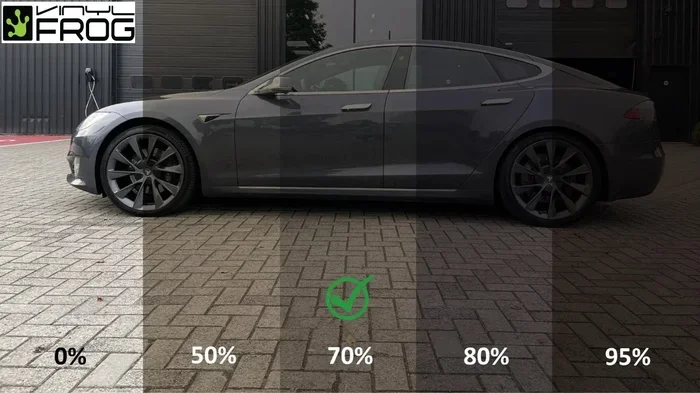
The window tint percentage refers to visible light transmission, also called VLT. VLT is the amount of light that passes through your car windows. A higher percentage means more light gets in. A lower percentage means less light gets in. Here is a quick breakdown:
- 90% VLT – Almost no tint at all
- 70% VLT – Very light tint, barely noticeable
- 50% VLT – Medium tint, good balance
- 35% VLT – Darker tint, more privacy
- 20% VLT – Very dark, often called “limo tint”
So 70 percent window tint sits at the lighter end of the spectrum. It is a great starting point for beginners who want to try tinting for the first time.
How Visible Light Transmission Works
When sunlight hits your car windows, it carries energy. Some of that energy is visible light. Some is infrared heat. Some is ultraviolet (UV) radiation. A good window film blocks harmful UV and infrared rays. It also reduces visible light to a comfortable level. A 70 percent tint film is designed to let most visible light through while still filtering out a significant amount of heat and UV rays.
This is why many car owners choose 70 percent window tint for their front side windows. It keeps the car looking stock and legal. At the same time, it provides real protection from the sun.
What Does 70 Percent Tint Look Like?
If you are wondering whether 70 percent window tint will change the look of your car, the answer is no. Not dramatically. The windows will look slightly darker than stock. But from the outside, they still appear nearly clear. From the inside, you will notice a small reduction in glare. The overall appearance is clean and subtle.
Quick Tip: Hold a piece of white paper behind the tinted window. You will see a very faint yellow or blue tint. That is normal. It is the dye or metal in the film. But it is barely visible to anyone passing by.
Benefits Of 70 Percent Window Tint
You might wonder why anyone would tint their windows to only 70%. The answer is that the benefits are real and meaningful. Even a light shade like this can make a big difference in comfort and protection.
UV Protection For You And Your Car
One of the biggest reasons people tint their windows is UV protection. The sun emits ultraviolet rays that can harm your skin. They can also damage your car interior. Over time, UV exposure fades your dashboard. It cracks your leather seats. It makes your trim look old and worn.
A 70 percent window tint blocks up to 99% of UV rays. That is impressive for such a light shade. You get serious protection without changing the look of your car. This makes it a smart choice for daily drivers and family cars alike.
Heat Rejection And Comfort
Have you ever sat in a hot car and felt like the dashboard was melting? That is solar heat doing its damage. A 70 percent tint helps reject a good amount of heat. It keeps your cabin cooler. That means less reliance on your air conditioning.
Less AC use means better fuel economy. It also means a more comfortable ride from the moment you start the car. Many drivers notice the difference right away.
Expert Insight: “Even a 70% tint can reject 30-40% of solar heat depending on the film type. Ceramic and carbon films perform best in heat rejection.” – Auto Tinting Industry Expert
Glare Reduction For Safer Driving
Glare from the sun or headlights at night can be dangerous. It strains your eyes. It reduces your ability to see the road clearly. 70 percent window tint reduces glare significantly. You will notice less eye fatigue on long drives. This is especially helpful during sunrise and sunset when the sun is low.
Privacy Without Going Too Dark
While 70 percent window tint is not a privacy tint, it does add a layer of subtlety. People outside cannot see into your car as easily. Your belongings on the seat are slightly less visible. This is a nice bonus without going to a dark shade that might attract unwanted attention.
Interior Protection From Sun Damage
Your car interior is an investment. The leather, the fabric, the plastic trim. All of it suffers from sun exposure over time. A 70 percent tint helps preserve your interior. It slows down fading and cracking. Your car will look newer for longer if you protect it with a good window film.
Quick Tips:
- Combine 70 percent window tint with a sunshade for maximum heat rejection
- Choose a ceramic or carbon film for the best UV and heat blocking
- Tint all windows evenly for a consistent look and protection
How 70 Percent Tint Compares To Other Shades
Not all tints are created equal. Different percentages serve different purposes. Let us compare 70 percent window tint to some other popular shades so you can see where it fits.
| Tint Shade | VLT Percentage | Light Blocking | Privacy Level | Legal Status | Best For |
|---|---|---|---|---|---|
| 70 Percent Tint | 70% | 30% | Low | Legal in most states | UV protection, glare reduction, beginners |
| 50 Percent Tint | 50% | 50% | Medium | Legal in most states | Balanced heat rejection and visibility |
| 35 Percent Tint | 35% | 65% | High | Legal for most windows in many states | Style, privacy, moderate heat rejection |
| 20 Percent Tint | 20% | 80% | Very High | Restricted in many states | Maximum privacy, sporty look |
| 5 Percent Tint | 5% | 95% | Maximum | Illegal for most vehicles | Limo tint, maximum darkness |
As you can see, 70 percent window tint is the lightest option on this list. It is the closest to factory tint. That makes it the safest choice for beginners. You get real benefits without crossing into legal gray areas.
50 Percent Tint vs 70 Percent Tint
A 50 percent tint blocks twice as much light as a 70% tint. It provides noticeably more heat rejection. But it also darkens the view more. If you want a balance between protection and clarity, 50% is a popular middle ground. But if you want the subtlest possible change, 70 percent window tint wins.
35 Percent Tint vs 70 Percent Tint
A 35 percent tint is a popular shade for style and privacy. It darkens the windows noticeably. It gives your car a sleek, finished look. But it is darker than what many beginners expect. If you are unsure about how dark you want your tint, start with 70 percent window tint. You can always go darker later.
20 Percent Tint vs 70 Percent Tint
A 20 percent tint is very dark. It is often called “limo tint.” It provides excellent privacy and heat rejection. But it can be too dark for daily driving in many areas. It may also violate local tint laws. 70 percent window tint is a much safer and more versatile choice for most drivers.
Common Mistakes:
- Choosing a dark tint without checking local laws first
- Assuming all tint percentages block the same amount of heat
- Forgetting that darker tints can reduce visibility at night
- Skipping the quality of the film to save money
Legal Considerations And Tint Laws
Before you get any tint on your car, you need to understand the tinting regulations in your area. Tint laws vary widely from state to state. Even from city to city. Ignorance of the law is not an excuse, and a ticket for illegal tint can be expensive.
Why Tint Laws Matter
Governments set tint laws for safety reasons. Darker tints reduce visibility. This can make it harder for drivers to see pedestrians, cyclists, and other cars. It also makes it harder for police officers to see inside your vehicle during a traffic stop. That is why most states regulate how dark your aftermarket tint can be.
Common Restrictions By State
Most states allow a 70 percent window tint on all windows. This is because 70% is so close to clear glass. Some states have stricter rules. For example, certain states only allow a specific VLT percentage on the front side windows. Others restrict tint on the windshield entirely.
Here are some general guidelines to keep in mind:
- Front side windows: Most states require at least 70% VLT
- Rear side windows: Often darker tint is allowed
- Rear windshield: Usually allowed to be darker if dual side mirrors are present
- Windshield: Often only a thin strip at the top is allowed
Always check your specific state and local tint laws before getting your windows tinted. Laws change, and what was legal last year may not be legal today.
Medical Exemptions And Special Permits
Some states offer medical exemptions for darker tints. If you or a family member has a medical condition that makes you sensitive to sunlight, you may qualify for an exception. You will need a doctor’s letter and a special permit from your state’s DMV. But for most people, 70 percent window tint is legal everywhere. That is one of its biggest advantages.
Installation Tips For 70 Percent Window Tint
Installing 70 percent window tint is not overly complicated. But it does require patience and attention to detail. A bad installation leads to bubbles, peeling, and an ugly finish. Here is what you need to know.
DIY vs Professional Installation
You have two options: do it yourself or hire a professional. DIY installation can save you money. There are many kits available for under $50. But tinting is a skill. It takes practice to get a bubble-free finish. If you have never done it before, your first attempt might not turn out well.
Professional installation costs more. But it guarantees a clean result. A pro has the right tools, the right environment, and the experience to do it right the first time. For most people, especially beginners, professional installation is the better choice.
Expert Insight: “A professional installer can complete a full car tint in 1-2 hours. The film is pre-cut to your vehicle’s specifications. This saves time and ensures a perfect fit every time.” – Professional Tint Installer
Step By Step Installation Process
If you decide to go the DIY route, here is a basic overview of the process:
- Clean your windows thoroughly. Use a glass cleaner and a lint-free cloth. Any dirt or dust will show under the film.
- Measure your windows. Cut the film slightly larger than the window. You can trim it down after application.
- Spray the window with soapy water. This creates a slippery surface that lets you position the film correctly.
- Apply the film. Peel off the backing and lay the film on the wet glass. Use a squeegee to push out water and air bubbles.
- Trim the edges. Use a sharp utility knife to cut off excess film along the window edges.
- Let it cure. Avoid rolling down your windows for at least 3-5 days. The film needs time to bond properly.
Common Mistakes To Avoid
Even experienced people make mistakes when tinting windows. Here are some common errors to watch out for:
- Applying tint in direct sunlight. The heat causes the film to dry too fast. You will not be able to adjust it.
- Not cleaning the glass enough. Dust trapped under the film is almost impossible to remove after application.
- Using too much water. Excess water pushes the film around and creates wrinkles.
- Skipping the squeegee. Air bubbles are nearly impossible to remove without proper squeegee technique.
- Rolling windows down too soon. This can peel the edges of the film before it has fully cured.
Quick Tips:
- Work in a dusty-free, climate-controlled environment if possible
- Use a heat gun to help the film conform to curved window edges
- Buy a premium window film with a good warranty for long-lasting results
- Have a second person help you with large windows like the windshield
Is 70 Percent Window Tint Right For You?
After reading through all of this, you might be wondering if 70 percent window tint is the right choice for your car. The answer depends on what you want out of a tint. Let us break it down.
Who Should Choose 70 Percent Tint
70 percent window tint is perfect for you if:
- You are a first-time tint buyer and want a subtle change
- You live in a state with strict tint laws
- You want UV protection and heat rejection without darkening your view
- You drive frequently and want less eye strain from glare
- You want to preserve the original look of your car
- You are tinting a leased or financed vehicle where modifications are restricted
Who Might Want A Darker Shade
On the other hand, 70 percent window tint might not be enough if:
- You want maximum privacy for your car
- You live in an extremely hot climate and need maximum heat rejection
- You want a sporty, aggressive look for your car
- You are tinting the rear windows and local laws allow darker shades
In these cases, you might consider a 35 percent tint or even a 20 percent tint for the rear windows while keeping 70 percent window tint on the front. This is a popular combo that keeps you legal up front while getting the style and privacy you want in the back.
Final Thoughts On Choosing Your Tint
Choosing the right tint shade is all about balancing your needs. Do you want protection? Style? Privacy? Heat rejection? 70 percent window tint checks a lot of boxes. It is legal, subtle, and effective. It is the best starting point for anyone new to car window tinting.
Take your time. Research your local laws. Choose a quality film. And invest in good installation. Whether you do it yourself or go professional, the right 70 percent tint will serve you well for years to come.
Your car, your comfort, your protection. 70 percent window tint is a simple upgrade that delivers real results. Start your tinting journey today and enjoy the difference on your next drive.
Frequently Asked Questions
Is 70 percent window tint legal everywhere?
In most states and countries, 70 percent window tint is legal on all windows. Because it is so close to clear glass, it rarely violates local tint laws. However, you should always check your specific state regulations before tinting. Laws can vary even within the same state by city or county.
How much does 70 percent window tint cost?
The cost of 70 percent window tint varies depending on the film quality and whether you go DIY or professional. DIY kits typically cost between $25 and $80 for a full set. Professional installation usually ranges from $150 to $300 for a complete car. Premium ceramic films cost more but offer better performance and durability.
Can you see through 70 percent tint at night?
Yes, 70 percent window tint is very easy to see through at night. Because it only blocks 30% of visible light, it maintains excellent visibility in low-light conditions. This makes it one of the safest tint options for nighttime driving. You will not experience the reduced visibility that comes with darker tints.
What type of film is best for 70 percent tint?
Ceramic and carbon films are the best choices for 70 percent window tint. They offer superior UV protection and heat rejection without interfering with electronic signals. Dyed films are cheaper but less effective at blocking heat. They also tend to fade faster over time. Choose a film that matches your budget and performance needs.
How long does 70 percent window tint last?
A quality 70 percent window tint can last 5 to 10 years with proper care. Ceramic and carbon films tend to last longer than dyed films. The lifespan depends on exposure to sunlight, the quality of installation, and how well you maintain the tint. Avoid using abrasive cleaners on tinted windows to extend its life.
Does 70 percent tint block heat?
Yes, 70 percent window tint blocks a significant amount of heat. Depending on the film type, it can reject 30-50% of solar heat. Ceramic films perform the best in heat rejection. Even though 70% is a light shade, it still provides meaningful comfort improvements compared to untinted windows.
=== CONCLUSION ===
70 percent window tint is one of the best choices for beginners and experienced car owners alike. It offers a perfect balance of protection, style, and legality. Whether you want to shield yourself from UV rays, reduce glare, or keep your car interior cool, this light shade delivers real results.
It is legal in most places. It is nearly invisible. And it provides genuine benefits that you will notice every time you get behind the wheel. Start with 70 percent window tint and enjoy a more comfortable, protected, and stylish ride today.