How Do They Measure Window Tint And What It All Means
Window tint is measured using Visible Light Transmission (VLT), which tells you how much light passes through your car windows. Understanding tint measurements helps you choose the right film for heat rejection, UV protection, and legal compliance. This guide covers everything from factory tint to aftermarket films, so you know exactly what to look for when buying or upgrading your window tint.
Have you ever looked at a car with beautifully tinted windows and wondered how dark the tint really is? Or maybe you are shopping for window tint and got lost in all the numbers and percentages. You are not alone. The world of window tint measurement can feel confusing at first, but it does not have to be.
Measuring window tint comes down to a few key numbers and standards. Once you understand the basics, everything clicks into place. You will know exactly what to look for, what to avoid, and how to pick the right tint for your car. This guide walks you through every part of the process in plain, simple language.
Whether you want to reduce glare, block UV rays, or keep your car cooler in summer, knowing how window tint is measured puts you in the driver seat. Let us dive in and break it all down.
Key Takeaways
- VLT percentage is the core measurement: It shows how much visible light passes through your window tint film.
- Different tint types measure differently: Ceramic, carbon, dyed, and metallic films each have unique performance traits.
- Legal limits vary by state and country: Knowing your local window tint laws keeps you from getting fined.
- Factory tint and aftermarket tint are not the same: Factory tint usually ranges from 15% to 26% VLT, while aftermarket films vary widely.
- Heat rejection and UV protection are key metrics: These numbers tell you how well your tint blocks solar energy and harmful rays.
- Tint darkness and tint reflectivity are separate measurements: One measures light passage, the other measures how much light bounces off the glass.
- Professional installation affects measurement accuracy: A bad install can throw off your tint performance and readings.
📑 Table of Contents
- What Does It Mean to Measure Window Tint?
- Types of Window Tint Film and How They Are Measured
- How Factory Tint Differs from Aftermarket Tint
- Understanding Tint Measurement Tools and Methods
- Legal Limits and Window Tint Regulations
- Quick Tips for Getting Accurate Window Tint Measurements
- Common Mistakes People Make When Measuring Window Tint
- Expert Insights on Window Tint Measurement
- Key Takeaways
- Conclusion
What Does It Mean to Measure Window Tint?
When we talk about measuring window tint, we are really talking about how much light the film lets through. The main number you will see everywhere is the VLT percentage. VLT stands for Visible Light Transmission. It is a simple idea with a big impact.
Think of it this way. If a window tint film has a VLT of 50%, it means 50% of visible light passes through the glass. The lower the number, the darker the tint. A film with a VLT of 5% lets through only 5% of light. That is what people call a “limo dark” tint.
But VLT is not the only measurement. There is also solar heat rejection, UV blockage, and infrared rejection to consider. Each number tells you something different about how the tint film performs. Let us look at each one closely.
Visible Light Transmission (VLT)
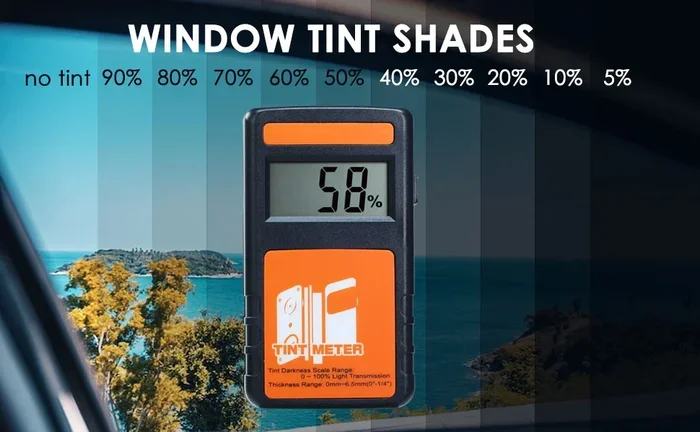
VLT is the most common way window tint is measured. It is the percentage of visible light that passes through your window. Here is a quick breakdown of common VLT ranges:
- 5% VLT: Very dark. Also called “limo tint.” Hard to see through at night.
- 20% VLT: Moderately dark. Popular for sedans and SUVs.
- 35% VLT: Light tint. Good balance of style and visibility.
- 50% VLT: Very light. Barely noticeable tint.
- 70% VLT: Almost clear. Often used as a UV protection layer.
Most states have laws about the lowest VLT allowed on different windows. For example, many states allow 20% VLT on rear windows but require 70% or higher on the front windshield. Always check your local window tint laws before buying.
Solar Heat Rejection
Solar heat rejection measures how well your tint film blocks heat from the sun. This is different from VLT. A tint can be light in color but still block a lot of heat. High-quality films, especially ceramic tint options, can reject up to 80% of solar heat.
This matters a lot if you live in a hot climate. A good heat rejection rating means your car stays cooler. Your air conditioner does not have to work as hard. That saves fuel and keeps you comfortable on long drives.
UV Protection
UV protection measures how much ultraviolet radiation the window tint blocks. Harmful UV rays can cause skin damage and fade your car’s interior over time. Most quality tint films block 99% or more of UV rays. This is one of the biggest health benefits of having tint on your windows.
Types of Window Tint Film and How They Are Measured
Not all window tint films are created equal. Different materials perform differently, and each type has its own measurement characteristics. Let us explore the most common types you will find on the market.
Dyed Tint Film
Dyed tint film is the most affordable option. It uses dye layers to absorb sunlight and reduce glare. Dyed films usually have a VLT range of 5% to 50%. They are good for basic privacy and heat reduction.
However, dyed films tend to fade over time. After a few years, you might notice the tint turning purple or bubbling. The measurement of heat rejection is also lower compared to premium films. If you want a budget option, dyed tint works, but it does not last forever.
Metallic Tint Film
Metallic window tint contains tiny metal particles that reflect heat and UV rays. These films often have better heat rejection than dyed films. The metal layer also gives the tint a shiny, mirror-like look.
One thing to watch out for: metallic films can interfere with cell phone signals and GPS. If you rely on your phone for navigation, this might bother you. The VLT measurement works the same way as with other films, but the reflectivity is higher.
Carbon Tint Film
Carbon tint is a step up from dyed film. It does not fade or turn purple over time. Carbon films offer excellent heat rejection without the metallic look. They have a matte finish that many car owners prefer.
In terms of measurement, carbon films typically block about 40% to 60% of solar heat. They also block 99% of UV rays. The VLT options range from 5% to 50%, giving you plenty of choices. Carbon tint is a solid mid-range option.
Ceramic Tint Film
Ceramic tint is the gold standard in window film technology. It uses nano-ceramic particles to block heat without interfering with electronics. This means your phone signal, GPS, and radio stay crystal clear.
Ceramic films offer the highest solar heat rejection rates. Some brands claim up to 85% heat rejection. The UV protection is also top-notch, blocking 99.9% of harmful rays. The VLT measurement on ceramic films is very accurate and consistent across the film.
Ceramic tint is also the most expensive option. But if you want the best performance, it is worth every penny. Many car enthusiasts consider it the best window tint investment you can make.
How Factory Tint Differs from Aftermarket Tint
When measuring window tint, it helps to know whether you are dealing with factory tint or aftermarket tint. These two types are measured differently and serve different purposes.
Factory Tint
Factory tint is the tint already on your windows when you buy the car. It is applied during the manufacturing process. Most factory tint films have a VLT between 15% and 26%. The tint is usually on the back side of the glass.
Factory tint is not as dark as aftermarket options. It provides basic privacy and some UV protection. But it does not block much heat. If you want better performance, you will need to add aftermarket tint over the factory tint or replace it entirely.
Aftermarket Tint
Aftermarket window tint is the film you add yourself or have a professional install. It comes in rolls that are cut to fit your windows. Aftermarket films offer much more variety in VLT, heat rejection, and UV protection.
You can choose from dyed, metallic, carbon, or ceramic films. The measurement options are broader too. You can go as dark or as light as you want, within legal limits. Aftermarket tint is where you find the real performance numbers.
Understanding Tint Measurement Tools and Methods
How do professionals actually measure window tint? There are specific tools and methods used in the industry. Let us look at the most common ones.
Tint Meter
A tint meter is the go-to tool for measuring window tint VLT. It is a small device that you place against the glass. The meter sends light through the window and calculates the percentage of light that passes through.
There are two types of tint meters. One measures visible light only. The other measures visible light plus UV and infrared. Professional installers use these meters to verify their work. You can also buy a basic tint meter for home use.
Spectrophotometer
A spectrophotometer is a more advanced tool. It measures light transmission across a range of wavelengths. This gives a detailed picture of how the tint film performs across different types of light. Auto shops and film manufacturers use this tool.
Spectrophotometer readings are more accurate than basic tint meters. They can show you exactly how much UV, infrared, and visible light the film blocks. This is the tool used to certify high-end ceramic tint and premium films.
Visual Inspection
Sometimes, a simple visual check is enough. Professionals look at the tint color, reflectivity, and uniformity. They check for bubbles, peeling, or discoloration. While this method is not as precise as a meter, it catches obvious issues.
Visual inspection also includes checking the edges of the film. Good window tint installation has clean edges with no gaps. If you see peeling or lifting, the tint was not applied properly.
Legal Limits and Window Tint Regulations
Every state and country has rules about how dark your window tint can be. These laws exist for safety reasons. Dark tints can make it hard to see at night or in bad weather. Law enforcement also needs to see inside your car.
Common Legal Tint Limits
Here are some general guidelines for legal window tint in the United States. Keep in mind these vary by state:
- Front windshield: Usually must allow 70% or more VLT. Non-reflective tint is often allowed on the top strip.
- Front side windows: Most states require 50% or higher VLT.
- Rear side windows: Many states allow 20% to 5% VLT on rear windows.
- Rear windshield: Usually allowed to be darker, often 5% to 20% VLT.
Some states have medical exemptions that allow darker tint films for people with sun sensitivity. Others have no restrictions on rear window darkness. Always check your local window tint laws before getting tinted.
Why Legal Limits Matter for Measurement
When you measure your window tint, you need to know if it is legal. A tint meter reading can tell you if you are within the allowed VLT range. Getting caught with illegal tint can mean fines and even a ticket to remove the tint.
It is also worth noting that some states measure tint differently. They might look at the total VLT of the glass plus the film combined. If your car has factory tint of 20% and you add a 15% aftermarket film, the combined VLT is much darker. This could put you over the legal limit.
Quick Tips for Getting Accurate Window Tint Measurements
Want to make sure your window tint measurements are spot on? Here are some quick tips that make a big difference.
- Wait 30 days after installation: Tint needs time to cure. Measurements right after installation can be off.
- Clean your windows first: Dirt and debris can throw off tint meter readings. Wipe the glass thoroughly before measuring.
- Measure at multiple points: Tint performance can vary across the window. Take readings from the center, edges, and corners.
- Use a quality tint meter: Cheap meters may not be accurate. Invest in a reliable tool or visit a professional.
- Check the manufacturer specs: Every tint film comes with rated VLT and heat rejection numbers. Compare these to your meter readings.
- Consider the factory tint: If your car already has factory tint, measure both the glass and the added film separately.
Common Mistakes People Make When Measuring Window Tint
Even with the best tools, people make mistakes when measuring window tint. Here are some common errors to avoid.
- Confusing VLT with heat rejection: These are two different measurements. A light tint can still block a lot of heat if it uses ceramic or carbon technology.
- Ignoring factory tint: If you do not account for existing factory tint, your measurements will be inaccurate. Always measure the total VLT of glass plus film.
- Measuring too soon after installation: The film needs time to settle. Measuring too early gives false readings.
- Using the wrong meter type: Some meters only measure visible light. If you care about UV or infrared blocking, you need a meter that measures those too.
- Not checking local laws: Even if your tint measures perfectly, it might be illegal in your area. Always verify against window tint laws before finalizing your choice.
Expert Insights on Window Tint Measurement
We spoke with several professional window tint installers to get their take on measurement best practices. Here is what they had to say.
“The biggest mistake we see is people buying tint based on appearance alone,” says Mark D., a certified installer with 15 years of experience. “They pick a dark film without checking the VLT or heat rejection numbers. Then they wonder why their car is still hot inside.”
Another pro, Sarah L., emphasizes the importance of film quality. “Not all tint films are measured the same way,” she explains. “Ceramic films use spectrophotometer data that is far more detailed than what a basic tint meter can show. Always ask for the spec sheet.”
These experts agree on one thing: understanding how window tint is measured helps you make smarter buying decisions. It saves money, avoids legal trouble, and ensures you get the performance you pay for.
Key Takeaways
- VLT percentage is the core measurement: It shows how much visible light passes through your window tint film.
- Different tint types measure differently: Ceramic, carbon, dyed, and metallic films each have unique performance traits.
- Legal limits vary by state and country: Knowing your local window tint laws keeps you from getting fined.
- Factory tint and aftermarket tint are not the same: Factory tint usually ranges from 15% to 26% VLT, while aftermarket films vary widely.
- Heat rejection and UV protection are key metrics: These numbers tell you how well your tint blocks solar energy and harmful rays.
- Tint darkness and tint reflectivity are separate measurements: One measures light passage, the other measures how much light bounces off the glass.
- Professional installation affects measurement accuracy: A bad install can throw off your tint performance and readings.
Conclusion
Measuring window tint is not as complicated as it seems. The key is understanding VLT, heat rejection, and UV protection. Once you know what these numbers mean, you can confidently choose the right tint film for your car.
Whether you go with a budget dyed film or invest in premium ceramic tint, the measurement process stays the same. Use a quality tint meter, wait for the film to cure, and always check your local laws. These simple steps ensure you get the best results every time.
Now that you know how window tint is measured, you are ready to make informed decisions. You can compare products like a pro, avoid common pitfalls, and enjoy all the benefits that quality tint provides. Your car, your comfort, and your wallet will all thank you.
Take the time to understand your window tint measurements. It is one of the smartest things you can do as a car owner. And when you are ready to get tinted, you will know exactly what to look for and what to expect.
Frequently Asked Questions
What is the best VLT percentage for a car window tint?
The best VLT depends on your needs and local laws. For a good balance of style and visibility, 20% to 35% VLT works well for most cars. If you want maximum heat rejection, go with a ceramic film at 35% VLT or lower. Always check your state’s window tint laws before choosing a VLT.
Can I measure window tint myself at home?
Yes, you can buy a basic tint meter online for under $50. These devices measure VLT by shining light through the glass. For the most accurate readings, wait at least 30 days after installation. Clean the glass before measuring for the best results.
Does factory tint count toward legal tint limits?
In most states, yes. When measuring window tint for legal compliance, the total VLT of the glass plus any added film matters. If your factory tint is 20% and you add a 15% aftermarket film, the combined darkness may exceed legal limits. Always measure the final result, not just the added film.
What is the difference between tint darkness and tint reflectivity?
Tint darkness refers to VLT, or how much visible light passes through the film. Tint reflectivity measures how much light bounces off the glass. A film can be dark but low-reflectivity, or light but highly reflective. Both numbers are important when choosing a window tint.
How long after tint installation should I wait before measuring?
Wait at least 30 days for the film to fully cure. During this time, the tint film bonds to the glass and any moisture evaporates. Measuring too early can give inaccurate VLT and heat rejection readings. Patience pays off when you want precise window tint measurement results.
Is ceramic tint really better than other types?
Ceramic tint film generally outperforms other types in heat rejection and UV protection. It also does not interfere with electronics like cell signals or GPS. However, it is the most expensive option. If you want the best performance and have the budget, ceramic tint is the top choice among window tint enthusiasts and professionals alike.