Which Mirror Is Used in Car for Better Visibility and Safety
Knowing which mirror is used in car is essential for every driver who wants to stay safe on the road. Car mirrors come in different types, each serving a unique purpose for better visibility and driving safety. This guide breaks down every mirror type, how they work, and how to adjust them correctly.
Every time you get behind the wheel, your mirrors are your best friends. They give you a clear view of what’s happening around your car. Without them, driving would be dangerous and full of guesswork. So, which mirror is used in car setups, and why does each one matter?
Car mirrors are not just simple pieces of glass. They are carefully designed safety tools that help you see other vehicles, pedestrians, and obstacles. Whether you drive a sedan, SUV, or truck, your car has at least two or three mirrors. Each one serves a specific purpose. Understanding how they work can make you a much better and safer driver.
In this guide, we will walk you through every type of mirror found in modern vehicles. We will explain how each mirror works, why it matters, and how to get the most out of it. By the end, you will know exactly how to use your driving mirrors for maximum visibility while driving.
Key Takeaways
- Side mirrors (wing mirrors): These are the exterior mirrors that give you a view of the lanes beside and behind your car.
- Rearview mirror: The interior mirror lets you see directly behind your vehicle through the back window.
- Convex mirrors: Most side mirrors use a convex shape to provide a wider field of view, though they make objects appear farther away.
- Proper adjustment matters: Correctly adjusted mirrors reduce blind spots and make lane changes much safer.
- Blind spot mirrors: Small add-on mirrors can further reduce dangerous blind zones on your vehicle.
- Upgraded mirror options: Heated mirrors, auto-dimming mirrors, and blind spot monitoring systems add extra layers of safety.
- Regular maintenance: Keeping your mirrors clean and damage-free ensures clear visibility at all times.
📑 Table of Contents
- Understanding Car Mirrors and Why They Matter
- Types of Mirrors Used in Cars
- Convex vs Flat Mirrors: What’s the Difference
- How to Adjust Your Car Mirrors for Best Visibility
- Common Mirror Problems and How to Fix Them
- Upgrading Your Car Mirrors for Enhanced Safety
- Key Maintenance Tips for Your Car Mirrors
- Conclusion
Understanding Car Mirrors and Why They Matter
The Role of Mirrors in Safe Driving
Driving is all about awareness. You need to know what is happening in front of you, behind you, and on both sides. Your vehicle mirrors give you that awareness without forcing you to turn your head and take your eyes off the road.
Studies show that improper mirror use contributes to many accidents every year. Drivers who don’t adjust their mirrors correctly have larger blind spots. Blind spots are areas around your car that you cannot see directly or through your mirrors. Reducing these blind spots is one of the easiest ways to stay safe.
Your car’s mirror system works as a team. The side mirrors and the rearview mirror together cover the areas around your vehicle. They help you check traffic before changing lanes, merging onto highways, and parking. When all mirrors are properly adjusted, you get a much wider view of your surroundings.
It is also worth noting that car mirrors are legally required in most countries. Your vehicle must have at least two exterior mirrors and one interior mirror to pass safety inspections. This requirement exists because lawmakers understand how critical mirrors are for road safety.
Let’s now look at each mirror type in detail. Understanding the purpose of each one will help you appreciate why your car has the setup it does.
Types of Mirrors Used in Cars
Most cars use three main types of mirrors. Each one is placed in a specific location for a specific reason. Let’s break them down one by one.
Side Mirrors (Wing Mirrors)
Side mirrors, also called wing mirrors, are the exterior mirrors mounted on both sides of your car. They are typically attached to the doors or the front fenders. These mirrors give you a view of the lanes beside and behind your vehicle.
Most side mirrors use a convex mirror surface. A convex mirror curves outward, which gives you a wider field of view compared to a flat mirror. This wider view helps you see more of the road and the cars around you.
However, there is a trade-off. Convex mirrors make objects appear smaller and farther away than they actually are. This is why most side mirrors have a warning sticker that says “Objects in mirror are closer than they appear.” This is an important reminder for drivers, especially when changing lanes or merging.
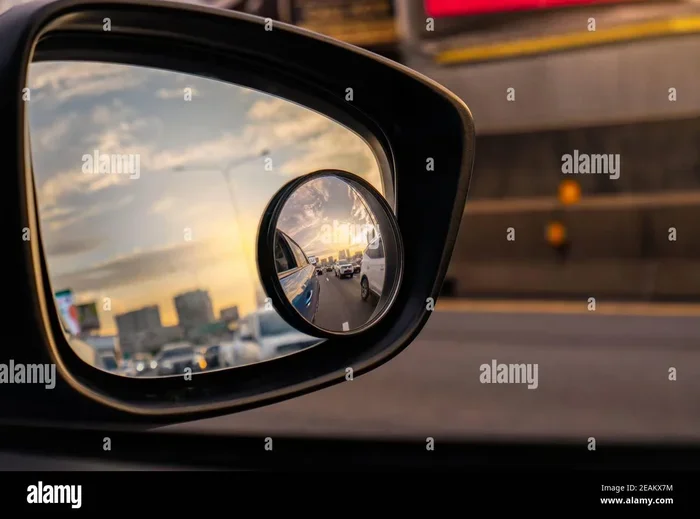
Some drivers choose to add a blind spot mirror to their side mirrors. These are small, extra mirrors that stick onto the corner of the existing side mirror. They help cover the area that the main mirror cannot show, further reducing blind spots.
Rearview Mirror
The rearview mirror is the interior mirror mounted on the windshield inside the car. It faces the rear window and gives you a direct view of what is behind you. Unlike side mirrors, the rearview mirror usually uses a flat mirror surface.
A flat mirror gives you an accurate, undistorted view of the traffic behind you. Objects appear at their true size and distance, which makes it easier to judge how close other vehicles are. This is why the rearview mirror does not carry the “objects are closer than they appear” warning.
Modern rearview mirrors come with extra features. Many now include built-in auto-dimming technology. This feature darkens the mirror automatically when bright headlights from behind shine at night. It prevents glare and helps you keep your focus on the road.
Some cars also have rearview mirrors with built-in cameras or display screens. These smart mirrors show a live feed from a rear-facing camera, giving you a crystal-clear view of what is behind your car, even when the rear window is blocked by cargo.
Blind Spot Mirrors
Blind spot mirrors are small, additional mirrors that attach to your existing side mirrors. They are designed to cover the areas that your main mirrors and peripheral vision cannot reach.
These mirrors are especially helpful for drivers who frequently drive in heavy traffic or on crowded highways. They are affordable, easy to install, and can make a real difference in your safety. Many drivers consider them an essential car accessory for improving mirror visibility.
You can find blind spot mirrors in different shapes and sizes. Some are convex, and some are aspherical. The best ones are curved just enough to expand your view without distorting the image too much.
Convex vs Flat Mirrors: What’s the Difference
Understanding the difference between convex and flat mirrors is key to understanding how your car mirrors work. Each type has its own strengths and limitations.
How Convex Mirrors Work
A convex mirror curves outward, like the surface of a ball. This shape bends light rays and creates a wider field of view. That is why most car side mirrors use convex glass.
The wider view means you can see more of the road and more vehicles around you. This is especially useful on multi-lane roads and highways. Convex mirrors also make the passenger side mirror safer because it covers a larger area.
The downside is that convex mirrors distort distance. Objects look smaller and farther away than they really are. This can trick drivers into thinking a car is more distant than it actually is. Always keep this in mind when using your side mirrors for lane changes.
How Flat Mirrors Work
A flat mirror has a straight, non-curved surface. It reflects light at the same angle, so the image you see is accurate and true to size. This is why the rearview mirror uses a flat glass surface.
Flat mirrors give you a precise view of distance and size. You can accurately judge how close a car behind you is. This makes flat mirrors ideal for the rearview position, where distance accuracy matters most.
Some drivers prefer flat mirrors on the sides too, but they provide a narrower field of view. This is why most countries require convex or aspherical mirrors for the exterior positions.
| Feature | Convex Mirror | Flat Mirror |
|---|---|---|
| Field of View | Wide | Narrow |
| Image Accuracy | Distorted (smaller) | True to size |
| Distance Perception | Objects appear farther | Accurate distance |
| Common Use | Side mirrors | Rearview mirror |
| Blind Spot Coverage | Better | Limited |
This table shows why most cars use a combination of both mirror types. The convex side mirrors give you a wide view, while the flat rearview mirror gives you accurate distance readings.
How to Adjust Your Car Mirrors for Best Visibility
Even the best mirrors won’t help if they are not adjusted correctly. Proper mirror adjustment is one of the simplest things you can do to improve your safety on the road.
Side Mirror Adjustment Tips
Start by sitting in your driver’s seat and adjusting the driver’s side mirror. Lean your head slightly to the left until it touches the window glass. Now adjust the mirror so you can just barely see the side of your car on the right edge of the glass. This position gives you the best view of the lane beside you.
For the passenger side mirror, lean your head toward the center console. Adjust the mirror so you can just barely see the side of your car on the left edge. This setup minimizes the blind spot on both sides.
Many drivers make the mistake of adjusting their mirrors while sitting upright. This creates large blind spots. Always adjust your mirrors from the correct driving position for the best results.
Rearview Mirror Setup
The rearview mirror is easy to adjust. Simply grab the mirror and point it so you can see the entire rear window. You should be able to see the road behind you clearly without moving your head.
If your car has a manual day-night rearview mirror, flip the lever at the bottom to reduce glare at night. For auto-dimming mirrors, the mirror handles this automatically. Just make sure the mirror is clean and free of obstructions.
Quick tip: Keep your rearview mirror clean. Dust and grime can reduce visibility, especially at night. A quick wipe with a microfiber cloth during your car care routine makes a big difference.
Quick Tips for Mirror Adjustment
- Always adjust mirrors before you start driving.
- Lean to the correct position for each mirror.
- Make sure you can see the full lane beside you.
- Clean all mirrors regularly for clear visibility.
- Use blind spot mirrors for extra coverage.
- Check your mirrors every few seconds while driving.
Common Mirror Problems and How to Fix Them
Like any part of your car, mirrors can develop problems over time. Knowing how to deal with these issues keeps you safe and avoids costly repairs.
Cracked or Damaged Mirror Glass
A cracked mirror glass distorts your view and reduces visibility while driving. Even a small crack can scatter light and create glare, especially at night. If your mirror glass is damaged, replace it as soon as possible.
Many auto shops can replace just the glass without replacing the entire mirror assembly. This is a quick and affordable repair. Some dealerships also carry replacement mirror glass for most car models.
If the mirror housing is damaged but the glass is fine, you may only need to replace the housing. Check your warranty or insurance coverage, as mirror damage from road debris is sometimes covered.
Foggy or Frosty Mirrors
Foggy mirrors are a common problem in humid or cold weather. They block your view and can be very dangerous. Many modern cars come with heated mirrors that warm the glass and prevent fog and frost.
If your car does not have heated mirrors, you can use anti-fog spray or wipes. These products create a thin film on the glass that prevents moisture from forming. They are cheap and easy to apply.
In a pinch, you can also use a small towel or cloth to wipe the mirrors clear. Keeping a microfiber cloth in your car is a smart habit for any driver who takes car maintenance seriously.
Mirror Vibrations at High Speeds
Some cars experience mirror vibrations at high speeds. This can make it hard to see clearly. If your mirrors shake excessively, check if they are tightened properly. Loose mounting brackets are a common cause.
If the mirrors are tight but still vibrate, consider upgrading to mirrors with vibration-dampening features. Many aftermarket mirrors are designed to reduce shaking and provide a steadier image at highway speeds.
Upgrading Your Car Mirrors for Enhanced Safety
If you want to take your driving safety to the next level, consider upgrading your mirrors. There are many options available that go beyond the standard factory setup.
Blind Spot Monitoring Systems
Blind spot monitoring is a modern driver assistance feature that alerts you when a vehicle is in your blind spot. It uses sensors on the side mirrors or rear bumper to detect other cars.
When a vehicle enters your blind spot, the system gives you a visual warning on the side mirror or a sound alert. Some systems also activate when you turn on your turn signal, warning you if it is not safe to change lanes.
This technology is especially helpful for newer drivers or anyone who drives frequently on busy highways. Many new cars come with blind spot monitoring as standard equipment, but it can also be installed as an aftermarket upgrade.
Heated and Auto-Dimming Mirrors
Heated mirrors use a built-in heating element to melt frost and prevent fog. They are a great feature for drivers in cold or wet climates. Auto-dimming mirrors use sensors to darken the glass when bright lights hit them from behind.
Both features are relatively affordable and can be added to most vehicles. They are excellent upgrades for anyone who wants better mirror visibility in all weather and lighting conditions.
Wide-Angle and Aspherical Mirrors
Aspherical mirrors are an advanced type of side mirror. They have a variable curve that reduces distortion while still providing a wide field of view. These mirrors give you better accuracy than standard convex mirrors.
Wide-angle mirror attachments are another popular upgrade. They clip onto your existing side mirrors and expand your view even further. Just be sure to choose high-quality attachments that do not distort the image too much.
When choosing car accessories like mirror upgrades, look for products that meet safety standards and are easy to install. Reading reviews from other drivers can also help you find the best options for your specific car model.
Key Maintenance Tips for Your Car Mirrors
Keeping your mirrors in good condition is simple but very important. Here are some maintenance tips every driver should follow.
- Clean your mirrors weekly: Use a glass cleaner and a microfiber cloth for streak-free results.
- Check mirror adjustments before every trip: Even small bumps can shift your mirrors out of position.
- Replace damaged mirrors promptly: Do not drive with cracked or loose mirrors. They reduce your field of view and can be dangerous.
- Use mirror covers in winter: Mirror covers protect your mirrors from ice and frost overnight.
- Inspect mirror mounting: Make sure the mirrors are securely attached to the car. Loose mirrors can vibrate and fall off.
Good car care includes your mirrors. They are one of the most used safety features in your vehicle, and keeping them in top condition should be a priority for every driver.
Conclusion
Your car mirrors are one of the most important safety features in your vehicle. Each mirror, from the side mirrors to the rearview mirror, plays a specific role in keeping you aware of your surroundings. Understanding which mirror is used in car setups and how to use them properly can greatly improve your driving safety.
Make it a habit to adjust your mirrors correctly before every drive. Keep them clean and free of damage. Consider upgrades like blind spot mirrors or heated mirrors if they fit your driving needs. Small steps like these make a big difference on the road.
Remember, no mirror system is perfect. Always use your mirrors together with shoulder checks and turn signals. The best drivers are the ones who stay aware and make safety a priority every time they get behind the wheel. Your mirrors are your first line of defense, so treat them with the care they deserve.
Frequently Asked Questions
How many mirrors does a standard car have?
A standard car has at least three mirrors: two side mirrors on the exterior and one rearview mirror inside the car. Some vehicles also come with additional features like blind spot mirrors or towing mirrors for extra coverage.
Why do side mirrors show objects as closer than they appear?
Side mirrors use a convex shape that curves outward. This gives you a wider view but distorts the distance of objects. That is why the warning label says “objects in mirror are closer than they appear.” Always keep this in mind when changing lanes.
Can I replace a cracked car mirror myself?
Yes, many cracked mirrors can be replaced yourself if you have basic tools. You can buy replacement glass or entire mirror assemblies online. However, if you are not comfortable doing it yourself, a professional auto shop can handle the replacement quickly and affordably.
Are blind spot mirrors worth the investment?
Absolutely. Blind spot mirrors are small, inexpensive, and easy to install. They significantly reduce blind spots and can help prevent accidents during lane changes. Many drivers consider them one of the best low-cost safety upgrades available.
What is the best way to clean car mirrors?
Use a glass cleaner and a microfiber cloth for the best results. Avoid paper towels or rough fabrics, as they can scratch the glass. Clean your mirrors weekly or whenever you notice smudges or glare affecting your visibility.
Do heated mirrors work in all weather conditions?
Heated mirrors work well in cold, humid, and rainy conditions. They melt frost and prevent fog from forming on the glass. However, they may not be effective in extreme ice buildup. In very heavy snow, you may still need to clear your mirrors manually.