Why Is There a QR Code on My Car and Why It Matters
The QR code on your car is not random. It serves as a digital bridge between your vehicle and the smartphone world. Whether it is for contactless sharing, automotive marketing, or vehicle identification, this tiny square sticker has a real purpose. Understanding it helps you stay ahead in the connected car era.
You are driving down the road. Then you notice it. A QR code on your car. Maybe it is on the back window. Or on the side panel. Or stuck near the license plate. You did not put it there yourself. So what is going on? Is it a tracking device? A marketing stunt? Or something useful?
The truth is, QR codes on cars are more common than you think. They serve real purposes that go far beyond looking techy. This guide breaks down every reason you might find one on your vehicle. We will cover the why, the how, and what it means for you as a car owner. By the end, you will fully understand this small but powerful piece of QR code technology.
Let us dive in. No jargon. No fluff. Just clear, practical answers about why there is a QR code on your car and why it actually matters.
Key Takeaways
- QR codes on cars serve multiple purposes: from digital business cards to vehicle identification and contactless payments.
- Automotive marketing has evolved: car owners and businesses use QR stickers to share information instantly.
- Scan-to-connect technology makes it easy for strangers, emergency responders, and potential buyers to access key data.
- Common mistakes include using low-quality prints, broken links, and placing codes in hard-to-scan spots.
- The future of car QR codes looks bright with connected car features and digital car tags becoming mainstream.
- Privacy matters: always be mindful of what data you share through your vehicle dashboard link.
- Quick tips can help you maximize the benefits of your car QR code while avoiding common pitfalls.
📑 Table of Contents
What Is a QR Code on a Car?
A QR code is a quick response code. It is a square-shaped barcode that stores information. When you scan it with your phone, it opens a link. That link can lead to a website, a contact card, a payment page, or even a vehicle history report. On a car, this code is usually printed on a sticker, a label, or a specialized decal.
But why put one on a car? Cars are public objects. They sit in parking lots. They drive through neighborhoods. They are seen by hundreds of people every day. A QR sticker turns every glance into a potential connection. It is a contactless information tool that works without any effort from the driver.
The Difference Between a Car QR Code and a Regular QR Code
Not all QR codes are the same. A regular QR code on a product box links to a store page. A QR code on a car often serves a different role. It might link to your personal portfolio, your business, your car ownership data, or even your insurance details. The context matters. The placement matters too. A code on a car needs to survive weather, sunlight, and wear. That is why most car QR codes use durable materials designed for the road.
Common Reasons for QR Codes on Vehicles
There are several reasons you might find a QR code on your car. Some are intentional. Others are part of a larger system. Let us look at the most common ones.
1. Digital Business Card
Many professionals use their car as a mobile billboard. A QR sticker on the back window acts as a digital business card. When someone scans it, they get your name, phone number, email, and website. This is automotive marketing at its finest. It costs almost nothing and works 24 hours a day.
Real estate agents, plumbers, electricians, and consultants love this approach. They park their car in high-traffic areas. The QR code does the talking. It is a form of car advertising that feels helpful rather than pushy.
2. Vehicle Identification and Registration
Some QR codes on cars are not for marketing. They are for identification. Government agencies and law enforcement use vehicle identification systems that rely on smart car labels. These codes help officers quickly pull up registration details, ownership records, and even vehicle history reports.
This is especially useful in parking enforcement and toll systems. A quick scan replaces manual entry. It reduces errors and speeds up processes. If you have ever wondered why a parking enforcement officer pointed a device at your car, this is why.
3. Contactless Payments and Parking
Paying for parking has changed. Many parking meters and lots now use a parking payment QR system. You scan the code, enter your zone number, and pay through your phone. No coins. No app downloads. Just a quick scan-to-connect experience.
Some cities have even started placing QR codes on parking signs that link directly to the payment portal. This is part of the broader connected car ecosystem. It makes urban driving smoother and less stressful.
4. Insurance and Roadside Assistance
Insurance companies are getting creative. Some now offer insurance QR code stickers for windshields. In an accident, a passerby or responder can scan the code to verify coverage instantly. No need to dig through a glovebox for paperwork.
Similarly, roadside assistance QR codes let you get help faster. A scan can connect you directly to your roadside service provider. This is a lifesaver in emergencies, especially on dark highways at night.
5. Car Shows and Events
Car enthusiasts know the drill. You spend months restoring a classic. You bring it to a car show QR code station. Attendees scan it to view your build story, specs, and restoration journey. It is a digital twin of your car. It lives online and tells your story even after the show ends.
This trend is growing fast in the automotive marketing world. Car clubs, manufacturers, and event organizers all use QR codes to enhance the show experience.
How QR Codes Work on Cars
Understanding QR code technology is simple. A QR code stores data in a grid of black and white squares. When your phone camera reads it, the decoder translates that grid into a URL or text. On a car, the code is usually a static QR code. That means it always points to the same destination.
Some advanced setups use dynamic QR codes. These are smarter. They allow the owner to change the destination link without printing a new sticker. You can update your car owner profile or digital car tag in real time. This is incredibly useful for businesses that change their offers frequently.
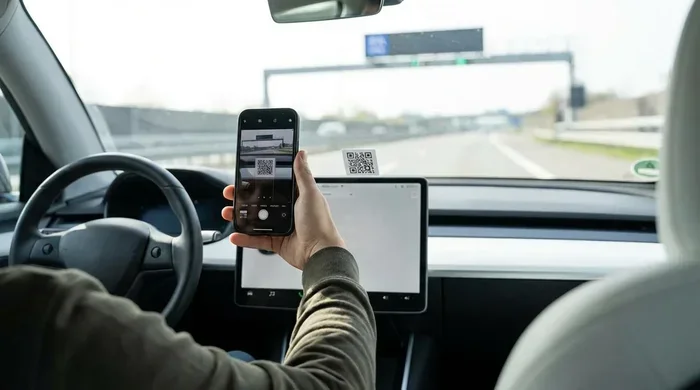
What Happens When You Scan a Car QR Code?
Here is what typically happens when you scan a QR code on a car:
- Your phone camera recognizes the square pattern.
- A notification pops up with the link preview.
- You tap the notification and the browser opens.
- The page loads. It could be a contact card, a payment portal, or a vehicle info page.
The whole process takes seconds. It is contactless information sharing at its best. No handshakes. No business cards. Just a quick scan and you are connected.
Benefits of Having a QR Code on Your Car
There are real advantages to having a QR code on your vehicle. Whether you are a business owner or a curious car enthusiast, these benefits are worth considering.
1. Always-On Marketing
Unlike a billboard that requires a big budget, a QR sticker costs pennies. It works while you sleep. It works on weekends. It works in rain and sun. Your car advertising never takes a break. Every parking lot is a potential lead generation space.
2. Instant Contact Sharing
Handing out paper business cards feels outdated. A QR code lets you share your full contact profile instantly. The person scanning gets your name, phone, email, and website in one tap. It is contact sharing made effortless.
3. Emergency Readiness
Having your insurance QR code or roadside assistance QR visible on your car can save valuable time in an emergency. First responders can access critical information without asking you questions. In a stressful situation, that speed matters.
4. Vehicle Transparency
For sellers, a QR code linked to a vehicle history report builds trust. Buyers can scan it and see maintenance records, accident history, and ownership details. It makes the car buying process more transparent and efficient.
Common Mistakes People Make with Car QR Codes
Not everyone uses QR codes on cars correctly. Here are the most common mistakes and how to avoid them.
Mistake 1: Using Low-Quality Prints
A blurry QR sticker will not scan. Always use weather-resistant materials and high-resolution prints. A QR code that fades in the sun defeats the purpose.
Mistake 2: Placing the Code in a Hard-to-Scan Spot
Putting your QR code too high or in a curved area makes it difficult to scan. The best spots are the back window, the side rear panel, or near the rear bumper. Keep it at eye level for passing pedestrians and drivers.
Mistake 3: Linking to a Broken or Slow URL
If your mobile-friendly link takes more than three seconds to load, people will give up. Use a fast hosting service and test your link regularly. A broken scan-to-connect experience damages trust.
Mistake 4: Ignoring Privacy Concerns
Sharing too much information through your QR code can be risky. Do not link to personal data like your home address or full license plate number. Keep it professional and limited to what is necessary. A digital car tag should be helpful, not invasive.
The Future of QR Codes in the Automotive World
The connected car revolution is here. QR code technology is just the beginning. Automakers are exploring digital twin concepts where every vehicle has a unique digital identity. Smart car labels will soon do more than share links. They will authenticate ownership, enable keyless entry, and even transmit vehicle diagnostics.
Digital Car Tags and Vehicle Dashboards
Imagine parking your car and having your vehicle dashboard sync with the lot’s system through a QR code. Your car ownership data is verified instantly. Payment is processed automatically. You walk away while your car handles the rest. This is not science fiction. Several automakers are already testing these features.
QR Codes vs. NFC Tags in Cars
You might wonder how QR codes compare to NFC tags in vehicles. Both serve similar purposes but work differently. A QR code requires a camera and a scan. An NFC tag requires close proximity and a tap. Here is a quick comparison.
| Feature | QR Code | NFC Tag |
|---|---|---|
| Scanning Method | Camera scan from distance | Close proximity tap |
| Cost | Very low | Moderate |
| Durability | High with proper materials | High |
| Compatibility | Works on any phone | Requires NFC-enabled phone |
| Setup Complexity | Simple | Moderate |
| Data Capacity | Limited by URL length | Can store more data |
For most car owners, a QR code is the simpler and more affordable choice. NFC is great for premium vehicles, but QR code technology wins on accessibility. Anyone with a smartphone can scan it. That is a huge advantage.
Quick Tips for Getting the Most from Your Car QR Code
Want to make your QR sticker work harder? Follow these quick tips.
- Use a dynamic QR code so you can update the link anytime.
- Test your code weekly to make sure it still scans properly.
- Place the code where it gets the most visibility, like the back window.
- Use a short, memorable URL that looks clean when printed.
- Add a brief call to action like “Scan for more info” next to the code.
- Check that your linked page is mobile-friendly and loads fast.
- Replace faded or damaged stickers promptly to maintain scanability.
Expert Insights on Car QR Codes
“The QR code on a car is one of the most underrated marketing tools available today,” says automotive branding expert Mark Sullivan. “It bridges the gap between physical presence and digital engagement. For small businesses, it is a game changer.”
Industry leaders also point out that vehicle identification through smart car labels is becoming standard in fleet management. Logistics companies use them to track vehicles in real time. The data flows seamlessly through vehicle dashboard systems and into centralized databases.
The trend is clear. QR codes on cars are not a fad. They are a practical tool that serves real needs in marketing, safety, identification, and convenience.
Conclusion
So why is there a QR code on my car? The answer is simple. It is a powerful, affordable tool that connects your physical vehicle to the digital world. Whether it is for automotive marketing, vehicle identification, contactless information sharing, or emergency readiness, the QR code earns its place on your car.
Understanding QR code technology helps you make smarter decisions. You can use it to grow your business, simplify payments, or just share your passion for cars. The key is to use it thoughtfully. Place it well. Keep the link working. Respect privacy. And always test your scan-to-connect experience.
The road ahead is connected. QR codes on cars are a small piece of a much bigger puzzle. Embrace them. Use them wisely. And let your car do more than just drive.
Frequently Asked Questions
Is a QR code on my car a security risk?
Generally, no. Most QR codes on cars link to safe, public-facing pages like business profiles or payment portals. However, always be cautious about what you link. Avoid sharing sensitive personal data like your home address through the QR sticker. Use reputable QR code technology platforms to generate your codes safely.
Can I remove a QR code that was placed on my car without my permission?
Yes. If a QR code was placed on your vehicle without your consent, you have every right to remove it. It may be part of a car advertising campaign or a tracking mechanism. Check with local authorities if you suspect it is being used for unauthorized vehicle identification or surveillance purposes.
Do QR codes on cars damage the paint or surface?
Most QR stickers are designed to be non-invasive. They use adhesive that does not harm the paint when removed carefully. If you are concerned, choose a removable vinyl QR sticker and test it on a small, hidden area first. Always clean the surface gently when removing it.
How much does it cost to get a QR code made for my car?
The cost is very low. A durable QR sticker costs between a few cents and a few dollars depending on size and material. Dynamic QR codes from platforms like QR Code Generator or Beaconstac may require a small monthly fee. Overall, it is one of the cheapest automotive marketing tools available.
Can a QR code on my car help sell it faster?
Absolutely. A QR code linked to a vehicle history report, maintenance records, or a virtual tour of your car builds buyer confidence. It shows transparency and professionalism. Many sellers on platforms like CarGurus and AutoTrader are starting to use smart car labels to stand out from the crowd.
Will QR codes on cars become mandatory in the future?
There are no current laws requiring QR codes on personal vehicles. However, the connected car trend is accelerating. Fleet operators and commercial vehicle managers already use vehicle identification systems with QR stickers and NFC tags. It is possible that regulations evolve to include digital car tags for safety and identification purposes in the coming years.