Can Police Unlock Your Car Heres What You Need To Know
Yes, police can unlock your car in certain situations, but the method and legality depend on the circumstances. Whether they use a spare key, a warrant, or specialized tools, understanding your rights is essential. This guide breaks down everything you need to know about police vehicle access.
Have you ever locked your keys in the car and wondered who can help? Maybe you have even asked yourself, can police unlock your car? The short answer is yes. But the full story is more detailed than you might think. Police officers have several methods to gain access to a locked vehicle. However, the legality and circumstances behind each method matter a great deal.
Understanding how police handle car lockouts can save you time, stress, and even legal trouble. Whether you are dealing with a lost key, an emergency, or a situation where law enforcement wants to access your vehicle, knowing your rights is powerful. This article covers everything you need to know about police unlocking your car, your legal protections, and what you should do in these situations.
Let us walk through it step by step. We will cover the legal methods, the tools involved, your rights as a vehicle owner, and practical tips to protect your car. By the end, you will feel confident and informed.
Key Takeaways
- Police can unlock your car using legal methods like spare keys, warrants, or lockout tools.
- Your Fourth Amendment rights protect you from unreasonable searches of your vehicle.
- Emergency situations may allow police to access your car without a warrant.
- Knowing your rights can help you respond calmly and appropriately during a police encounter.
- Regular maintenance and smart locking habits reduce the risk of unauthorized access.
- Calling a locksmith is often a faster and less invasive option for lockouts.
- Documenting incidents helps protect your rights if police access your vehicle.
📑 Table of Contents
What Happens When Police Need to Unlock Your Car
When police need to unlock a car, the process depends on the situation. There is no one-size-fits-all answer. The reason for the lockout, the location, and the urgency all play a role in how officers handle the situation.
In most cases, police will first try the simplest method. They may contact the vehicle owner or check for a spare key. If the car belongs to someone they know or can easily reach, this is often the fastest solution. But what happens when the owner is not available? That is where things get more interesting.
Police may also call a tow truck or a locksmith service. Many departments have relationships with local locksmiths who can handle vehicle lockouts quickly. This approach is common in non-emergency situations where time is not critical.
However, in emergency cases, police have the authority to take more direct action. If a child or pet is trapped inside a hot car, for example, officers can break a window or use specialized tools to open the door. The key factor is always the level of urgency and the potential for harm.
Common Reasons Police Unlock Cars
Police unlock cars for a variety of reasons. Here are the most common scenarios:
- Child or pet in danger: A locked car with a child or pet inside on a hot day is an emergency. Officers will act immediately to ensure safety.
- Accident response: After a car crash, police may need to access the vehicle to assist injured occupants or secure the scene.
- Crime investigation: If a crime has occurred or is in progress, officers may need to enter a vehicle as part of their investigation.
- Vehicle impound: When a car is towed, police or towing companies may need to unlock it to inventory contents or retrieve personal belongings.
- Lost key situations: In rare cases, police may assist a stranded motorist who has no other options for regaining access.
The Legal Ways Police Can Access Your Vehicle
Not all police access to vehicles is the same. The law sets clear boundaries on when and how officers can unlock or search your car. Understanding these legal frameworks helps you know what to expect and what to challenge if necessary.
With Owner Consent
The simplest and most straightforward method is with your permission. If you are present and give verbal or written consent, police can unlock and search your vehicle. This is a common scenario during routine traffic stops. However, you have the right to refuse consent. Saying no clearly and calmly is your legal right.
With a Search Warrant
A search warrant is a legal document issued by a judge. It gives police the authority to search your vehicle for specific items. To get a warrant, officers must show probable cause. This means they need a reasonable belief that evidence of a crime is inside your car.
A warrant specifies exactly what police can search and what they are looking for. If they find something outside the scope of the warrant, that evidence may be challenged in court. This is an important protection for vehicle owners.
Under Exigent Circumstances
Exigent circumstances are situations where there is an immediate threat to life or a risk of evidence destruction. In these cases, police do not need a warrant to access your vehicle. Examples include a fire inside the car, a suspect fleeing on foot, or hearing screams from inside a locked vehicle.
Courts have consistently upheld the use of warrantless searches under exigent circumstances. But the definition is broad, and police must be able to justify their actions after the fact. If you believe your rights were violated, documenting the encounter is crucial.
Through Inventory Searches
When a vehicle is impounded, police often conduct an inventory search. This is a standard procedure to document the contents of the car before towing. Inventory searches are legal as long as they follow department policy and are not used as a pretext for a criminal investigation.
During an inventory search, police may open locked compartments, the trunk, and even the glove box. Anything found during this process can potentially be used as evidence, depending on the circumstances.
Tools and Methods Police Use to Unlock Cars
Police have access to a range of tools designed to open locked vehicles. These tools vary in complexity and legality. Let us look at the most common ones.
Lockout Tools
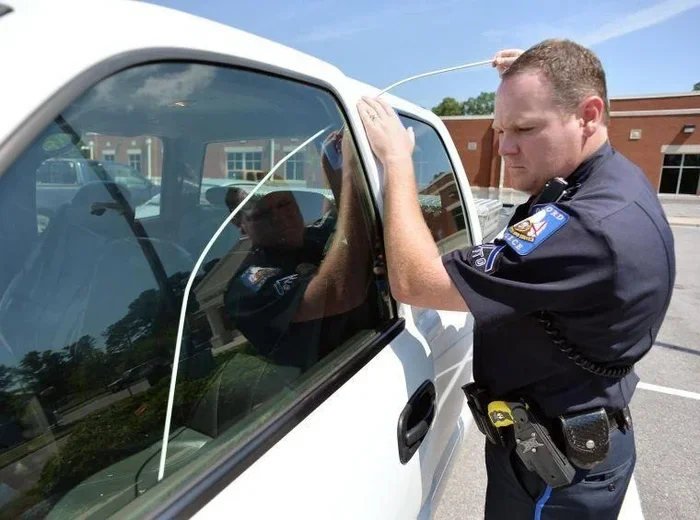
Lockout tools are slender devices that officers slide between a car door and the weather stripping. Once inside, the tool can manipulate the lock mechanism from the inside. This method is non-destructive and works on many older vehicle models.
Modern cars with advanced locking systems can be more challenging. Some lockout tools are designed to work with specific vehicle makes and models. Officers often carry a variety of tools to handle different types of locks.
Air Wedge and Rod Method
The air wedge method involves placing a small inflatable wedge between the door and the frame. This creates a small gap. Then, a long rod is inserted through the gap to press the unlock button or pull the interior handle.
This technique is effective on many vehicles and causes minimal damage. It is commonly used by police and professional locksmiths alike. However, it requires skill and practice to avoid scratching or denting the car.
Slim Jim and Similar Tools
The Slim Jim is a well-known tool for unlocking car doors. It is a flat metal strip that slides between the window and the interior panel to manipulate the lock linkage directly. While effective, this tool requires significant expertise.
Improper use of a Slim Jim can damage the door mechanism or trigger the airbag system. For this reason, many police departments now prefer less invasive methods. The tool is still used, but less frequently than in the past.
Electronic and Digital Methods
Some modern police departments use electronic tools that can communicate with a car’s keyless entry system. These devices can send a signal to unlock the doors without physical manipulation. In some cases, officers can even program a new key fob on the spot.
These electronic methods are becoming more common as vehicles become more technologically advanced. They are fast, non-destructive, and highly effective. However, they require specialized equipment and training.
Breaking Windows as a Last Resort
When all other methods fail or when time is of the essence, police may break a car window. This is always a last resort. It is most commonly used in emergencies, such as a child locked inside a hot vehicle.
Breaking a window causes property damage. In most cases, the police department or the vehicle owner is responsible for the repair costs. However, in true emergencies, the priority is always safety first.
Your Rights as a Vehicle Owner
Knowing your rights is one of the most important things you can do. The Fourth Amendment of the U.S. Constitution protects citizens against unreasonable searches and seizures. This applies to your vehicle just as it does to your home.
When police want to unlock your car, you have the right to ask why. You have the right to know if they have a warrant. And you have the right to refuse consent if they do not have one. Remaining calm and respectful during these interactions is always the best approach.
If you believe your rights have been violated, you can file a complaint or consult an attorney. Evidence obtained through an unlawful search may be excluded from court proceedings. This is known as the exclusionary rule, and it is a powerful legal protection.
What to Do If Police Unlock Your Car
If you find that police have unlocked your car, here are some steps you can take:
- Stay calm: Avoid arguing or resisting. This can escalate the situation unnecessarily.
- Ask for identification: Request the officer’s name and badge number.
- Ask for the reason: Politely ask why they needed to access your vehicle.
- Document everything: Write down the date, time, location, and names of any officers involved.
- Seek legal advice: If you believe your rights were violated, consult a lawyer as soon as possible.
When Police Need a Warrant to Search Your Car
The question of when police need a warrant to search your car is one of the most debated topics in criminal law. The general rule is that a warrant is required for any search. But there are important exceptions.
Police do not need a warrant if you give consent. They also do not need one if they have probable cause to believe a crime has been committed and evidence is in the vehicle. This is known as the automobile exception.
The automobile exception exists because vehicles are mobile. Courts have ruled that the ease with which a car can be moved creates a lower expectation of privacy compared to a home. However, this does not mean police can search your car on a whim. They still need a reasonable basis for their actions.
If you are stopped during a traffic stop, police can search your vehicle if they have probable cause. This might include seeing illegal items in plain view or smelling marijuana. Without probable cause, they generally cannot search without your consent or a warrant.
How to Protect Your Vehicle from Unauthorized Access
While you cannot always prevent police access in emergencies, you can take steps to protect your vehicle from unauthorized entry in everyday situations.
Keep Spare Keys Safe
One of the easiest ways to avoid a lockout is to keep a spare key. You can store it at home, give one to a trusted friend or family member, or use a magnetic key box hidden under your vehicle. Just make sure the hiding spot is not obvious to thieves.
Invest in a Good Lockout Service
A reliable lockout service can help you regain access to your vehicle quickly and safely. Professional locksmiths have the tools and expertise to open most cars without causing damage. Look for a licensed and insured locksmith with good reviews.
Use a Steering Wheel Lock
A steering wheel lock adds an extra layer of security to your vehicle. While it does not prevent police access during emergencies, it does deter thieves. Visible security measures make your car a less attractive target.
Keep Your Vehicle Well-Maintained
Regular maintenance of your car’s locking system can prevent unexpected lockouts. Have your locks inspected during routine service appointments. If you notice any stiffness or difficulty with your keys, address it promptly. A well-maintained vehicle is less likely to experience lock-related issues.
Know Your Local Laws
Laws regarding vehicle access and search vary by state and jurisdiction. Familiarize yourself with the laws in your area. Understanding your local regulations helps you respond appropriately if police ever need to access your car.
Key Takeaways
- Police can unlock your car using legal methods like spare keys, warrants, or lockout tools.
- Your Fourth Amendment rights protect you from unreasonable searches of your vehicle.
- Emergency situations may allow police to access your car without a warrant.
- Knowing your rights can help you respond calmly and appropriately during a police encounter.
- Regular maintenance and smart locking habits reduce the risk of unauthorized access.
- Calling a locksmith is often a faster and less invasive option for lockouts.
- Documenting incidents helps protect your rights if police access your vehicle.
Conclusion
So, can police unlock your car? The answer is yes, and they have several legal methods to do so. Whether through a spare key, a warrant, or specialized tools, law enforcement has the authority to access your vehicle in specific situations. But that authority comes with limits. Your constitutional rights protect you from unreasonable searches and seizures.
Understanding these rights empowers you to handle encounters with confidence. If you ever find yourself in a situation where police need to unlock your car, stay calm, ask questions, and document what happens. Knowing the difference between a lawful search and an unlawful one can make a significant difference.
Prevention is also key. Keep spare keys handy, maintain your vehicle’s locking system, and consider investing in professional lockout services. These simple steps can save you from stressful lockout situations and help keep your vehicle secure.
Ultimately, awareness is your best defense. Stay informed, know your rights, and be prepared. That way, if the question of police unlocking your car ever comes up, you will already have the answers.
Frequently Asked Questions
Can police unlock my car without a warrant?
Yes, in certain situations. If there is an emergency, such as a child or pet trapped inside a hot car, police can unlock your car without a warrant. They can also search your vehicle if you give consent or if they have probable cause to believe a crime has been committed.
What should I do if police want to unlock my car?
Stay calm and ask the officer for the reason. You have the right to ask if they have a warrant. If they do not have one, you have the right to refuse consent. Document the interaction by noting the officer’s name, badge number, and the time and date.
Will police damage my car when unlocking it?
Usually not. Police and locksmiths use specialized tools designed to open car doors without causing damage. However, in emergencies or when other methods fail, they may need to break a window. This is always a last resort and only done when safety is at risk.
Can I call a locksmith instead of waiting for police?
Absolutely. In most non-emergency lockout situations, calling a professional locksmith is a faster and less invasive option. Licensed locksmiths can open most vehicles quickly and often with no damage. This is usually the best choice if you are simply locked out.
What happens if police unlock my car and find nothing?
If police unlock your car legally and find no evidence of a crime, the interaction typically ends there. However, if you believe the search was unlawful, you can consult an attorney. Evidence obtained through an illegal search may be excluded from court proceedings.
Do police need probable cause to unlock my car?
It depends on the situation. If police have a warrant, they do not need additional probable cause at that moment. If there is no warrant, they generally need probable cause or your consent to unlock and search your vehicle. Emergency situations are an exception where probable cause may not be required.