Turn Off The Maintenance Required Light On Your Dashboard
The maintenance required light is one of the most common dashboard warnings drivers encounter. This light simply means your vehicle is due for routine service based on mileage or time intervals. You can reset the maintenance required light yourself in most cars using a few quick steps, though some models need a scanner tool.
That little symbol on your dashboard keeps staring at you every time you get behind the wheel. It says “Maintenance Required” and it just won’t go away. You are not alone. Almost every driver sees this light at some point, and most people wonder what it actually means and how to make it stop.
The good news is that the maintenance required light is one of the easiest dashboard warnings to deal with. It is not a sign that your car is broken. It is simply a reminder that your vehicle needs routine service based on the mileage or time interval set by the manufacturer. In most cases, you can turn it off yourself without visiting a mechanic. Let us walk you through everything you need to know about this annoying but harmless light.
Key Takeaways
- The maintenance required light is not an emergency: It is a routine service reminder, not a sign of engine failure.
- You can usually reset it yourself: Most vehicles allow you to turn off the maintenance light using the dashboard controls or a simple procedure.
- It is different from the check engine light: The maintenance light is tied to service intervals, while the check engine light signals an actual problem.
- Ignoring it too long can cause issues: Skipping oil changes and other scheduled service can damage your engine over time.
- Some cars need a diagnostic tool: Newer or luxury vehicles may require a scanner to fully reset the maintenance light.
- Regular maintenance keeps your car healthy: Following your service schedule prevents costly repairs down the road.
📑 Table of Contents
- What Does the Maintenance Required Light Mean?
- Why Does the Maintenance Light Come On?
- How to Turn Off the Maintenance Required Light
- Step-by-Step Reset Guide for Popular Car Brands
- Can You Just Ignore the Maintenance Light?
- Quick Tips to Keep Your Dashboard Lights Healthy
- Common Mistakes People Make With the Maintenance Light
- The Role of Regular Maintenance in Car Longevity
- Final Thoughts
What Does the Maintenance Required Light Mean?
Before you learn how to reset anything, it helps to understand what this light is actually telling you. The maintenance required light is part of your car’s onboard diagnostic system. It tracks your mileage and alerts you when you are due for a scheduled service interval.
Most automakers set the first reminder at around 3,000 to 5,000 miles after the last service. This is typically when you need an oil change. Some vehicles also factor in driving conditions like extreme heat, cold, or towing. These conditions can shorten the interval between services.
How the System Tracks Service Intervals
Your car’s computer monitors the odometer reading and counts miles since the last reset. When you hit the preset mileage threshold, the light pops up. The system does not know what kind of service you need. It just knows it is time to visit a shop or do the work yourself. Some vehicles use a flexible service interval system that adjusts based on your driving habits, while others stick to a fixed mileage schedule.
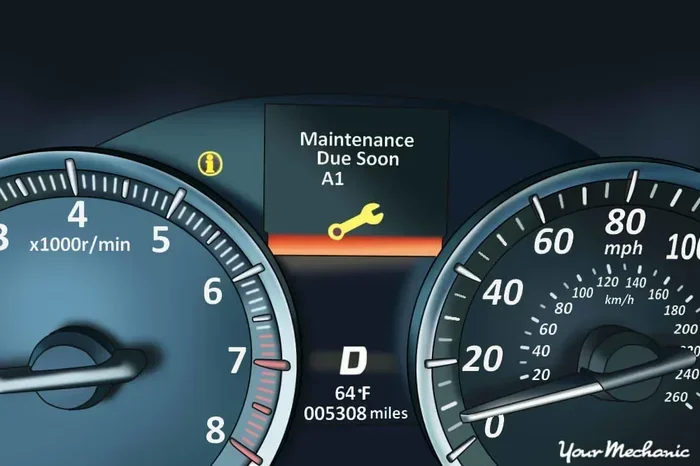
The light usually looks like a wrench, a spanner, or the words “MAINT” on the dashboard display. It may also appear as a yellow or orange symbol. If the light is red, that could indicate a more urgent issue, and you should check your owner’s manual right away.
Maintenance Required Light vs. Check Engine Light
People often confuse the maintenance required light with the check engine light. They are very different. The check engine light signals an actual problem detected by the engine management system. It could mean anything from a loose gas cap to a serious sensor failure. If you are unsure which light you are looking at, you can learn more about the check engine light and what it means.
The maintenance light, on the other hand, is purely a service reminder. It does not indicate a malfunction. You can still drive safely when this light is on. However, you should not ignore it for too long, because skipping oil changes and other routine car maintenance can lead to engine wear over time.
Why Does the Maintenance Light Come On?
Understanding the common triggers for the maintenance required light helps you stay ahead of your vehicle maintenance schedule. Here are the most frequent reasons this light appears on your dashboard.
- Oil change due: This is the number one reason. Most cars trigger the light at the recommended oil change interval, which is typically every 5,000 to 7,500 miles for modern vehicles.
- Time-based service: Some manufacturers set a time interval, such as every 6 months or 12 months, regardless of mileage.
- Other scheduled services: The light may also come on for tire rotations, air filter replacements, brake inspections, or fluid flushes.
- Aftermarket oil change: If you changed your own oil or visited a quick-lube shop, the service tech may not have reset the maintenance timer.
- Driving in harsh conditions: Stop-and-go traffic, extreme temperatures, and dusty roads can trigger the light earlier than normal.
Common Driving Conditions That Trigger the Light Early
Many drivers are surprised when the maintenance light comes on even though they just had their car serviced. This often happens because the system counts “severe service” miles differently. Short trips under 5 miles, frequent idling, and driving in very hot or very cold weather all count as severe conditions. The system thinks these miles are harder on the engine, so it shortens the service interval.
If you frequently drive in the city rather than on highways, your service reminder may pop up faster than expected. This is normal and actually designed to protect your engine. Short trips do not allow the oil to fully warm up, which means contaminants build up faster.
How to Turn Off the Maintenance Required Light
Now for the part you have been waiting for. Turning off the maintenance required light is straightforward in most vehicles. The exact steps vary by car brand and model, but the general process is similar across most makes and years. Below, we cover the most common methods.
Method 1: Using the Dashboard Controls
This is the most common method and works on many Toyota, Honda, Ford, and Chevrolet models. Here is what you typically need to do:
- Turn the ignition to the “ON” position without starting the engine. You can do this by pressing the start button without stepping on the brake pedal.
- Locate the trip meter or odometer button on your dashboard or steering wheel controls.
- Press and hold the trip reset button until the maintenance light starts to flash.
- Release the button and then press it again briefly.
- The light should turn off and the service interval counter resets to zero.
For many Toyota models, you can also turn the ignition to the “ON” position and then hold the trip meter button for about 10 seconds. The maintenance light should blink and then go off. This is a quick and easy way to reset the maintenance light without any tools.
Method 2: Using the Steering Wheel Controls
Newer vehicles often have digital displays and steering wheel buttons that let you navigate through the dashboard menu. In these cars, you can usually find the maintenance reset option under the “Settings” or “Vehicle Info” menu. Use the arrow buttons to scroll to the maintenance menu, select “Reset,” and confirm your choice.
Some vehicles, like certain Subaru and Mazda models, have a slightly different procedure. If you own a Subaru, you can find detailed steps for resetting warning lights specific to your model. Always refer to your owner’s manual for the exact steps for your particular vehicle.
Method 3: Using an OBD-II Scanner
If the dashboard button method does not work for your car, you can use an OBD-II scanner. This is a small diagnostic tool that plugs into the port under your steering column. Here is how it works:
- Plug the scanner into the OBD-II port.
- Turn the ignition to the “ON” position.
- Follow the scanner’s menu to find the “Clear Codes” or “Reset Maintenance” option.
- Select the maintenance light reset and confirm.
- The light should turn off, and the service counter resets.
OBD-II scanners are affordable and very useful for any car owner. They can also help you read other dashboard warning lights and understand what your vehicle is trying to tell you. If you want to learn more about what other lights on your dash mean, you can explore information about clearing the engine management light.
Method 4: Visiting a Dealership or Auto Shop
If none of the DIY methods work, you can always take your car to a dealership or mechanic. They have professional diagnostic equipment that can reset the maintenance light in seconds. Many shops will do this for free as a courtesy, especially if you are already in for service. Just be aware that some dealerships may charge a small fee for this simple procedure.
It is also worth noting that if you lease your vehicle, you may want to keep records of all service visits. Learning about early lease termination options can be helpful if your circumstances change.
Step-by-Step Reset Guide for Popular Car Brands
Every car brand has its own specific reset procedure. Below is a quick reference guide for some of the most popular brands on the road today.
Toyota Maintenance Light Reset
For most Toyota models, the process is simple. Turn the ignition to “ON,” press and hold the trip meter button for about 10 seconds, and the maintenance light should blink and then turn off. For newer Toyota models with a digital display, you may need to navigate through the steering wheel controls to find the reset option in the vehicle settings menu.
Honda Maintenance Light Reset
Honda vehicles typically require you to turn the ignition to “ON,” then press and hold the trip meter button until the light resets. On some Honda models, you may need to hold the button for up to 15 seconds. The light should go out and the service interval counter should return to zero.
Ford Maintenance Light Reset
Ford trucks and SUVs often use the steering wheel controls to access the maintenance menu. Navigate to “Vehicle Info,” then “Maintenance,” and select “Reset.” The light should turn off immediately. For older Ford models, you may need to use the trip odometer button sequence instead.
Chevrolet and GMC Maintenance Light Reset
GM vehicles usually have a “Vehicle Information” menu on the digital display. Scroll to the maintenance option, select “Reset Service,” and confirm. The maintenance light should turn off right away.
Can You Just Ignore the Maintenance Light?
Technically, yes. The car will still run with the maintenance light on. But that does not mean you should ignore it. The maintenance required light exists for a reason. It reminds you to stay on top of routine car maintenance that keeps your vehicle running smoothly and safely.
Skipping oil changes can lead to dirty oil buildup, which reduces engine performance and fuel efficiency. Over time, neglected maintenance can cause bigger problems like engine overheating, transmission issues, or premature wear on critical components. These repairs cost a lot more than a simple oil change.
If you have been putting off your service, now is a great time to schedule it. You can also learn more about the difference between the maintenance light and other dashboard warnings like the check engine light. Understanding these differences helps you respond appropriately to each warning.
When to See a Mechanic Instead of Resetting the Light
There is a big difference between resetting a maintenance light and ignoring a real problem. You should visit a mechanic if:
- The maintenance light stays on after you reset it.
- Other warning lights appear alongside the maintenance light.
- You notice unusual sounds, smells, or changes in how your car drives.
- The light keeps coming back shortly after you reset it.
- You are unsure whether the light is the maintenance light or the check engine light.
Sometimes what looks like a maintenance light is actually a different warning that needs professional attention. If you are ever unsure, it is always better to get a professional opinion. You can learn more about how to identify different dashboard lights and when to take action.
Quick Tips to Keep Your Dashboard Lights Healthy
Keeping your dashboard in good shape is about more than just resetting one light. Here are some practical tips that help you stay on top of your vehicle’s health.
- Check your owner’s manual regularly: It contains the full maintenance schedule and reset procedures for your specific model.
- Reset the light after every service: Make it a habit to ask the service technician to reset the maintenance timer after each visit.
- Keep a service log: Write down every oil change, tire rotation, and inspection. This helps you stay organized and proves your maintenance history if you ever sell the car.
- Do not wait for the light to come on: If you know your mileage is approaching the service interval, schedule the appointment early.
- Learn what each dashboard symbol means: Familiarizing yourself with common dashboard lights helps you react quickly and appropriately to warnings.
Taking a few minutes to understand your dashboard can save you time, money, and stress in the long run. A well-maintained car runs better, lasts longer, and holds its value. The maintenance required light is your friend, not your enemy. It is simply your car’s way of saying, “Hey, I need a little attention.”
Common Mistakes People Make With the Maintenance Light
Even though the maintenance light is simple, drivers still make mistakes when dealing with it. Here are the most common errors to avoid.
- Confusing it with the check engine light: The maintenance light means service is due. The check engine light means something is wrong. They require different responses.
- Resetting the light without doing the actual service: This is the most common mistake. Turning off the light does not change the fact that your car needs an oil change or other service. Always complete the maintenance first.
- Ignoring the light for thousands of miles: Even though the maintenance light is not an emergency, pushing it too far past the service interval can harm your engine.
- Using the wrong reset procedure: Every car is different. Using the wrong method can sometimes cause error codes or won’t turn the light off at all.
- Not checking for underlying issues: If the light keeps coming back after you reset it, there may be an underlying issue that needs professional diagnosis.
Avoiding these mistakes keeps your car in great shape and prevents unnecessary trips to the shop. A little knowledge goes a long way when it comes to dashboard maintenance and vehicle care.
The Role of Regular Maintenance in Car Longevity
Your car is a significant investment. Regular maintenance is the best way to protect that investment and keep your vehicle running reliably for years. The maintenance required light is your car’s built-in reminder system designed to help you stay on track.
Studies show that vehicles that follow a consistent maintenance schedule last significantly longer than those that do not. Regular oil changes keep the engine lubricated and cool. Fresh filters improve fuel efficiency and air quality inside the cabin. Timely inspections catch small problems before they become expensive repairs.
Beyond the financial benefits, staying current with your service schedule also improves safety. Well-maintained brakes, tires, and steering components all contribute to a safer driving experience. Your car is one of the most important tools you use every day. Treating it well pays off in reliability, performance, and peace of mind.
Final Thoughts
The maintenance required light is a simple reminder, not a cause for panic. Whether you reset it yourself using the dashboard buttons, a steering wheel control menu, or an OBD-II scanner, the process is quick and usually straightforward. The key is to make sure you actually complete the needed service before or shortly after resetting the light.
Keep your service intervals in mind, stay on top of your oil changes, and don’t let that little warning symbol catch you off guard. With the knowledge you now have, you can handle the maintenance light with confidence every time it comes on. Your car will thank you for it, and your wallet will too.
Frequently Asked Questions
Can I drive my car with the maintenance required light on?
Yes, you can safely drive your car with the maintenance required light on. It is not an emergency warning. It simply means your vehicle is due for routine service like an oil change or inspection. However, you should not ignore it for too long, as skipping scheduled maintenance can lead to engine wear over time.
How do I know if the maintenance light and the check engine light are different?
The maintenance light usually looks like a wrench or says “MAINT” on the display. The check engine light typically looks like an engine silhouette. The maintenance light is a service reminder, while the check engine light signals an actual problem detected by the engine management system. If you are unsure, it is best to have a professional check it out.
What happens if I reset the maintenance light without getting my oil changed?
Resetting the light without completing the service simply clears the reminder. The underlying need for an oil change remains. Old oil loses its lubricating properties over time, which can lead to increased engine wear. Always complete the actual maintenance before resetting the light to keep your car running properly.
Can the maintenance light come on even if I just had my car serviced?
Yes, this can happen if the service technician did not reset the maintenance timer. It can also occur if you had the work done at a shop that does not reset the system, or if you changed your own oil. The fix is simple: just reset the light yourself using the dashboard controls or ask the next service provider to do it.
How often does the maintenance required light come on?
Most vehicles trigger the maintenance light every 5,000 to 7,500 miles, though this varies by manufacturer and model. Some cars use a fixed mileage interval, while others use a flexible system based on driving conditions. Check your owner’s manual for the specific service schedule for your vehicle.
Do I need special tools to turn off the maintenance required light?
In most cases, no special tools are needed. You can usually reset the light using the dashboard buttons or steering wheel controls. However, some newer or luxury vehicles may require an OBD-II scanner or a visit to a dealership. A basic OBD-II scanner is affordable and useful for many car maintenance tasks beyond just resetting lights.