Does Audi Own Porsche Here Is Everything You Need to Know
Yes, Audi does not directly own Porsche. Instead, both brands fall under the Volkswagen Group umbrella. Porsche AG is majority-owned by Volkswagen AG, which also owns Audi AG. This means the Porsche and Audi connection runs deeper than most people realize, with shared technology, platforms, and engineering resources shaping both luxury brands.
Have you ever wondered about the connection between Audi and Porsche? These two luxury brands sit side by side in every showroom and every car magazine. But the question remains: does Audi own Porsche? The answer is more complicated than a simple yes or no.
The truth is that both Audi and Porsche belong to the same parent company. Volkswagen AG controls both brands, but each one operates with its own identity, engineering team, and design philosophy. This relationship has shaped the luxury car market for decades and continues to influence everything from sports cars to luxury sedans.
In this article, we will break down the full story of how Audi and Porsche became connected. You will learn about the Volkswagen Group, the history behind both brands, and what this ownership means for car buyers today. By the end, you will have a clear picture of how these two iconic brands fit together.
So let us dive right in and explore the fascinating world of automotive ownership and what it means for the cars you love.
Key Takeaways
- Audi does not own Porsche: Both brands are part of the Volkswagen Group, with Porsche AG being majority-controlled by Volkswagen AG.
- The Volkswagen Group is a massive car conglomerate: It owns Audi, Porsche, Lamborghini, Bentley, and several other luxury and performance brands.
- Shared platforms and technology benefit both brands: Many Porsche and Audi vehicles share the same base architecture, leading to cost savings and better engineering.
- The Porsche-Piëch family still holds significant influence: The founding family maintains a special voting rights stake in Porsche AG through Porsche Automobil Holding SE.
- Car buyers get premium quality at different price points: The relationship allows Audi to offer luxury at a more accessible price while Porsche focuses on high-performance models.
- Cross-brand collaboration is growing: Electric vehicle development, racing programs, and luxury features are increasingly shared between the two brands.
📑 Table of Contents
- The Short Answer: Does Audi Own Porsche?
- Understanding the Volkswagen Group
- The History of Porsche and Audi
- Current Ownership Structure
- How This Relationship Affects Car Buyers
- What the Future Holds for Porsche and Audi
- Common Mistakes People Make About Audi and Porsche Ownership
- Expert Insights on the Porsche-Audi Connection
- Key Takeaways
- Conclusion
The Short Answer: Does Audi Own Porsche?
The short answer is no. Audi does not own Porsche. Instead, both brands are owned by the same parent company. Volkswagen AG holds the majority stake in Porsche AG. At the same time, Volkswagen AG also owns Audi AG. This makes them sister brands under one large automotive umbrella.
Think of it like a family tree. Volkswagen AG sits at the top. Audi and Porsche branch off from there as separate entities. Each brand has its own management, design studio, and engineering department. They build different types of cars for different types of buyers. But they share resources, technology, and platforms behind the scenes.
This structure is common in the automotive world. Large car companies often own multiple brands. General Motors once owned Cadillac, Chevrolet, and Buick. Toyota owns Lexus and has stakes in other manufacturers. The Volkswagen Group takes this concept to another level with its impressive lineup of luxury and performance brands.
Understanding this ownership structure helps explain why certain Porsche and Audi models feel similar on the road. It also clarifies why parts, technology, and engineering insights flow freely between these two brands. The connection runs deeper than most car buyers realize.
Understanding the Volkswagen Group
What Is the Volkswagen Group?
The Volkswagen Group, often called VW Group, is one of the largest car manufacturers in the world. It is headquartered in Wolfsburg, Germany. The group owns and operates several car brands across different segments of the market.
Volkswagen Group owns brands that range from affordable mass-market cars to ultra-luxury vehicles. Here is a quick look at some of the major brands under this umbrella:
- Volkswagen – The core brand offering affordable and reliable cars
- Audi – The luxury brand known for refined sedans and SUVs
- Porsche – The high-performance sports car maker
- Lamborghini – The supercar brand famous for extreme performance
- Bentley – The ultra-luxury brand crafting grand tourers and limousines
- Skoda – The budget-friendly brand popular in Europe
- SEAT – The Spanish brand focusing on stylish and affordable cars
This is an impressive lineup. Volkswagen Group competes with other automotive giants like Toyota, Stellantis, and Hyundai-Kia. The group sells millions of vehicles every year across all price ranges and market segments.
Which Brands Does Volkswagen Own?
Volkswagen Group owns a total of eight passenger car brands. These include Volkswagen, Audi, Porsche, Lamborghini, Bentley, SEAT, Skoda, and Cupra. Each brand targets a specific market segment.
Audi targets the premium luxury segment. Porsche focuses on high-performance sports cars and SUVs. Lamborghini goes all-in on supercars. Bentley caters to ultra-luxury buyers. And Volkswagen, Skoda, SEAT, and Cupra serve the mass market with quality and affordability.
This strategy allows Volkswagen Group to capture customers at every price point. A buyer might start with a Volkswagen Golf and eventually upgrade to an Audi A4, then a Porsche Cayenne, and finally a Bentley Continental GT. The group has a clear path for customers as their budgets grow.
The shared resources across these brands create massive economies of scale. Engineering teams develop platforms that multiple brands can use. This keeps development costs lower and allows each brand to invest more in quality and innovation.
The History of Porsche and Audi
Ferdinand Porsche’s Vision
The story of Porsche starts with Ferdinand Porsche, a legendary automotive engineer. He was born in Maffersdorf, Bohemia, in 1875. From a young age, he showed a talent for designing and building cars.
Ferdinand Porsche worked for several major car companies before starting his own design firm. He created the Volkswagen Beetle, one of the most famous cars ever made. He also designed military vehicles and racing cars throughout his career.
In 1931, Ferdinand Porsche founded the Porsche design office. The company focused on engineering and consulting work. The famous Porsche 356, the first car to carry the Porsche name, debuted in 1948. It was a lightweight sports car that quickly earned a reputation for performance and handling.
The Porsche 911 arrived in 1964 and became an icon. It remains the heart of the Porsche lineup to this day. The 911 set the standard for rear-engine sports cars and helped Porsche build a loyal following worldwide.
How Audi Entered the Picture
Audi has a different but equally fascinating origin story. The brand traces its roots back to August Horch, a pioneer of the automobile industry. Horch founded his first car company in 1899. After a dispute with his business partners, he left and started a new company.
In German, “horch” means “listen.” The Latin translation of “listen” is “audi.” That is how the Audi name was born. The company went through several ownership changes over the decades.
In 1966, Volkswagen AG acquired Auto Union, which was the parent company of Audi at the time. This was a game-changing move. Volkswagen saw the potential in Audi’s engineering expertise and premium positioning.
Under Volkswagen’s ownership, Audi grew rapidly. The company introduced models like the Audi 80, the Audi 100, and eventually the legendary Audi Quattro. The Quattro launched in 1980 and revolutionized the automotive world with its all-wheel-drive system.
The Porsche-Piech Family Connection
Here is where the story gets really interesting. The Porsche and Piech families are deeply intertwined. Ferdinand Porsche’s daughter, Louise, married Anton Piëch. Meanwhile, Ferdinand Porsche’s son, Ferry Porsche, founded the Porsche car company.
The Piech family eventually gained control of Volkswagen AG. The Porsche and Piech families worked together to build one of the most powerful automotive empires in history. This family connection has shaped the entire relationship between Audi and Porsche.
Today, the Porsche-Piech family through Porsche Automobil Holding SE holds a significant voting stake in Volkswagen AG. This gives them enormous influence over the entire Volkswagen Group, including both Audi and Porsche.
Current Ownership Structure
How Much of Porsche Does Volkswagen Control?
Volkswagen AG owns approximately 75 percent of Porsche AG. The remaining 25 percent is held by Porsche Automobil Holding SE, which is controlled by the Porsche-Piech family. This gives Volkswagen operational control while the founding family retains a meaningful stake.
This ownership structure was finalized after a long legal battle. In 2011, Porsche and Volkswagen completed their merger after years of negotiation. The deal created one of the most complex ownership structures in the automotive industry.
For car buyers, this means Porsche operates as a semi-independent entity within Volkswagen Group. Porsche has its own CEO, its own board, and its own design and engineering teams. But it also benefits from Volkswagen Group’s resources, research, and global reach.
Porsche AG vs. Porsche Automobil Holding SE
This is where things get confusing for many people. There are actually two separate Porsche entities:
- Porsche AG – This is the car manufacturer. It builds the Porsche 911, Cayenne, Panamera, Taycan, and other models. Volkswagen AG holds the majority stake here.
- Porsche Automobil Holding SE – This is an investment holding company. It is controlled by the Porsche-Piech family and holds a large stake in Volkswagen AG itself.
So the Porsche family actually holds a major stake in Volkswagen, which in turn owns Porsche AG. It is a circular relationship that makes the automotive world both fascinating and complex.
Audi AG sits more directly under Volkswagen AG. It operates as a fully owned subsidiary with its own management structure but benefits from close collaboration with the parent company.
How This Relationship Affects Car Buyers
Does It Affect Car Quality?
Many car buyers wonder if the shared ownership between Audi and Porsche affects quality. The short answer is no. Both brands maintain their own strict quality standards. Porsche and Audi engineers work hard to ensure their cars meet the expectations of their respective customers.
However, the relationship does bring real benefits. Shared platforms mean both brands can invest more in refinement and testing. The Porsche Macan and the Audi Q5, for example, share the same base platform. But Porsche tunes the suspension, powertrain, and interior to deliver a distinctly different driving experience.
This cross-pollination of technology works both ways. Audi benefits from Porsche’s expertise in high-performance engineering. Porsche benefits from Audi’s research in luxury comfort and technology features. The result is better cars from both brands.
Pricing and Market Position
The ownership structure also affects pricing. Porsche models generally command higher prices than comparable Audi models. This reflects Porsche’s focus on performance, exclusivity, and brand prestige.
Audi positions itself as a more accessible luxury brand. The Audi A4 starts at a lower price than the Porsche 911. The Audi Q5 is more affordable than the Porsche Macan. This allows buyers to enter the luxury car market at different price points.
Here is a quick comparison of how the two brands stack up in key areas:
| Feature | Audi | Porsche |
|---|---|---|
| Price Range | More accessible luxury | Premium performance |
| Target Buyer | Luxury daily drivers | Performance enthusiasts |
| Platform Sharing | Shared with Porsche and VW Group | Shared with Audi and VW Group |
| Brand Focus | Refinement and technology | Driving dynamics and speed |
| Model Range | Sedans, SUVs, wagons, e-trons | Sports cars, SUVs, sedans |
| Dealership Experience | Premium but approachable | Exclusive and personalized |
This table shows how the two brands serve different needs while sharing a common foundation. Buyers who want a luxury daily driver might lean toward Audi. Those who crave pure driving excitement will gravitate toward Porsche.
Quick Tips for Buyers Considering Audi or Porsche
- Test drive both brands: The driving experience differs significantly even on shared platforms
- Consider maintenance costs: Porsche parts and service tend to be more expensive than Audi
- Look at resale values: Porsche generally holds its value better than most luxury brands
- Check warranty coverage: Both brands offer competitive warranties but terms vary by model
- Explore the Porsche Cayenne and Audi Q7: These SUVs share a platform but deliver very different experiences
What the Future Holds for Porsche and Audi
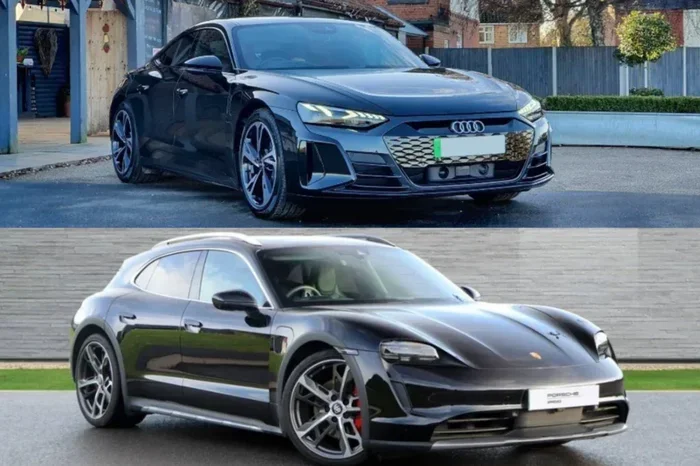
The automotive industry is changing rapidly. Electric vehicles are becoming more important every year. Both Porsche and Audi are investing heavily in electrification. The Porsche Taycan has proven that electric sports cars can deliver thrilling performance. The Audi e-tron lineup shows that luxury EVs can be practical and desirable.
The Volkswagen Group is leading the charge toward electric mobility. The MEB platform, developed by Volkswagen Group, underpins many electric models from Audi, Porsche, and other brands. This shared electric platform accelerates development and reduces costs for everyone involved.
Experts predict that the relationship between Audi and Porsche will grow even stronger in the coming years. Shared technology, joint research projects, and collaborative development efforts will become more common. But each brand will maintain its unique identity and appeal.
The Porsche-Piech family continues to play a key role in guiding the Volkswagen Group’s strategy. Their vision for the future combines performance, luxury, and sustainability in equal measure. This family-driven approach has been a hallmark of the Porsche-Audi connection for generations.
Common Mistakes People Make About Audi and Porsche Ownership
There are several misconceptions about the Audi-Porsche relationship. Let us clear up a few of the most common ones.
Mistake 1: Assuming Audi owns Porsche. As we have covered, Volkswagen Group owns both brands. Audi has no ownership stake in Porsche.
Mistake 2: Thinking shared platforms mean shared cars. While Audi and Porsche share platforms, the final products are very different. Each brand tunes its cars differently for distinct driving experiences.
Mistake 3: Believing Porsche is losing its identity. Porsche remains fiercely independent in its engineering approach. The brand’s focus on driving purity has not diminished despite being part of a larger group.
Mistake 4: Ignoring the Porsche-Piech family influence. The founding family still holds significant power and shapes the direction of the entire Volkswagen Group, including both Audi and Porsche.
Mistake 5: Overlooking the benefits of group ownership. Shared resources mean better technology, more research funding, and improved quality control across all brands in the group.
Expert Insights on the Porsche-Audi Connection
Automotive industry analysts have long studied the Volkswagen Group’s ownership strategy. The approach of building a portfolio of brands has proven remarkably successful. Each brand serves a distinct market segment while benefiting from group-wide resources.
Dr. Ferdinand Piech, the late chairman of Volkswagen Group, was the architect of much of this strategy. His vision was to create a comprehensive automotive empire that covered every segment from economy cars to ultra-luxury vehicles. His influence on both Audi and Porsche cannot be overstated.
Today, industry experts point to the Volkswagen Group as a model for automotive consolidation. The group’s ability to maintain brand individuality while sharing resources sets it apart from competitors. This balance between independence and collaboration is key to its continued success.
Looking ahead, the Porsche-Audi connection will likely deepen. Joint development projects in electric vehicles, autonomous driving, and digital technology will bring the two brands even closer together. Yet both will continue to offer something unique to their loyal customers.
Key Takeaways
- Audi does not own Porsche: Both brands are owned by Volkswagen AG, making them sister companies rather than parent and subsidiary.
- The Volkswagen Group is a global automotive powerhouse: It owns Audi, Porsche, Lamborghini, Bentley, and several other brands across different market segments.
- The Porsche-Piech family holds significant influence: Through Porsche Automobil Holding SE, the founding family maintains a strong voice in the Volkswagen Group’s decisions.
- Shared platforms benefit both brands: Technology, engineering insights, and development costs are shared across the group, leading to better cars.
- Porsche and Audi serve different buyers: Porsche focuses on performance and driving excitement, while Audi emphasizes luxury refinement and accessibility.
- The future is electric and collaborative: Both brands are investing in electrification and will continue to share technology platforms going forward.
- Brand identity remains strong: Despite shared ownership, both Porsche and Audi maintain distinct identities, engineering philosophies, and customer experiences.
Conclusion
So, does Audi own Porsche? The answer is no, but the relationship between these two brands is closer than most people think. Both Audi and Porsche belong to the Volkswagen Group, one of the largest and most successful automotive companies in the world.
This ownership structure benefits everyone. Porsche gets access to Volkswagen Group’s vast resources and engineering expertise. Audi benefits from Porsche’s performance DNA and racing heritage. Car buyers get access to two exceptional brands that push each other to innovate and improve.
The Porsche-Audi connection is a perfect example of how modern automotive groups operate. Individual brands maintain their identity and purpose while sharing a common foundation. This model has proven successful for decades and will likely shape the future of the industry for years to come.
Whether you are a loyal Audi fan or a Porsche enthusiast, understanding this relationship gives you a deeper appreciation for both brands. The next time you see an Audi and a Porsche parked side by side, remember that they share more than just a showroom. They share a vision, a history, and a commitment to automotive excellence.
The road ahead looks exciting for both brands. Electric vehicles, new technologies, and continued innovation will keep Audi and Porsche at the forefront of the luxury car market. And the Volkswagen Group will continue to provide the foundation that makes it all possible.
Frequently Asked Questions
Is Porsche a part of Audi?
No, Porsche is not part of Audi. Both brands are owned by Volkswagen AG, making them sister companies. Porsche AG operates independently with its own management, engineering teams, and design philosophy. Audi AG also operates independently under the Volkswagen Group umbrella.
Who actually owns Porsche cars?
Porsche AG is majority-owned by Volkswagen AG, which holds about 75 percent of the company. The remaining 25 percent is held by Porsche Automobil Holding SE, which is controlled by the Porsche-Piech family. So Volkswagen Group is the primary owner, but the founding family retains significant influence.
Do Audi and Porsche share any car platforms?
Yes, Audi and Porsche share several platforms within the Volkswagen Group. The Porsche Cayenne and Audi Q7 share a platform. The Porsche Macan and Audi Q5 also share a base architecture. However, each brand tunes its cars differently to deliver distinct driving experiences.
Why are Porsche cars more expensive than Audi cars?
Porsche focuses on high-performance sports cars and SUVs with limited production numbers. The brand emphasizes exclusivity, track-focused engineering, and premium materials. Audi targets a broader luxury market with higher production volumes, which helps keep prices more accessible.
Will Audi and Porsche ever merge into one brand?
This is very unlikely. Both brands have strong identities and loyal customer bases. The Volkswagen Group benefits from having distinct brands that serve different market segments. Merging them would eliminate the competitive advantages each brand brings to the group.
How does the Volkswagen Group benefit from owning both Audi and Porsche?
The group benefits from shared research and development costs, shared manufacturing platforms, and shared supply chain resources. Each brand can focus on its target market while leveraging group-wide technology. This creates a powerful synergy that benefits both the companies and their customers.