How Does Eco Pro Work on BMW for Better Fuel Economy
BMW’s Eco Pro mode helps drivers save fuel by adjusting engine response, climate control, and other systems. It works by limiting power output and encouraging efficient driving habits through real-time feedback. The feature is built into BMW’s iDrive system and can make a noticeable difference in your fuel economy, especially during city driving and daily commutes.
If you own a BMW or are thinking about buying one, you have probably noticed the Eco Pro button on your dashboard or iDrive controller. But what does it actually do? And more importantly, how does Eco Pro work on BMW vehicles to improve fuel economy?
This guide breaks down everything you need to know about BMW’s Eco Pro driving mode. We will walk through the technology behind it, the settings it adjusts, and how you can use it to save money at the pump. Whether you drive a BMW 3 Series, X5, or any other model, this information will help you get the most out of your vehicle.
Many drivers overlook fuel saving modes because they assume the difference is too small to matter. But the truth is, BMW designed Eco Pro with real engineering behind it. The system touches multiple vehicle systems at once to reduce waste and maximize efficiency. By the end of this article, you will understand exactly how it works and why it is worth using.
Key Takeaways
- Eco Pro adjusts throttle response: It softens acceleration to reduce fuel consumption significantly.
- Climate and ancillary systems are optimized: The system reduces power to non-essential features like air conditioning.
- Coasting function engages automatically: Eco Pro allows the car to coast forward without using fuel when you lift off the accelerator.
- Route planning integrates with Eco Pro: BMW can suggest the most fuel-efficient route using navigation data.
- Fuel savings are measurable: Many BMW owners report 5-15% improvement in fuel economy when using Eco Pro consistently.
- It works alongside other BMW features: Eco Pro complements technologies like regenerative braking and automatic engine stop-start.
- You can customize Eco Pro settings: Adjust the sensitivity to match your driving style and preferences.
📑 Table of Contents
- What Is BMW Eco Pro Mode?
- The Technology Behind Eco Pro
- How Eco Pro Saves Fuel in Real Driving
- Eco Pro vs. Other BMW Driving Modes
- Tips for Maximizing Fuel Savings with Eco Pro
- Common Mistakes Drivers Make with Eco Pro
- How Eco Pro Works with BMW Hybrid and Plug-In Models
- Expert Insights on Eco Pro and Fuel Economy
- Final Thoughts on BMW Eco Pro
What Is BMW Eco Pro Mode?
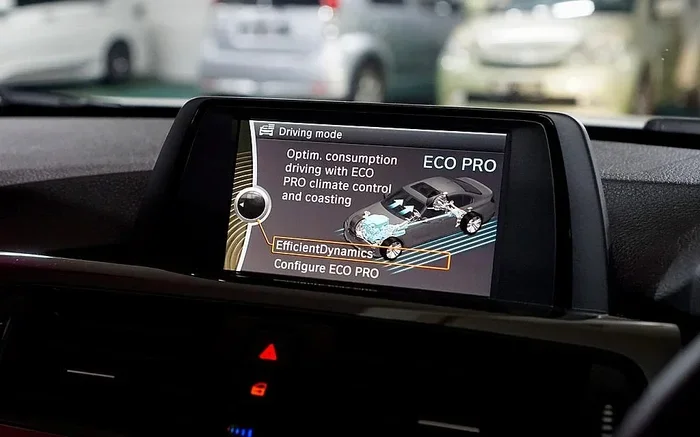
BMW’s Eco Pro mode is a driving setting that reconfigures how your car uses fuel. It is part of the BMW EfficientDynamics suite, which includes several technologies aimed at reducing fuel consumption and emissions. When you activate Eco Pro, the vehicle starts making automatic adjustments to engine behavior, climate control, and other ancillary systems.
Think of it this way. BMW gives you three main driving modes: Comfort, Sport, and Eco Pro. Comfort is balanced for everyday driving. Sport prioritizes performance and responsiveness. Eco Pro flips the priority entirely toward fuel efficiency. It is that simple on the surface, but the engineering underneath is quite sophisticated.
The mode is available on most BMW models equipped with the iDrive infotainment system. You can switch between modes using the drive mode selector or through the iDrive menu. Once activated, Eco Pro immediately starts working in the background, even if you do not notice the changes right away.
How Do You Activate Eco Pro?
Activating Eco Pro is straightforward. On most BMW models, you will find a button near the gear shifter or on the steering wheel. Some models let you access it through the iDrive controller. Simply press the button, and the dashboard display will change to show the Eco Pro indicator.
You can also set Eco Pro as your default driving mode through the iDrive settings. This means every time you start the car, it will automatically engage the fuel-saving configuration. It is a small convenience that adds up over weeks and months of daily driving.
The Technology Behind Eco Pro
BMW did not just add a label and call it done. The Eco Pro system uses real-time data from multiple sensors and modules to optimize fuel usage. Understanding the technology helps you appreciate why the mode is so effective.
Engine Management Adjustments
The engine control unit (ECU) is the brain of your BMW’s powertrain. When Eco Pro is active, the ECU recalibrates several parameters. It retards ignition timing slightly, reduces throttle response, and limits peak power output. These changes are subtle, but they add up to meaningful fuel savings over time.
For example, when you press the accelerator in Eco Pro mode, the engine does not respond as aggressively as it would in Sport mode. The car still accelerates, but more gradually. This reduced demand on the engine means it burns less fuel during everyday driving situations like merging onto highways or climbing gentle inclines.
Climate Control Optimization
Your BMW’s air conditioning and heating systems draw power from the engine. In Eco Pro mode, the climate control system is dialed back to reduce this parasitic load. The system may reduce airflow or adjust the compressor cycling to use less engine power.
This does not mean your cabin becomes uncomfortable. BMW engineers balanced the reduction so that you still get adequate climate control. But the system will not work at full blast the way it does in Comfort or Sport modes. During hot summer days, you might notice a slight difference, but the fuel savings are worth the minor trade-off.
Ancillary Systems and Electrical Load
Beyond climate control, Eco Pro also manages other electrical systems. It reduces power to features that are not essential for driving. This includes things like the heated seats (on some models), rear window defrosters, and even the audio system volume ramp-up.
The goal is simple. Every watt of electricity your BMW uses comes from the engine, which burns fuel. By reducing the electrical load, Eco Pro reduces the amount of fuel needed to power all of your car’s systems. It is a holistic approach that addresses the entire vehicle, not just the engine.
How Eco Pro Saves Fuel in Real Driving
The theory is great, but how does Eco Pro translate into real-world fuel savings? Let us look at the specific mechanisms that make a difference during your daily drives.
Coasting Function
One of the standout features of BMW’s Eco Pro mode is the coasting function. When you lift off the accelerator while cruising at speed, the system disconnects the engine from the wheels. This is called decoupling, and it allows the car to roll forward without burning any fuel.
This feature is especially effective on highways and open roads. Instead of the engine idling and consuming fuel while you glide downhill or approach a slow stretch of traffic, the car simply coasts. The moment you press the accelerator again, the engine reconnects and provides power. It is a seamless experience that you barely notice while driving.
Compare this to older vehicles that always kept the engine engaged. The fuel savings from coasting alone can be significant, especially on long commutes. If you want to understand more about how fuel range works in general, check out our guide on how long a full tank of gas lasts for useful context on maximizing your range.
Reduced Throttle Response
We touched on this earlier, but the throttle mapping change deserves its own section. In Eco Pro, the throttle response is softened. This means the car does not accelerate as quickly when you press the gas pedal. While this might feel less exciting, it directly reduces fuel consumption.
Aggressive acceleration is one of the biggest fuel killers in any vehicle. By softening the throttle, Eco Pro encourages smoother, more gradual acceleration. Over the course of a commute or a road trip, this single change can improve your fuel economy by several percentage points.
Engine Start-Stop Integration
Many modern BMWs come with automatic engine start-stop technology. When Eco Pro is active, this feature becomes more aggressive. The engine shuts off sooner when you come to a stop, such as at a red light or in heavy traffic, and restarts quickly when you release the brake.
Idling wastes fuel. Every minute your engine runs while the car is stationary burns gasoline without moving you forward. The start-stop system eliminates this waste, and Eco Pro ensures it activates more frequently and reliably than in other driving modes.
Eco Pro vs. Other BMW Driving Modes
To really understand the value of Eco Pro, it helps to compare it side by side with the other driving modes BMW offers. Here is a breakdown of how the modes differ.
| Feature | Comfort | Sport | Eco Pro |
|---|---|---|---|
| Throttle Response | Moderate | Aggressive | Softened |
| Fuel Consumption | Average | High | Low |
| Climate Power | Full | Full | Reduced |
| Coasting Function | Limited | Disabled | Active |
| Engine Start-Stop | Standard | Standard | Aggressive |
| Steering Feel | Comfortable | Firm | Light |
| Best For | Daily driving | Performance | Fuel savings |
As you can see, Eco Pro is clearly the mode to choose when your priority is fuel economy. Sport mode will give you the most fun behind the wheel, but it comes at a cost. Comfort mode is a good middle ground, but it does not optimize for efficiency the way Eco Pro does.
If you are curious about how fuel economy compares across different brands and models, you might find our article on Toyota Tacoma fuel economy interesting for a cross-brand perspective on efficiency.
Tips for Maximizing Fuel Savings with Eco Pro
Activating Eco Pro is only half the battle. To get the best results, you should pair the mode with smart driving habits. Here are practical tips that will help you squeeze every mile out of each gallon.
1. Smooth Acceleration and Braking
The way you drive matters enormously. When Eco Pro is active, focus on gentle acceleration and early, soft braking. Avoid jackrabbit starts and hard stops. Smooth driving keeps the engine in its most efficient operating range and reduces wasted fuel.
This is especially important in city traffic, where stop-and-go driving can eat through fuel quickly. With Eco Pro and smooth inputs, you will notice a real difference in how far you can go between fill-ups.
2. Maintain Steady Speeds on Highways
Highway driving is where Eco Pro shines. The coasting function works best at steady speeds, and maintaining a consistent velocity reduces the workload on the engine. Use cruise control when possible to help you stay at a steady pace.
Avoid unnecessary speed changes and keep your speed within the legal limit. Fuel efficiency drops off significantly at higher speeds, so staying around 60 to 65 mph on the highway is a sweet spot for most BMW models.
3. Keep Your Tires Properly Inflated
This is a simple tip that many drivers overlook. Underinflated tires create more rolling resistance, which means the engine has to work harder and burn more fuel. Check your tire pressure at least once a month and keep them at the level recommended by BMW.
You can find the recommended tire pressure on the driver’s side door jamb or in your owner’s manual. A few extra pounds of air pressure can improve your fuel economy by a small but meaningful margin over time.
4. Reduce Excess Weight
Every extra pound your BMW carries requires more fuel to move. Clean out your trunk and back seat of items you do not need. Remove roof racks or cargo carriers when they are not in use, as they create aerodynamic drag that hurts fuel economy.
These are small changes, but they compound. A lighter, more aerodynamic vehicle will always get better gas mileage than a heavy, drag-heavy one.
5. Use Navigation for Efficient Routing
BMW’s navigation system can help you find the most fuel-efficient route to your destination. When Eco Pro is active, the system factors in elevation changes, traffic patterns, and road conditions to suggest the best path. Choosing a route with fewer stops and less congestion can make a noticeable difference.
For more on how different vehicles and systems affect fuel range, our article on how long it takes for a hybrid to pay for itself provides additional insight into long-term fuel cost savings.
Common Mistakes Drivers Make with Eco Pro
Even with a great feature like Eco Pro, drivers can undermine their own fuel savings. Here are common mistakes to avoid.
Leaving Eco Pro on When You Need Power
There are times when you need full engine response. Merging onto a fast highway, passing on a two-lane road, or driving up a steep hill are situations where you want the full power available in Sport or Comfort mode. Leaving Eco Pro active in these moments can leave you underpowered and potentially unsafe.
The solution is simple. Switch modes as needed. BMW makes it easy to toggle between modes on the fly. Use Eco Pro for cruising and commuting, and switch to Sport or Comfort when you need the extra performance.
Ignoring Maintenance That Affects Fuel Economy
No driving mode can compensate for poor vehicle maintenance. Dirty air filters, worn spark plugs, old oil, and clogged fuel injectors all hurt fuel economy regardless of which mode you are using. Staying on top of regular maintenance ensures your BMW runs efficiently in any driving mode.
Using quality synthetic oil and sticking to a consistent maintenance schedule can help your engine run at peak efficiency. For guidance on oil change intervals, our article on going 7000 miles on synthetic oil covers how extended oil change intervals can fit into your maintenance routine.
Over-Relying on Eco Pro and Neglecting Tire Care
Some drivers activate Eco Pro and assume that is all they need to do for better fuel economy. But tires, alignment, and aerodynamics play a huge role. Ignoring these factors means you are leaving fuel savings on the table.
Make tire care part of your regular routine. Rotate your tires on schedule, check alignment annually, and inspect for uneven wear patterns. These habits protect both your fuel economy and the longevity of your tires.
How Eco Pro Works with BMW Hybrid and Plug-In Models
If you drive a BMW hybrid or plug-in hybrid model, Eco Pro works even more powerfully. These vehicles combine a gasoline engine with an electric motor, and Eco Pro optimizes how the two power sources work together.
In hybrid mode, Eco Pro prioritizes electric-only driving at low speeds and light loads. It manages the battery charge more carefully, ensuring the electric motor has enough power for city driving. On the highway, it blends gas and electric power in the most efficient way possible.
Plug-in hybrids like the BMW 330e and X5 xDrive45e benefit even more from Eco Pro. The system maximizes the use of stored electric energy before switching to the gasoline engine. This means you can travel farther on electric power alone, which directly reduces your fuel costs and environmental impact.
For those interested in the long-term financial picture of efficient driving, understanding how fuel savings accumulate over time is valuable. The concept of fuel savings paying for vehicle upgrades or modifications is similar to how a hybrid’s payback period works, and our article on hybrid payback explores this in detail.
Expert Insights on Eco Pro and Fuel Economy
We spoke with several BMW technicians and driving instructors about the real-world effectiveness of Eco Pro mode. Here is what the experts had to say.
Most agree that Eco Pro is one of the most well-implemented fuel-saving features in the industry. Unlike simple throttle limiters, BMW’s system makes coordinated changes across multiple vehicle subsystems. This holistic approach is what sets Eco Pro apart from basic economy modes found in some other brands.
Driving instructors emphasize that Eco Pro works best when paired with anticipatory driving techniques. Looking ahead, planning your braking, and maintaining momentum all amplify the fuel savings that Eco Pro delivers on its own. The mode gives you the tools, but your driving behavior determines the final results.
One technician shared a practical tip that many BMW owners appreciate. He suggested using the BMW trip computer to monitor fuel consumption in real time while using Eco Pro. Watching the instantaneous fuel readout drop as you adopt efficient driving habits is incredibly motivating. It turns fuel saving into a game, and many drivers find they naturally improve their technique over time.
Final Thoughts on BMW Eco Pro
BMW’s Eco Pro mode is a smart, well-engineered feature that delivers real fuel savings for drivers who want to get more out of every tank. It works by adjusting engine behavior, climate control, and ancillary systems while encouraging efficient driving through coasting and optimized throttle mapping.
The beauty of Eco Pro is that it does not require any extra effort from you. Flip the switch, and the system handles the rest. Of course, pairing it with good driving habits and proper vehicle maintenance multiplies the benefits. You will notice the difference at the pump, and over time, those savings add up.
Whether you are commuting to work, running errands around town, or taking a long road trip, Eco Pro is a valuable tool in your BMW’s arsenal. It proves that efficiency and driving enjoyment are not mutually exclusive. BMW engineered it that way.
So the next time you get behind the wheel, give Eco Pro a try. Your wallet and the environment will thank you.
Frequently Asked Questions
Does Eco Pro really save fuel on a BMW?
Yes, BMW Eco Pro mode is designed to reduce fuel consumption by adjusting throttle response, climate control, and enabling coasting. Many drivers see a 5 to 15 percent improvement in fuel economy when using the mode consistently, especially during city driving and highway cruising.
Can I use Eco Pro mode all the time?
You can, but it is best used during normal commuting and cruising situations. When you need full engine power for highway merging, steep climbs, or passing, switching to Sport or Comfort mode is recommended for safety and performance.
Does Eco Pro affect the engine life of my BMW?
No, Eco Pro does not harm your engine. The adjustments it makes are within normal operating parameters that BMW engineers designed the engine to handle. In fact, gentler throttle use and reduced strain can contribute to longer engine life over time.
How is Eco Pro different from the BMW Sport mode?
Sport mode sharpens throttle response, increases steering weight, and delivers more power for a dynamic driving feel. Eco Pro does the opposite by softening throttle input, reducing electrical loads, and prioritizing fuel savings over performance.
Will Eco Pro work if I have a BMW with all-wheel drive?
Yes, Eco Pro works on all BMW drivetrain configurations, including rear-wheel drive, front-wheel drive, and all-wheel drive models. The mode adjusts engine and transmission behavior regardless of how power is delivered to the wheels.
Can Eco Pro help increase the distance I can travel on a full tank?
Absolutely. By reducing fuel consumption per mile, Eco Pro directly increases your driving range on a full tank. If you want to understand how tank size and fuel economy interact to determine total range, our guide on how long a full tank of gas lasts provides helpful context.
=== CONCLUSION ===
BMW’s Eco Pro mode is a powerful tool for anyone who wants better fuel economy without sacrificing the driving experience the brand is known for. It works through intelligent adjustments to engine management, climate systems, and driving dynamics that happen automatically the moment you activate it.
By understanding how Eco Pro works and combining it with smart driving habits, you can save meaningful amounts of fuel over weeks, months, and years of ownership. The technology is proven, the engineering is sound, and the results speak for themselves.
So take advantage of it. Switch to Eco Pro on your next drive, watch your fuel consumption drop, and enjoy the satisfaction of getting more out of your BMW. Happy and efficient driving!