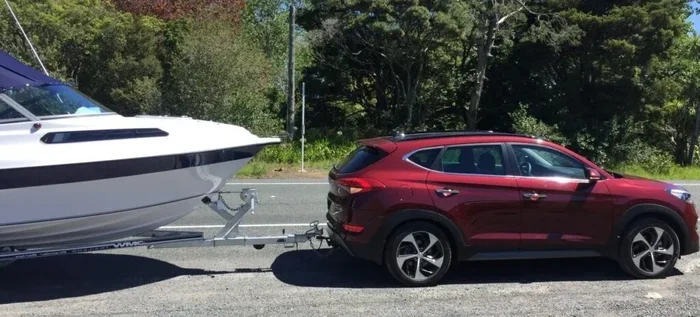
How Much Can a Hyundai Tucson Tow Everything You Need
The Hyundai Tucson towing capacity ranges from 1,500 to 3,500 pounds depending on the trim and engine. This guide covers towing specs, required equipment, safety tips, and how the Tucson compares to competitors like the Honda CRV and Subaru Forester.
So you want to know how much a Hyundai Tucson can tow. Maybe you have a camper trailer sitting in the driveway. Maybe you need to haul a small boat to the lake. Or maybe you are just curious about what your SUV can handle. Whatever the reason, this guide breaks down everything you need to know about Hyundai Tucson towing capacity.
The Hyundai Tucson towing capacity depends on several factors. Your trim level, engine choice, and whether you have the right towing equipment all matter. In this article, we walk you through every detail. You will learn the exact towing numbers, what gear you need, and how to stay safe on the road. Let us dive right in.
Towing is not just about hooking up a trailer and driving. There are rules, limits, and safety steps you must follow. A compact SUV like the Tucson can handle light to moderate towing jobs. But pushing it beyond its limits can damage your vehicle or create dangerous situations. That is why understanding your towing specs before you hit the road is so important.
Key Takeaways
- Maximum towing capacity: The Hyundai Tucson can tow up to 3,500 pounds when properly equipped.
- Engine matters: The 2.5L engine offers the best towing performance compared to the base 1.6L turbo.
- Towing package is essential: You need the proper hitch, brakes, and weight distribution setup.
- Trim levels change everything: Higher trims come with towing-ready features standard.
- Safety first: Always stay under the towing limit and check your owner’s manual for specifics.
- Hybrid considerations: The Tucson Hybrid has different towing specs than the gas-only model.
- Proper equipment saves lives: Braking systems and weight distribution hitches make towing safer and easier.
📑 Table of Contents
Understanding the Hyundai Tucson Towing Capacity
What the Numbers Mean
When we talk about Hyundai Tucson towing capacity, we are referring to the maximum weight your vehicle can safely pull behind it. This number includes the trailer itself plus everything inside it. Think camping gear, food, water, and anything else you load up.
The base towing capacity for most Tucson models starts around 1,500 pounds. But when you step up to the right engine and trim, you can reach 3,500 pounds. That is enough to pull a small camper, a utility trailer, or even a couple of jet skis.
Here is a quick look at what affects your towing number:
- Engine type: The 1.6L turbo produces less power than the 2.5L engine, which directly impacts towing ability.
- Drivetrain: Front-wheel drive and all-wheel drive models may have slightly different towing ratings.
- Towing package: Some trims come with a factory towing package that includes a reinforced hitch and wiring harness.
- Curb weight: A heavier vehicle can generally tow more, but the Tucson is a compact SUV, so its limits are moderate.
- Payload capacity: Your payload (passengers plus cargo inside the vehicle) also plays a role in how much you can safely tow.
Always check your owner’s manual for the exact towing limits for your specific model year. Hyundai updates specs from year to year, and the numbers can shift slightly. When in doubt, contact a local dealer for confirmation.
Towing Capacity by Trim Level
Base vs. Higher Trims
Not every Tucson is created equal when it comes to towing power. The trim you choose makes a real difference. Here is a general breakdown of what to expect across the lineup.
The SE trim is the entry-level model. It comes with the 1.6L turbocharged engine and a towing capacity of around 1,500 pounds. That is enough for a small utility trailer or a few dirt bikes. But if you want to pull a travel trailer, you will want to look higher up the trim ladder.
The SEL and Limited trims offer the 2.5L naturally aspirated engine. This engine produces more horsepower and torque, which translates to better towing performance. With the 2.5L engine, you can expect towing capacities closer to 3,500 pounds when equipped with the proper towing package.
The Tucson Hybrid models have their own set of specs. The hybrid system adds weight to the vehicle, which can slightly reduce towing capacity compared to the gas-only versions. However, the hybrid Tucson still offers respectable towing capability for light-duty tasks. Always verify the exact numbers for the hybrid variant in your owner’s manual.
Engine Comparison Table
| Engine | Horsepower | Torque | Approx. Towing Capacity |
|---|---|---|---|
| 1.6L Turbo (Base) | 227 hp | 258 lb-ft | 1,500 lbs |
| 2.5L (Higher Trims) | 187 hp | 178 lb-ft | 3,500 lbs |
| Hybrid (SEL Hybrid+) | 226 hp combined | 258 lb-ft combined | ~1,500 lbs |
These numbers are approximate and can vary by model year. Always confirm with Hyundai’s official specifications for your specific vehicle.
What You Need to Tow Safely
Towing Equipment Essentials
Having the right towing equipment is non-negotiable. You cannot just attach a trailer and go. There are specific components that make towing safe and legal.
First, you need a hitch receiver. The Tucson requires a Class I or Class II trailer hitch depending on the weight you plan to tow. A Class I hitch handles up to 2,000 pounds, while a Class II hitch can manage up to 3,500 pounds. Make sure the hitch matches your towing capacity exactly.
Next, you need a wiring harness for the trailer lights. Brake lights, turn signals, and running lights on the trailer are not optional. They are required by law in most states. A 7-way connector is the standard for most trailers and works perfectly with the Tucson.
If you are towing something heavy, consider adding a weight distribution hitch. This device helps spread the load evenly across all four wheels. It prevents the front of your Tucson from lifting and improves overall stability. For trailers over 2,000 pounds, a weight distribution system is highly recommended.
Towing Brakes and Safety Systems
Many people overlook towing brakes, but they are critical. If your trailer weighs more than 1,500 pounds, most states require the trailer to have its own braking system. These brakes sync with your vehicle’s brakes, giving you much shorter stopping distances.
Some Tucson trims come with brake controller compatibility. A brake controller lets you adjust how much braking force the trailer receives. This is especially helpful when going downhill or carrying heavy loads. Without trailer brakes, your stopping distance increases dramatically, which is a serious safety risk.
Also consider adding a towing mirror if your trailer is wide. Standard side mirrors may not give you enough visibility. Extended towing mirrors solve this problem and are often required by law when towing wide loads.
Weight Distribution and Tongue Weight
Understanding tongue weight is one of the most overlooked aspects of towing. Tongue weight is the downward force the trailer puts on the hitch ball. The general rule is that tongue weight should be about 10 to 15 percent of the total trailer weight.
If your tongue weight is too high, the back of your Tucson will sag. This affects steering and handling. If it is too low, the trailer may sway and become unstable. A tongue weight scale is a cheap and easy tool to have. Use it every time you load up your trailer.
Proper weight distribution also means placing heavier items over the axle and lighter items toward the front of the trailer. This keeps the trailer balanced and reduces sway. Never load all your heavy gear to one side either, as this can cause the trailer to pull to one direction.
Comparing the Tucson to Other Compact SUVs
How does the Hyundai Tucson tow compare to the competition? Let us take a look at some popular compact SUVs in the same class. This comparison helps you understand where the Tucson stands in the towing game.
The Honda CRV has a towing capacity of about 1,500 pounds. The CRV is very similar to the base Tucson in terms of towing power. Both are solid choices for light-duty towing like small trailers and bikes.
The Subaru Forester can tow around 1,500 pounds as well. However, the Subaru Forester can tow a camper in lighter configurations, making it a decent option for weekend camping trips. The Tucson matches this when equipped with the base engine.
The Mitsubishi Outlander offers towing up to 2,000 pounds, which gives it a slight edge over the base Tucson. But when you compare the Tucson SEL or Limited with the 2.5L engine, the Tucson pulls ahead with 3,500 pounds of towing capacity.
For those considering an SUV for towing, the Subaru Crosstrek tows around 1,500 pounds. It is a capable compact crossover but falls short of the Tucson’s higher-end towing numbers. If you need more hauling power, the Tucson is the better choice.
Some drivers also wonder about pulling a trailer with a RAV4. The Toyota RAV4 can tow up to 2,500 pounds, which sits between the base Tucson and the higher-trim Tucson with the 2.5L engine.
Overall, the Tucson holds its own in the compact SUV towing segment. With the right trim and engine, it offers competitive numbers that rival or exceed many rivals.
Tips for Towing with a Hyundai Tucson
Pre-Trip Checklist
Before every towing trip, go through a quick checklist. This habit keeps you safe and prevents problems on the road.
- Check your hitch and connections. Make sure the ball mount is secure and the hitch pin is locked in place.
- Verify trailer lights. Test the brake lights, turn signals, and running lights before you leave.
- Inspect your tires. Both the Tucson’s tires and the trailer tires should be properly inflated.
- Confirm your load is secure. Tie down any loose items. Shifting cargo during a drive is dangerous.
- Check your mirrors. Make sure you have full visibility of the trailer and the road behind you.
- Test your brakes. Apply the brakes gently and make sure the trailer responds properly.
Driving Tips While Towing
Driving a Tucson with a trailer attached feels different. The vehicle is longer, heavier, and less responsive than when driving solo. Here are some tips to help you adjust.
Leave more following distance. Stopping takes longer when you are towing. Give yourself extra room between your vehicle and the one ahead of you. A good rule of thumb is to double your normal following distance.
Take turns wider. The trailer has a tighter turning radius than your Tucson. When making right turns, swing out slightly to avoid clipping curbs or hitting poles. Practice turning in an empty parking lot before you tackle busy roads.
Use lower gears on hills. When going downhill, shift into a lower gear and let engine braking do the work. Riding your brakes for long periods can cause them to overheat. The same applies when climbing hills. If your Tucson struggles, downshift to maintain momentum without overworking the engine.
Avoid sudden movements. Smooth steering, gentle braking, and gradual acceleration all contribute to a stable tow. Jerky movements can cause the trailer to sway, which is difficult to correct once it starts.
Watch your temperature gauge. Towing puts extra strain on your engine, especially in hot weather. If you notice the temperature climbing, pull over safely and let the engine cool down before continuing.
Common Mistakes to Avoid When Towing
Even experienced drivers make towing mistakes. Here are some common errors that can lead to accidents, vehicle damage, or costly repairs.
Exceeding the towing limit. This is the biggest mistake people make. Just because your Tucson can tow 3,500 pounds does not mean you should push it to the max. Always stay well under the limit, especially if you are new to towing. A good safety margin is to keep your trailer weight at 80 percent or less of your maximum capacity.
Skipping the towing package. Some owners try to tow without the proper hitch or wiring setup. This is dangerous and can void your warranty. Always use factory-approved towing equipment for your Tucson.
Ignoring tongue weight. As mentioned earlier, improper tongue weight causes instability. Many people load their trailers and never check the tongue weight. A simple scale can prevent this problem entirely.
Not maintaining your towing gear. Hitches, pins, and wiring connections wear out over time. Inspect your equipment before every trip and replace any worn parts immediately. A loose hitch pin on the highway is a serious safety hazard.
Overloading the trailer. It is tempting to pack everything you own into a trailer for a move or camping trip. But overloading leads to poor handling, increased stopping distances, and potential trailer damage. Respect the weight limits and plan your load carefully.
Expert Insights on Tucson Towing
According to automotive experts, the Hyundai Tucson is one of the better compact SUVs for towing in its class. The key is choosing the right trim and understanding what your vehicle can handle.
Experts recommend that first-time towers start with lighter loads. Practice backing up, turning, and braking with a trailer before you tackle long road trips. Many driving schools and dealerships offer towing clinics that can build your confidence and skills.
Another expert tip is to invest in a trailer sway control system. Wind gusts, passing trucks, and uneven road surfaces can all cause a trailer to sway. Sway control systems automatically apply the brakes to individual wheels to stabilize the trailer. This feature is a game-changer for safer towing.
Regular maintenance also plays a huge role in towing performance. Keep your engine oil, transmission fluid, and coolant at proper levels. Towing puts extra stress on every system in your vehicle, and staying on top of maintenance prevents breakdowns on the road.
For those who tow frequently, consider upgrading to a heavier-duty hitch and adding a transmission cooler. These upgrades help your Tucson handle the extra workload and extend the life of your drivetrain. They are especially valuable if you plan to tow regularly throughout the year.
Final Thoughts
The Hyundai Tucson towing capacity makes it a versatile and capable compact SUV for a wide range of towing needs. Whether you are hauling a small trailer to the lake or pulling a camper for a weekend getaway, the Tucson handles the job with confidence when properly equipped.
Remember that towing safety always comes first. Respect the weight limits, use the right equipment, and take your time learning how your Tucson handles with a trailer in tow. The more prepared you are, the more enjoyable your towing experience will be.
If you are comparing SUVs for towing, consider how the Tucson stacks up against models like the Honda CRV, Subaru Forester, and Mitsubishi Outlander. Each has its strengths, but the Tucson offers a compelling mix of towing ability, comfort, and value. For more information on towing with specific vehicles, check out guides on pulling a trailer with a RAV4 or Mitsubishi Outlander towing to see how they compare.
Now that you know what your Tucson can tow, the next step is to get the right equipment and hit the road with confidence. Happy towing!
Frequently Asked Questions
How much can a Hyundai Tucson tow?
The Hyundai Tucson can tow between 1,500 and 3,500 pounds depending on the trim level and engine. The base 1.6L turbo engine supports up to 1,500 pounds, while the 2.5L engine in higher trims can tow up to 3,500 pounds. Always check your owner’s manual for the exact number for your specific model year.
Do I need a towing package to tow with a Tucson?
While the Tucson does not always require a factory towing package for light loads, having one is strongly recommended for anything over 1,500 pounds. The towing package includes a reinforced hitch, wiring harness, and sometimes a brake controller. These components ensure safe and legal towing on the road.
Can the Hyundai Tucson tow a camper?
Yes, the Tucson can tow a small to medium-sized camper. With the 2.5L engine and proper towing equipment, the Tucson handles campers up to 3,500 pounds. This makes it a great choice for weekend camping trips and road adventures. Just make sure your camper weight stays within the Tucson’s towing limits.
Is towing hard with a Hyundai Tucson?
Towing with a Tucson is manageable for most drivers, especially with lighter loads. The Tucson handles well and feels stable when towing within its capacity. The key is to take it slow, leave extra stopping distance, and practice before long trips. New towers should start with lighter loads to build confidence.
What happens if I exceed the Hyundai Tucson towing limit?
Exceeding the towing limit puts extreme strain on your engine, transmission, and brakes. It can cause overheating, accelerated wear, and even complete drivetrain failure. More importantly, it makes your vehicle harder to control, increasing the risk of accidents. Always stay within the manufacturer’s recommended towing capacity.
Can I tow a boat with a Hyundai Tucson?
Yes, you can tow a small boat with a Tucson, provided the combined weight of the boat and trailer stays within the Tucson’s towing capacity. Most small fishing boats and jet skis fall well within the 1,500 to 3,500 pound range. Just make sure you have the proper hitch, wiring, and trailer brakes set up before you tow.