How to Tell If a Car Is Good on Gas and Save Money
Learning how to tell if a car is good on gas is easier than you think. With a few simple checks and smart driving habits, you can boost your fuel efficiency and save money on every trip. This guide walks you through everything you need to know about fuel economy, the best cars for saving gas, and practical tips that work right away.
Key Takeaways
- Check your MPG regularly: Tracking your miles per gallon helps you spot problems early and save money on gas.
- Your driving habits matter a lot: Smooth acceleration, steady speeds, and smart braking can improve fuel economy by up to 30%.
- Regular maintenance keeps your engine running efficiently: Simple tasks like oil changes and air filter replacements make a big difference.
- Hybrid and compact cars offer the best gas mileage: They are designed for fuel efficiency and lower car ownership cost.
- Small changes add up over time: Even minor adjustments to how you drive and maintain your vehicle can lead to serious savings at the pump.
- Use a fuel cost calculator: It helps you compare the true cost of owning different vehicles based on fuel prices and consumption.
📑 Table of Contents
What Makes a Car Good on Gas?
When you buy a car, one of the biggest costs you will face is fuel. Nobody wants to spend too much at the pump. That is why how to tell if a car is good on gas matters so much. A car that sips fuel instead of guzzling it can save you hundreds of dollars every year.
But what exactly makes a vehicle fuel efficient? Several factors come into play. The engine size, the weight of the car, the aerodynamics, and even the type of fuel it uses all matter. A small, lightweight car with a smart engine design will almost always beat a heavy truck when it comes to gas mileage.
Let us break this down. Fuel efficiency is measured in miles per gallon, or MPG. The higher the MPG, the less fuel your car needs to travel a given distance. The EPA rating gives you a standard number to compare different vehicles. You can find this rating on the window sticker of a new car or online at the fuel economy website.
Another important factor is the type of driving you do. Highway driving usually gives better fuel economy than city driving. This is because city roads involve a lot of stopping and starting, which burns more fuel. If you mostly drive on open roads, your car will use less gas overall.
Also, think about fuel tank size. A bigger tank means you can go farther between fill-ups, but it does not always mean the car is more fuel efficient. A small car with a small tank might still give you better MPG than a large SUV with a big tank. Always look at the MPG number, not just the tank size.
Understanding Miles Per Gallon and Fuel Economy
Miles per gallon is the most common way to measure how well a car uses fuel. If a car gets 35 MPG, it means it can travel 35 miles on one gallon of gas. The higher this number, the better the car is at saving fuel.
Fuel economy is a broader term. It includes not just MPG but also how much fuel your car uses in different situations. For example, your car might get great gas mileage on the highway but lower mileage in stop-and-go traffic. Both numbers matter when you are trying to save money on gas.
A fuel cost calculator is a great tool to use. It takes your MPG, your average miles driven per month, and your local fuel prices to estimate how much you will spend on gas each year. This helps you compare different cars side by side and make a smart choice.
How to Check Your Car’s Gas Efficiency
Now that you understand what makes a car fuel efficient, let us talk about how you can actually check your own vehicle. Whether you drive a new car or a used one, there are simple ways to track your gas mileage and see if your car is performing well.
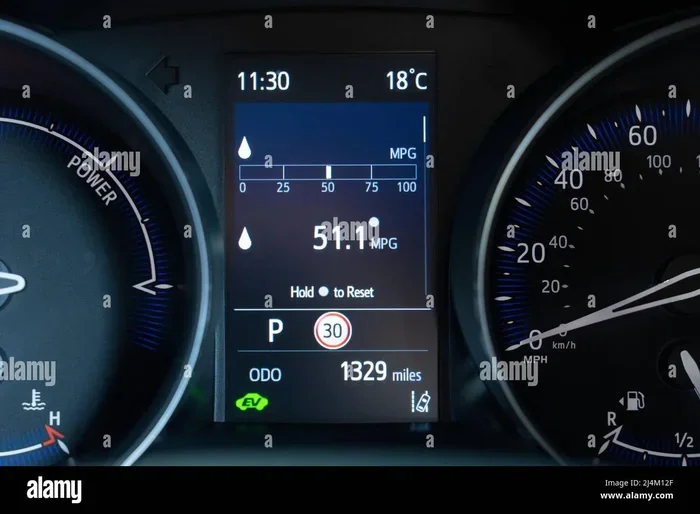
One of the easiest ways is to use your car’s onboard computer. Most modern vehicles have a trip computer that shows your average MPG in real time. You can reset it after each fill-up and watch the number change. If you notice your MPG dropping over time, that is a sign something might need attention.
Reading the Dashboard Gauges
Your dashboard tells you more than just your speed. Many cars have a fuel economy display that shows whether you are driving efficiently. Look for a gauge that shows liters per 100 kilometers or miles per gallon. If your car does not have this feature, you can always calculate it yourself.
Here is a simple way to do it. Fill up your tank completely and reset your trip meter. Drive normally until you need to fill up again. Then divide the miles you drove by the gallons it took to refill. That number is your real-world MPG. Compare it to the EPA rating and you will know if your car is performing as it should.
Using Fuel Tracking Apps
In today’s world, there is an app for everything. Fuel tracking apps let you log every fill-up and automatically calculate your MPG. Some apps even give you tips on how to improve your fuel economy. They are free, easy to use, and very helpful if you want to track your car fuel consumption over time.
Popular apps like GasBuddy, Fuelly, and Road Trip let you compare your fuel usage with other drivers. This gives you a benchmark and helps you see if your car is above or below average. It is a great way to stay on top of your gas mileage without doing any math.
Best Cars Known for Great Gas Mileage
If you are in the market for a new car, you want one that will not drain your wallet at the gas station. The best gas mileage cars come in all shapes and sizes. From tiny compacts to sleek hybrids, there is a fuel-efficient option for every budget and lifestyle.
When you are looking at cars, pay attention to the combined MPG rating. This number averages city and highway driving and gives you a realistic idea of what to expect. A car with a combined MPG of 35 or higher is generally considered very fuel efficient.
Compact Cars That Save at the Pump
Small cars are some of the most fuel-efficient vehicles on the road. Models like the Honda Civic, Toyota Corolla, and Mazda3 regularly deliver excellent gas mileage. These cars are light, aerodynamic, and have engines that are designed to sip fuel rather than guzzle it.
Compact cars also tend to have lower car ownership cost. They cost less to buy, less to insure, and less to fuel. If your goal is to keep your expenses low, a compact car is one of the smartest choices you can make.
Hybrid and Electric Options
Hybrid vehicles take fuel efficiency to the next level. They use a combination of a gas engine and an electric motor to maximize fuel economy. The Toyota Prius is the most well-known hybrid, but many other brands now offer hybrid versions of their popular models.
Full electric cars use no gas at all, which means zero fuel costs. However, they do require charging, and the upfront cost is usually higher. If you drive a lot and charge at home, an electric car can save you a significant amount of money over time.
| Vehicle Type | Avg. MPG (Combined) | Best For |
|---|---|---|
| Compact Car | 30-40 MPG | Daily commuting, budget buyers |
| Midsize Sedan | 28-35 MPG | Families, long commutes |
| Hybrid Car | 45-60 MPG | Fuel savings, eco-conscious drivers |
| SUV (Compact) | 25-32 MPG | Families needing more space |
| Full Electric | 100+ MPGe | Zero fuel cost, short commutes |
| Truck | 15-22 MPG | Towing, heavy-duty needs |
Driving Habits That Improve Fuel Economy
Your car is only half the equation. Driving habits play a huge role in how much fuel you use. Even the most fuel-efficient car will waste gas if you drive it the wrong way. The good news is that small changes in how you drive can lead to big savings.
Studies show that aggressive driving can lower your gas mileage by up to 30% on the highway and 40% in the city. That is a lot of wasted fuel and wasted money. The way you handle your car behind the wheel matters more than most people realize.
Speed and Acceleration Tips
One of the biggest factors in fuel economy is your speed. Driving above 60 mph dramatically increases aerodynamic drag, which forces your engine to work harder. Every 5 mph over 60 is like paying an extra $0.20 per gallon of gas. Keeping your speed steady and within the limit is one of the easiest ways to save money on gas.
Acceleration also matters a lot. Jackrabbit starts burn through fuel quickly. Instead, accelerate smoothly and gradually. Think of your gas pedal as something you should press gently, not slam down. This simple change can improve your fuel efficiency noticeably over time.
Quick Tips for Better Gas Mileage
- Use cruise control on the highway to maintain a steady speed and reduce fuel waste.
- Avoid idling for long periods. Turn off your engine if you are parked for more than a minute.
- Remove excess weight from your car. Extra cargo makes your engine work harder and use more fuel.
- Use the right grade of motor oil as recommended by your car’s manufacturer.
- Plan your trips to avoid heavy traffic and combine errands into one trip.
- Keep your windows up at high speeds to reduce drag and improve aerodynamics.
Quick Tip
Try to keep your RPMs in the sweet spot. Most cars are most fuel efficient between 1,500 and 2,500 RPMs. Shifting up early (if you drive a manual) and avoiding high RPMs can make a real difference in your gas mileage.
Car Maintenance Tips for Better Gas Mileage
Taking care of your car is not just about keeping it looking good. It is also about keeping it running efficiently. A well-maintained car uses less fuel, runs smoother, and lasts longer. Neglecting basic vehicle maintenance can quietly drain your wallet at the pump.
The connection between maintenance and fuel economy is often overlooked. Many drivers do not realize that a simple issue like a dirty air filter or underinflated tires can reduce their MPG by several percentage points. Over time, these small problems add up to hundreds of dollars in extra fuel costs.
Common Mistakes That Hurt Fuel Economy
There are several common mistakes that drivers make without realizing they are hurting their gas mileage. Let us look at the biggest offenders so you can avoid them.
Ignoring tire pressure is one of the most common mistakes. Underinflated tires create more rolling resistance, which means your engine has to work harder. Check your tire pressure at least once a month and keep it at the level recommended by the manufacturer. This one simple habit can improve your fuel efficiency by up to 3%.
Skipping oil changes is another big one. Old, dirty oil increases friction in your engine, which reduces performance and wastes fuel. Stick to the oil change schedule in your owner’s manual. Using the right grade of oil also helps your engine run more smoothly.
Using the wrong fuel can also be a problem. If your car does not require premium gas, using it will not improve your engine performance or fuel economy. Check your owner’s manual to see what grade your car actually needs. Using the right fuel saves you money without any downside.
Expert Insights on Engine Health
According to automotive experts, the single biggest maintenance factor for fuel economy is keeping your engine properly tuned. A misfiring spark plug can reduce your MPG by up to 30%. A clogged fuel injector can cause your engine to run rich, meaning it uses more fuel than necessary.
Regular inspections of your engine performance components can catch these issues early. Your oxygen sensor, catalytic converter, and mass airflow sensor all play a role in how efficiently your car burns fuel. When these parts fail or get dirty, your fuel economy drops fast.
Experts also recommend checking your aerodynamic design factors. Roof racks, cargo carriers, and even open windows at high speeds create drag. Drag forces your engine to use more fuel to maintain speed. Remove accessories you are not using and keep your car as streamlined as possible.
Expert Insight
Mechanics often say that a well-maintained car can get 4-5% better fuel economy than a neglected one. That might not sound like much, but over a year of driving, it can add up to $200 or more in savings. Stay on top of your vehicle maintenance schedule, and your car will reward you with better gas mileage and lower car ownership cost.
Is It Worth Switching to a Fuel-Efficient Car?
If your current car gets poor gas mileage, you might wonder if it is worth switching. The answer depends on several factors, including how much you drive, your local fuel prices, and your budget.
Let us do some quick math. Say you drive 12,000 miles per year and your current car gets 20 MPG. At $3.50 per gallon, you spend about $2,100 per year on gas. If you switch to a car that gets 35 MPG, your annual fuel cost drops to about $1,200. That is $900 in savings every single year.
Over five years, that is $4,500 saved just on fuel. And that does not even include the potential savings on insurance and maintenance for a smaller, simpler car. When you look at the full picture, how to tell if a car is good on gas becomes clear: better fuel economy means more money in your pocket over the long run.
Of course, switching cars is a big decision. Consider your needs, your budget, and how much you drive before making a change. But if you are currently driving a gas-guzzler and you do a lot of miles, the savings from a fuel-efficient vehicle can be substantial.
Conclusion
How to tell if a car is good on gas comes down to a few key factors: MPG ratings, driving habits, regular maintenance, and smart vehicle choices. By tracking your fuel economy, keeping up with maintenance, and adjusting the way you drive, you can significantly improve your car’s fuel efficiency.
Whether you are buying a new car or trying to get more out of your current one, the tips in this guide will help you save money on gas and reduce your car ownership cost. Start with small changes, stay consistent, and watch your fuel savings grow over time. A fuel-efficient car is not just better for your wallet, it is better for the environment too.
Take action today. Check your MPG, review your driving habits, and explore the best gas mileage cars in your price range. Every small step you take toward better fuel economy adds up to big savings in the long run.
Frequently Asked Questions
What is a good MPG for a car?
A good MPG depends on the type of vehicle. For a compact car, 30 MPG or higher is considered excellent. For a midsize sedan, 25 MPG or higher is solid. For SUVs, 20 MPG or higher is respectable. The key is to compare MPG within the same vehicle category, not across different types of cars.
Does using the AC reduce gas mileage?
Yes, using the air conditioning does increase fuel consumption because it puts extra load on the engine. However, at highway speeds, using the AC is more fuel efficient than driving with the windows open because open windows create drag. In city driving, rolling down the windows may save a bit more fuel.
How often should I check my gas mileage?
You should check your gas mileage at least once a month. Tracking it over time helps you spot trends and catch problems early. If you notice a sudden drop in MPG, it could signal an issue with your engine, tires, or fuel system that needs attention.
Do bigger tires affect fuel economy?
Yes, bigger tires can reduce your fuel economy because they are heavier and have more rolling resistance. They also change your gear ratios, which can make your engine work harder at highway speeds. If you are trying to maximize your gas mileage, stick to the tire size recommended by the manufacturer.
Is premium gas better for fuel efficiency?
Premium gas is not better for fuel efficiency unless your car specifically requires it. Most cars run perfectly fine on regular gas. Using premium in a car that does not need it will not improve your MPG or engine performance. Always check your owner’s manual before choosing a fuel grade.
Can a dirty air filter reduce fuel efficiency?
Yes, a dirty air filter restricts airflow to the engine, which can cause it to burn more fuel than necessary. Replacing a clogged air filter is a cheap and easy fix that can improve your gas mileage by a few percentage points. It is one of the simplest maintenance tasks you can do to keep your car running efficiently.