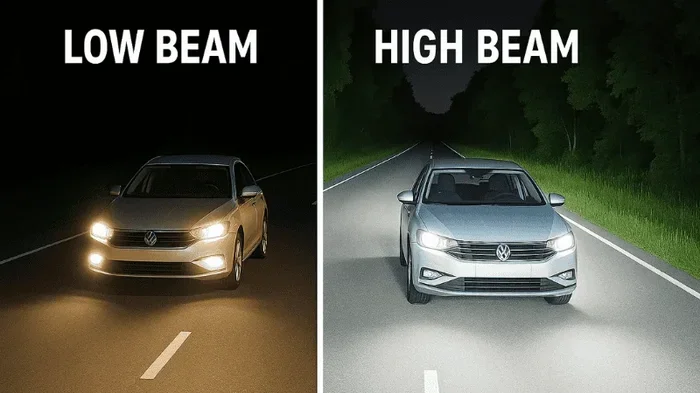
What Triggers Auto High Beams And When They Activate
What triggers auto high beams? The answer lies in smart sensor technology that detects darkness and oncoming traffic. Automatic high beam systems use light sensors and cameras to switch between low beam and high beam without any input from the driver. These auto headlights improve night driving visibility and make roads safer. Understanding how this automatic switching works helps you get the most from your vehicle’s smart headlights.
Key Takeaways
- Auto high beams use sensors and cameras: They detect ambient light and oncoming vehicles to switch automatically.
- Activation happens in dark, low-traffic areas: Rural roads, highways, and dimly lit streets trigger the system.
- Oncoming traffic turns them off: The system deactivates high beams when it detects other cars ahead.
- Clean sensors matter: Dirty sensors can cause the system to malfunction or fail to activate.
- Dashboard symbols show system status: A blue high beam icon lets you know when auto high beams are active.
- Manual override is always available: You can always switch between auto and manual mode when needed.
- Regular maintenance keeps the system reliable: Simple cleaning and periodic checks prevent most issues.
📑 Table of Contents
What Triggers Auto High Beams and How the System Works
You are driving down a dark country road at night. The road has no streetlights. There are no other cars in sight. Suddenly, your headlights switch from low beam to high beam on their own. This is not magic. It is your auto high beam system at work.
What triggers auto high beams? The short answer is a combination of darkness, low traffic, and sensor input. Modern vehicles use advanced sensor technology to decide when to switch between low beam and high beam. The system takes into account ambient light levels, the presence of other vehicles, and road conditions.
Understanding how this works is important for every driver. Auto headlights are not just a luxury feature. They are a safety tool that improves road illumination and reduces the risk of accidents. When you know how the system operates, you can use it more effectively and trust it on dark roads.
The automatic high beam feature has been around for a while, but newer vehicles have much smarter versions. These systems use camera-based detection and complex algorithms to make split-second decisions. They can tell the difference between a streetlight and an oncoming car. They can detect a vehicle ahead even in heavy rain or fog.
The Light Sensor Technology Behind Auto High Beams
At the core of most auto high beam systems is a light sensor. This small device sits on the dashboard or near the rearview mirror. It constantly measures the amount of ambient light around the vehicle.
When the sensor detects that it is dark enough, it signals the system to turn on the high beams. But it does not stop there. The system also monitors for any changes in light patterns that might indicate another vehicle nearby.
Here is how the light sensor process works in simple steps:
- The sensor measures the surrounding light level.
- If the light level drops below a set threshold, the system activates.
- The system switches from low beam to high beam automatically.
- If the sensor detects a change in light patterns, it triggers automatic switching back to low beam.
This whole process happens in milliseconds. You barely notice it happening. But the difference it makes in visibility is huge. You can see farther down the road, which gives you more time to react to obstacles, animals, or changes in the road.
Camera-Based Detection Systems in Modern Vehicles
Newer vehicles take auto high beam technology a step further. They use a small camera mounted near the rearview mirror. This camera works alongside the light sensor to create a more accurate detection system.
The camera looks ahead and scans for light sources. It can tell the difference between the glow of a streetlight and the headlights of an oncoming car. This is called adaptive driving beam technology. It is a big leap forward from older sensor-only systems.
Here are some things the camera can detect:
- Oncoming traffic from the opposite direction.
- Vehicles ahead in your own lane.
- Reflective road signs and lane markings.
- Different types of light sources like LED and halogen bulbs.
The camera feeds this information to the car’s computer. The computer then decides whether to keep the high beams on or switch to low beam. This means fewer false triggers and smoother automatic switching overall.
| Feature | Light Sensor Only | Camera-Based System |
|---|---|---|
| Detection Method | Measures ambient light levels | Uses a forward-facing camera |
| Oncoming Traffic Detection | Limited or none | Yes, with high accuracy |
| Vehicle Ahead Detection | No | Yes |
| False Trigger Rate | Higher | Lower |
| Works in Fog or Rain | Yes | Yes, with some limitations |
| Common In | Older or budget models | Newer premium vehicles |
Both systems serve the same purpose: better visibility without requiring the driver to manually switch between beams. But the camera-based system is smarter and more reliable. If your vehicle has this feature, you are getting the best of modern driving safety technology.
When Auto High Beams Activate
Knowing when auto high beams turn on helps you understand the system better. The activation depends on several factors working together. Let us break down the most common triggers.
Dark Rural Roads and Highways
The most common trigger for auto high beam activation is darkness. When you are driving on a road with no streetlights and no nearby buildings, the system detects low ambient light. This is the primary trigger.
Highway driving at night is a perfect example. The road is dark, there are few other vehicles, and visibility is poor. The auto headlights switch to high beam to give you the longest possible view of the road ahead. This is exactly when you need the extra road illumination the most.
Rural roads are another common activation scenario. These roads often lack lighting and have higher speed limits. The system recognizes the dark environment and activates the high beams to help you see curves, animals, and other hazards.
Low Traffic Conditions
Even if it is dark, the system will not switch to high beam if there is heavy traffic. Low traffic conditions are a key trigger. When the sensors detect few or no other vehicles nearby, the high beams can stay on safely.
The system constantly scans for vehicles in front of you and coming toward you. If it does not detect any, it keeps the high beams active. This creates a continuous cycle of checking and adjusting that happens automatically.
Here are typical situations where low traffic triggers high beam activation:
- Driving alone on a two-lane road at night.
- Early morning highway driving before rush hour.
- Country roads with no other vehicles for long stretches.
- Parking lots or open areas with no nearby cars.
Speed and Road Conditions
Some advanced systems also factor in your speed when deciding to activate. At higher speeds, you need to see farther ahead. The system may keep high beams on longer at higher speeds because the stopping distance increases.
Road conditions also play a role. Wet roads reflect light differently than dry roads. The system’s sensors account for this. In some cases, the auto high beam system may adjust the timing of when it switches beams based on current road conditions.
Night driving on a wet highway can be challenging. The auto headlights help by maintaining optimal beam settings without you having to think about it. This is one of the biggest advantages of the system: it handles the complexity so you can focus on the road.
Quick Tip: If you notice your auto high beams are not activating when they should, check that the light sensor area is not blocked by a sticker, dash cover, or dirt buildup. Even a small obstruction can interfere with the sensor’s ability to detect ambient light levels.
What Triggers Auto High Beams to Switch Off
Activation is only half the story. What triggers auto high beams to switch off? This is equally important. The system is designed to be smart about when it turns the high beams off to avoid blinding other drivers.
Oncoming Traffic Detection
The most common trigger for the system to switch off is oncoming traffic. When the sensors detect headlights from a vehicle coming toward you, the system immediately switches back to low beam. This prevents glare and keeps the road safe for everyone.
The camera or sensor can detect oncoming vehicles at a considerable distance. This gives the system plenty of time to make the switch before the other driver is close enough to be affected by the high beams. Once the oncoming vehicle has passed, the system may switch back to high beam if conditions still warrant it.
This back-and-forth switching happens seamlessly. You might not even notice it happening. But it makes a big difference in driving safety. You get the benefits of high beams when you can use them and the courtesy of low beams when others are nearby.
Vehicles Ahead in Your Lane
The system also detects vehicles ahead of you in the same lane. If the auto headlights sense a car in front of you, they switch to low beam. This prevents the high beams from reflecting off the other car’s mirrors and rear window, which would blind the driver ahead.
This is especially important on highways where traffic tends to move at similar speeds. The system constantly monitors the road ahead and adjusts the beam setting accordingly. You get a smooth driving experience without having to manually toggle between beams every few minutes.
Urban and Well-Lit Areas
When you enter a city or a well-lit area, the ambient light sensor detects the increased light levels. This triggers the system to turn off the high beams. In urban environments, streetlights and building lights provide enough visibility on their own.
There is no need for high beams in these conditions. In fact, using high beams in cities would create unnecessary glare reduction problems for pedestrians and other drivers. The system knows this and keeps the low beam active until it detects a return to darker conditions.
Here are common scenarios where the system switches off:
- Entering a city or town with street lighting.
- Approaching an intersection with traffic lights.
- Driving behind a vehicle for an extended period.
- Encountering oncoming traffic on a two-lane road.
- Passing under a bridge or overpass with overhead lighting.
Common Mistake: Many drivers leave their headlights on auto mode but never check the dashboard symbol to confirm the system is working. If the dashboard symbol for auto high beams is not lit, the system may not be active. Always glance at your instrument cluster to verify the system is engaged.
The Benefits of Auto High Beam Systems
Now that you understand what triggers auto high beams and when they activate, let us look at why this feature matters. The benefits go beyond simple convenience.
Better Night Visibility
The most obvious benefit is improved visibility at night. High beams illuminate the road much farther than low beams. With the auto headlights system, you get this extra reach without the hassle of manually switching beams.
Studies show that drivers using adaptive driving beam systems can see about 30 to 40 percent farther down the road compared to low beams alone. This extra distance can make a critical difference when reacting to unexpected hazards like a deer on the road or a pothole in your path.
Reduced Driver Fatigue
Driving at night can be tiring. You are constantly adjusting your lights, watching for other vehicles, and straining to see the road. An auto high beam system takes one of those tasks off your plate.
When the system handles the beam switching, you can focus more on steering, braking, and scanning the road. This reduces mental fatigue and helps you stay alert during long night drives. Less fatigue means safer driving for you and everyone else on the road.
Enhanced Driving Safety
At its core, the auto high beam system exists to make driving safety better. By providing optimal road illumination without blinding others, it creates a safer environment for all road users.
The system also reduces the risk of human error. Forgetting to switch from high to low beam is a common mistake. An auto high beam system never forgets. It always makes the right call based on real-time conditions. This is especially helpful for newer drivers or anyone unfamiliar with the vehicle.
Expert Insight: According to the Insurance Institute for Highway Safety (IIHS), vehicles equipped with adaptive driving beam headlights show improved nighttime collision avoidance. The extra visibility provided by properly activated high beams allows drivers more reaction time, which can be the difference between a near miss and an accident.
Common Issues and How to Troubleshoot
Like any electronic system, auto high beams can sometimes have issues. Most problems are easy to fix with basic troubleshooting.
Dirty or Obstructed Sensors
The most common cause of auto high beam problems is a dirty sensor. The light sensor or camera lens can get covered in dirt, mud, snow, or ice. When this happens, the system may not detect darkness properly or may fail to spot oncoming vehicles.
Keep the sensor area clean. A quick wipe with a soft cloth during your regular car wash can prevent most sensor-related issues. If you have been off-roading or driving through heavy snow, give the sensor area a extra check.
Dashboard Warning Lights
Your vehicle uses a dashboard symbol to show the status of the auto high beam system. Typically, this is a blue icon that looks like a headlight with horizontal lines. When this symbol is lit, the auto high beams are active.
If you see a warning light, it usually means the system has detected a problem. Common causes include a faulty sensor, a wiring issue, or a software glitch. In most cases, a simple restart of the vehicle clears minor glitches. If the light stays on, have a mechanic check the system.
System Malfunctions
Sometimes the entire auto headlights system may stop working. This can happen after a battery replacement, a software update, or a minor electrical issue. If the system stops responding, try these steps:
- Turn the ignition off and wait 30 seconds.
- Restart the vehicle and check if the system reactivates.
- Inspect the sensor area for dirt or obstructions.
- Check the vehicle’s fuse box for a blown fuse related to the headlight system.
- If none of the above works, consult your owner’s manual or visit a certified mechanic.
Tips for Getting the Most Out of Auto High Beams
You have invested in a vehicle with auto high beams. Here is how to make sure you get the full benefit from this feature.
Keep Sensors Clean and Clear
Regular maintenance is the easiest way to keep the system working well. Wipe down the sensor area near the windshield and the camera lens near the rearview mirror. This should be part of your routine car cleaning schedule.
After washing your car, take a moment to check that the sensor area is dry and free of water spots. Water droplets can distort the sensor readings and cause the system to behave erratically.
Understand When to Override Manually
Most vehicles with auto high beams also allow manual override. You can switch to full manual mode if you prefer. This is useful in situations where the automatic system might not make the best call.
For example, if you are driving slowly through a residential area with many parked cars, you might want to keep the low beams on manually. The auto system might not recognize parked cars as a reason to switch off high beams. Knowing when to take manual control gives you more confidence in the system.
Know Your Vehicle’s Specific Features
Every vehicle is different. Some auto high beam systems are more advanced than others. Take time to read your owner’s manual and understand exactly what your system can and cannot do.
Pay attention to any settings or modes available. Some vehicles allow you to adjust the sensitivity of the sensors. Others have a dedicated button to toggle between auto and manual mode. Knowing these details helps you use the system more effectively.
Quick Tip: If you frequently drive in areas with heavy fog or snow, check whether your vehicle has a specific winter or fog mode for the auto headlights. Some systems adjust the beam pattern to reduce glare from snowflakes or fog particles, which can make a big difference in visibility during harsh weather.
Conclusion
What triggers auto high beams? The answer is a combination of darkness, low ambient light, and the absence of other vehicles. The system uses sensor technology and sometimes cameras to make smart decisions about when to switch between low beam and high beam. This automatic switching happens seamlessly and makes night driving safer and less stressful.
The benefits are clear: better road illumination, reduced driver fatigue, and improved driving safety for everyone on the road. By understanding how the system works and keeping your sensors clean, you can trust your auto headlights to do their job every time you get behind the wheel.
Take a moment to familiarize yourself with your vehicle’s auto high beam system. Check the dashboard symbol, keep the sensors clean, and know when to use manual override. These simple steps ensure you get the most out of this valuable safety feature. Safe travels and enjoy the improved visibility on your next night drive.
Frequently Asked Questions
How do I know if my vehicle has auto high beams?
Check your vehicle’s dashboard for a blue headlight symbol when the system is active. You can also look in your owner’s manual for headlight settings. Most vehicles with auto headlights have a dedicated button or setting on the light stalk or dashboard controls.
Can auto high beams work in fog or heavy rain?
Yes, most auto high beam systems still function in fog and rain. However, the camera-based systems may have some limitations in very heavy precipitation. The light sensor portion of the system generally works well in these conditions because it relies on overall ambient light levels rather than visual clarity.
Do auto high beams drain the battery faster?
No. Auto high beams use the same bulbs as manual high beams. The system only switches to high beam when conditions warrant it, so it actually uses less energy than leaving high beams on all the time. Modern LED headlights used in these systems are also very energy efficient.
What does the auto high beam dashboard symbol look like?
The symbol typically looks like a blue headlight icon with horizontal lines radiating from it. When this light appears on your dashboard, it means the auto high beam system is active and the high beams are currently on. If the symbol is off or shows a different indicator, the system may be in low beam mode or may have a malfunction.
Can I manually turn off auto high beams?
Yes, most vehicles allow you to switch from auto mode to manual mode. In manual mode, you control the beam switching yourself using the lever or button on your steering column. This is useful in situations where you want more direct control over your visibility and glare reduction settings.
Are auto high beams the same as adaptive driving beams?
They are related but not exactly the same. Adaptive driving beam (ADB) is a more advanced system that uses cameras to selectively dim parts of the high beam pattern. This allows the high beams to stay on while only dimming the area directed at oncoming traffic. Traditional auto high beams simply switch between full high beam and full low beam. ADB systems offer more precise glare reduction and better road illumination for all drivers.


