A Car Moves a Distance of 200m and What You Should Know
When a car moves a distance of 200m, it covers roughly two football fields in a matter of seconds. This distance plays a huge role in vehicle safety, speed calculations, and braking performance. Understanding this 200-meter stretch can help you become a safer, more aware driver.
Have you ever wondered how far a car really travels in just a few seconds? When a car moves a distance of 200m, it covers a lot of ground very quickly. To put it simply, 200 meters is about two football fields lined up end to end. In that short span, a lot can happen on the road. You might be cruising along, checking your phone, or just daydreaming. But in the time it takes to cover 200 meters, your driving choices matter more than you think. This distance is a sweet spot where speed, safety, and vehicle performance all come into play. Let us dive into what happens when a car moves a distance of 200m and why you should care about it every day.
Many people do not think about the distance their car covers. They just focus on the speedometer. But distance is just as important. It tells you how much room you have to react. It also tells you how much space you need to stop safely. When a car moves a distance of 200m, the physics behind it are fascinating. You do not need to be a scientist to understand them. You just need to be a smart driver. This guide will break it all down for you in simple terms. We will look at what 200 meters looks like, how fast you are going, and why it matters for your safety.
Key Takeaways
- Visualize the Distance: 200 meters is about two football fields long, and a car covers it in seconds at highway speeds.
- Time Matters: At 60 mph, a car moves 200 meters in just seven seconds, leaving little room for error.
- Braking vs. Stopping: Your total stopping distance includes reaction time and braking distance, both of which are affected by speed and road conditions.
- Vehicle Differences: Sports cars, trucks, and electric vehicles all handle the 200-meter distance differently due to weight, torque, and braking systems.
- Road Conditions are Key: Wet, icy, or poorly maintained roads dramatically increase the distance needed to stop safely.
- Know Your Car: Regular tire maintenance and understanding your vehicle’s limits are essential for safe driving over any distance.
📑 Table of Contents
What Does 200 Meters Actually Look Like?
Visualizing the Distance in Everyday Life
Before we get into the numbers, let us picture 200 meters. Imagine standing at one end of a soccer pitch. Now, walk all the way to the other end. You just covered about 100 meters. Double that, and you have your 200 meters. It is roughly the length of two large commercial airplanes parked nose to tail. When a car moves a distance of 200m, it crosses this entire stretch in a blink of an eye. At city speeds, this might take a few seconds. But on a highway, it happens in less than a second. Understanding this visual helps us grasp how quickly vehicles can change positions on the road. It also shows why keeping a safe following distance is so important. Many drivers underestimate just how long 200 meters really is. They think it is a short distance. But at high speeds, it is a long way to go.
Think about your daily commute. You might cross 200 meters without even realizing it. It could be the stretch between your house and the corner store. It could be the length of a long intersection. When a car moves a distance of 200m in a busy downtown area, pedestrians are everywhere. You need to be extra careful. People step out from between parked cars. They look at their phones instead of the road. Covering 200 meters in a city means you have to watch for unexpected obstacles. The distance gives you a window of time. But only if you are paying attention. Distracted driving wastes that precious window. It turns a safe distance into a dangerous one.
How Long Does It Take to Travel 200 Meters?
The time it takes depends entirely on your speed. If you are driving at 30 miles per hour, you will hit that 200-meter mark in about 15 seconds. That is enough time to change a song or glance at a text message. But at 60 miles per hour, you will fly past 200 meters in just seven seconds. Seven seconds! That is barely enough time to react to a sudden brake. The faster you go, the less time you have to respond. This is why knowing your speed is crucial. When a car moves a distance of 200m at high speeds, the outcomes can be severe. Always keep an eye on your speedometer and stay aware of your surroundings. You cannot get that time back once it is gone.
Let us look at another example. If you are driving at 45 miles per hour, you cover 200 meters in about 10 seconds. Ten seconds is a long time to be distracted. In those ten seconds, a child could run into the street. A car ahead of you could slam on its brakes. The road conditions could change in an instant. When a car moves a distance of 200m, you are committing to a path for those ten seconds. You need to make sure that path is clear. This is the core of defensive driving. It is about looking ahead and planning for what might happen next. Ten seconds of travel gives you plenty of time to spot trouble. But only if you are looking.
The Physics Behind a Car Covering 200 Meters
Speed, Velocity, and Why They Matter
People often use speed and velocity the same way, but they are different. Speed tells you how fast something is going. Velocity adds a direction to that speed. When a car moves a distance of 200m, we measure its speed in meters per second or miles per hour. If a car goes 200 meters in 10 seconds, its average speed is 20 meters per second. That translates to about 45 miles per hour. This math is the foundation of vehicle dynamics. Engineers use these exact calculations to design safer cars. They test how vehicles behave over specific distances. The next time you see a speed limit sign, remember it is based on this simple math. It is all about keeping you and others safe on the road.
Understanding velocity helps you predict how your car will move. If you are heading east at 45 miles per hour, that is your velocity. If you turn north, your direction changes. Even if your speed stays the same, your velocity has changed. When a car moves a distance of 200m around a curve, the velocity is constantly shifting. This is why curves are so tricky. Your car wants to keep going straight. The tires have to fight that urge to keep you on the road. The friction between the tires and the pavement makes the turn possible. Without enough friction, you would slide straight off the road. This is why icy roads are so dangerous. The friction drops to almost zero, and your velocity takes over.
Acceleration and Kinetic Energy at Play
Acceleration is how quickly your car gains speed. A powerful sports car will zip through 200 meters in no time because of strong acceleration. But kinetic energy is the real story here. Kinetic energy grows with the square of your speed. This means if you double your speed, your kinetic energy quadruples. When a car moves a distance of 200m at high speed, it carries a massive amount of kinetic energy. This energy must go somewhere when you hit the brakes. It turns into heat through your brake pads and rotors. This is why high-speed crashes are so devastating. The car has too much energy to shed in a short distance. Always respect the physics of motion when you drive.
Momentum is another key concept. Momentum is mass times velocity. A heavy truck has a lot of momentum. It takes a long distance to slow it down. When a car moves a distance of 200m, its momentum is trying to keep it moving. Your brakes have to work hard to overcome that momentum. This is why heavy vehicles need longer stopping distances. It is not just about the brakes. It is about the sheer weight of the vehicle. Even with the best brakes, a fully loaded truck needs more room. Always give trucks extra space on the road. Their stopping distance is much longer than yours.
Braking Distance vs. Stopping Distance
Why 200 Meters Matters for Safety
Let us talk about brakes. Your braking distance is how far your car travels after you press the pedal. The stopping distance includes your reaction distance too. Reaction distance is the ground you cover while you decide to hit the brake. When a car moves a distance of 200m, it often includes both of these phases. At 50 miles per hour, your braking distance alone is about 53 meters. Add your reaction distance, and you are looking at over 100 meters. If the road is wet, that number jumps significantly. This is why 200 meters is such a critical benchmark. It is long enough to cause a serious accident if you are not paying attention. It is also long enough to stop safely if you drive smart.
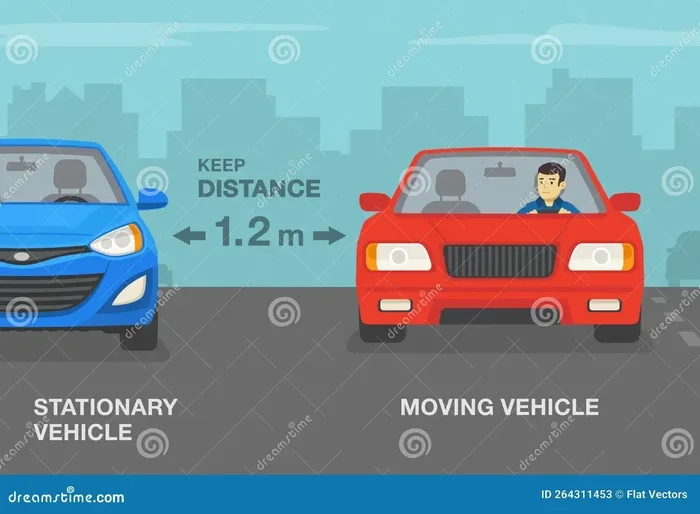
Many drivers do not know the difference between braking and stopping distance. They think hitting the brake pedal instantly stops the car. That is not how it works. There is always a delay. That delay is your reaction time. When a car moves a distance of 200m, a big chunk of that might be your reaction distance. This is why distracted driving is so dangerous. Taking your eyes off the road for two seconds is like driving blind for over 30 meters. To stay safe, keep your eyes on the road. Maintain a safe following distance of at least two seconds. This gives you the room you need to react and stop properly.
The Role of Reaction Time in Your Stopping Path
Your brain is the most important braking system in your car. The average reaction time is about 1.5 seconds. In that time, a car moving at 50 miles per hour travels over 33 meters. That is a lot of distance covered before your foot even touches the brake. When a car moves a distance of 200m, a big chunk of that might be your reaction time. This is why distracted driving is so dangerous. Taking your eyes off the road for two seconds is like driving blind for over 30 meters. To stay safe, keep your eyes on the road. Maintain a safe following distance of at least two seconds. This gives you the room you need to react and stop properly.
Fatigue and alcohol both slow down your reaction time. If you are tired, your brain takes longer to process danger. If you have been drinking, your reaction time gets even worse. When a car moves a distance of 200m, a slow reaction time adds many extra meters to your stopping path. You might not feel impaired, but your driving is. Always make sure you are fully awake and alert before you get behind the wheel. If you feel drowsy, pull over and rest. It is not worth the risk. A few minutes of rest can save your life.
How Different Vehicles Handle 200 Meters
Sports Cars vs. Family Sedans
Not all cars are created equal when it comes to covering distance. A sports car with a big engine will zip through 200 meters in no time. It has great acceleration and high top speeds. A family sedan will take much longer to cover the same ground. The difference comes down to power-to-weight ratio. Sports cars are light and powerful. Family cars are heavier and focus on efficiency. But here is the catch. A sports car might cover 200 meters fast, but it also needs more distance to stop. The heavy braking forces can cause the tires to lose grip. This leads to longer skid marks and a higher risk of losing control. So, speed is not everything. Stopping power matters just as much.
When a car moves a distance of 200m from a stoplight, you can really see the difference. The sports car shoots ahead quickly. The sedan takes its time building speed. But when the light turns red, the story changes. The sports car has to scrub off a lot of speed. It needs more braking force to stop. The sedan might stop in a shorter distance because it was moving slower. This is a perfect example of how kinetic energy works. Faster cars have more energy to get rid of. Always remember that going fast means more danger. It does not matter if you are in a sports car or a minivan.
The Impact of Engine Power and Torque
Torque is the twisting force that makes your wheels turn. More torque means faster launches. When a car moves a distance of 200m from a standstill, torque plays a huge role. A truck with high torque might crawl through the first 200 meters slowly. But it will have the pulling power to haul heavy loads. On the other hand, a small turbo engine can blast through 200 meters with ease. This is why drivers must know their vehicles. You need to understand how your car accelerates and brakes. Do not assume your car can stop as quickly as a sports car. Always adjust your driving to your vehicle’s capabilities. Know your limits and the limits of your machine.
Electric vehicles add a new twist to this. They deliver torque instantly. The moment you press the accelerator, the power is there. When a car moves a distance of 200m in an electric vehicle, the launch can be very quick. This instant torque is great for merging onto highways. But it also means the tires wear down faster if you launch hard. Electric cars also use regenerative braking. This system slows the car down by using the electric motor as a generator. It recovers energy and puts it back in the battery. This can change how the car feels when you brake. Drivers need to learn how their specific car slows down over 200 meters.
Road Conditions and Their Effect on Distance
Wet and Icy Roads Change Everything
Dry pavement gives your tires great grip. But add rain, snow, or ice, and everything changes. When the road is wet, your braking distance can double. On ice, it can increase tenfold. When a car moves a distance of 200m on a wet highway, it needs much more space to stop safely. Your tires can only grip the road so much. If the road is slick, your tires will hydroplane. This means they ride on a film of water instead of touching the asphalt. You lose all steering and braking control in that moment. This is why winter tires exist. They use special rubber compounds to stay soft and grip the road in cold weather. Always check your local weather before you drive long distances.
Aquaplaning is a scary experience. Your car suddenly feels like it is floating on water. The steering goes light, and the brakes stop working. When a car moves a distance of 200m on a flooded road, aquaplaning can happen in a split second. You cannot steer or brake until the tires touch the road again. The best way to avoid this is to slow down before you hit standing water. Do not slam on the brakes. Ease off the accelerator gently. Let your speed drop naturally. This gives the tires time to push the water away and reconnect with the road surface. Prevention is always better than trying to recover from a slide.
Tire Quality and Regular Maintenance
Your tires are the only part of your car that touches the road. Worn-out tires are a major safety hazard. The tread on your tires channels water away. This keeps the rubber planted firmly on the asphalt. When a car moves a distance of 200m with bald tires, it is a disaster waiting to happen. The tread depth matters a lot. New tires usually have about 8 millimeters of tread. Once it drops below 3 millimeters, your wet braking distance increases sharply. Make it a habit to check your tire pressure too. Under-inflated tires create more rolling resistance. This wastes fuel and reduces your grip. Simple maintenance can save your life. Check your tires every month and before long trips.
Tire alignment also plays a role in how your car handles 200 meters. If your wheels are out of alignment, the car pulls to one side. This wastes energy and wears the tires unevenly. Uneven tires do not grip the road as well. When a car moves a distance of 200m on a curve, misaligned tires might slip. Regular alignment checks keep your car tracking straight. They also extend the life of your tires. A small investment in maintenance can make a huge difference in your safety. It ensures that your tires can do their job when you need them most.
Real-World Scenarios Where 200 Meters Matters
Highway Merging and Emergency Situations
Highway driving is all about distances. When you merge onto a busy freeway, you need to match the speed of traffic. The acceleration lane is often about 200 meters long. This gives you the space to blend in safely. If you are too slow, you risk a rear-end collision. When a car moves a distance of 200m on an on-ramp, drivers must be confident and smooth. Look over your shoulder, check your mirrors, and accelerate steadily. Do not stop at the end of the ramp unless traffic forces you to. The same goes for emergency situations. If a deer jumps out in front of you, you will cover 200 meters in a panic. Staying calm and steering smoothly is your best bet. Slamming the brakes without looking can cause a rollover.
Construction zones are another place where 200 meters matters a lot. Work zones have narrow lanes and sudden stops. Workers are often just feet away from fast-moving traffic. When a car moves a distance of 200m in a construction zone, the driver must be ready for anything. Flags might wave you to stop. Other cars might brake suddenly. The road surface might be gravel or shifted pavement. You need extra space to react to these unexpected changes. Always slow down in work zones. Follow the posted speed limits. They are there to protect the workers and you. A few extra minutes on your trip are worth saving a life.
Accident Reconstruction and Insurance Claims
After a crash, investigators use physics to piece together what happened. They measure skid marks to calculate how fast a car was going. If the skid marks are 200 meters long, the car was moving very fast. This kind of accident reconstruction helps determine fault in insurance claims. When a car moves a distance of 200m during a crash, the damage is usually severe. Investigators also look at the final resting position of the vehicles. They factor in the road grade and the surface type. All of this helps paint a clear picture of the event. It is a stark reminder of why defensive driving is so important. You can never predict what other drivers will do. But you can control your own speed and following distance.
Insurance adjusters rely on these calculations every day. They use the length of the skid marks to estimate the speed at impact. When a car moves a distance of 200m while braking, the skid marks tell a story. They show how hard the driver tried to stop. They also show the road conditions at the time of the crash. Dry asphalt leaves different marks than wet concrete. Gravel leaves yet another pattern. All of these details help build a fair claim. Understanding this process can help you if you are ever in an accident. Keep your insurance information handy. And always cooperate fully with the investigators.
Conclusion
When a car moves a distance of 200m, it is more than just a number. It represents time, speed, energy, and safety. From the physics of kinetic energy to the reality of wet roads, this distance affects every driver. You have learned how to visualize 200 meters, how long it takes to cross it, and why braking distance matters so much. Remember, your reaction time and your vehicle’s condition play huge roles in this journey. Always keep your eyes on the road and maintain your car properly. Drive at safe speeds, especially in bad weather. The next time you see a 200-meter stretch of road, think about the physics and the responsibility that comes with it. Stay alert, stay safe, and enjoy the drive.
Frequently Asked Questions
How fast is a car going when it covers 200 meters in 10 seconds?
A car covering 200 meters in 10 seconds is traveling at an average speed of 20 meters per second. That translates to about 45 miles per hour or 72 kilometers per hour. This is a common speed limit in residential areas or busy city streets. It shows how quickly a vehicle can cross a significant distance even at moderate speeds.
What is the braking distance for a car at 50 mph?
At 50 miles per hour, a typical car needs about 53 meters to stop on a dry road. This is the braking distance alone. When you add your reaction distance, the total stopping distance jumps to over 100 meters. This is why maintaining a safe following distance is so important for every driver.
Does a heavier car take longer to stop than a lighter car?
Generally, yes. A heavier vehicle has more momentum and kinetic energy. This means it needs more force to slow down and stop. However, modern cars have advanced braking systems designed to handle their weight. Regardless of the vehicle type, keeping a safe distance is always the best practice.
How does wet weather affect the distance a car travels before stopping?
Wet roads significantly increase the distance needed to stop. Water reduces the friction between your tires and the road surface. This can double your braking distance compared to dry conditions. In heavy rain or on standing water, your tires might even hydroplane, making stopping nearly impossible until grip returns.
Why is 200 meters considered a critical distance in driving?
200 meters is critical because it represents a long stretch of road covered in just a few seconds at highway speeds. It is roughly the length of two football fields. At 60 miles per hour, a car covers this distance in about seven seconds. This short time window leaves little room for error or reaction.
Can tire condition change how far a car moves before stopping?
Absolutely. Tire condition has a massive impact on stopping distance. Worn-out tires with low tread cannot channel water away effectively. This leads to longer braking distances and a higher risk of accidents. Regular tire checks and proper inflation are essential for safe driving and shorter stopping paths.