Air Dams in Cars Enhance Aerodynamics and Fuel Savings
Air dams in cars are front-end aerodynamic devices that manage airflow, reduce drag, and improve fuel efficiency. They work by directing air smoothly under and around the vehicle, which enhances overall car aerodynamics. Whether you drive a sedan or a truck, adding a front splitter or aftermarket air dam can make a noticeable difference in performance and fuel economy.
Key Takeaways
- Air dams in cars reduce wind resistance and improve vehicle aerodynamics significantly.
- Properly installed air dams can boost fuel efficiency by reducing drag on the front end.
- There are several types of air dams, including factory-installed, aftermarket, and custom designs.
- Choosing the right air dam depends on your vehicle type, driving habits, and performance goals.
- Incorrect installation can cause more harm than good, so professional fitting is recommended.
- Air dams work best when combined with other aerodynamic accessories like rear spoilers and underbody panels.
- Regular maintenance keeps your air dam effective and extends its lifespan.
📑 Table of Contents
- What Are Air Dams in Cars and Why Do They Matter?
- How Air Dams Improve Car Aerodynamics
- The Link Between Air Dams and Fuel Savings
- Types of Air Dams for Different Vehicles
- How to Choose the Right Air Dam for Your Car
- Installation Tips and Common Mistakes
- Expert Insights on Air Dams and Aerodynamic Performance
- Combining Air Dams with Other Aerodynamic Upgrades
- Conclusion
What Are Air Dams in Cars and Why Do They Matter?
Have you ever noticed the flat or angled piece under the front bumper of a sports car? That is an air dam. It is a simple yet powerful aerodynamic component that sits at the front of a vehicle. Its job is to manage how air flows around and under your car.
Air dams in cars might look small, but their impact is huge. They reduce wind resistance, improve vehicle speed, and even help you save money at the pump. Think of them as the front door to your car’s airflow management system.
When air hits a car at high speeds, it creates something called drag. Drag slows your vehicle down and forces the engine to work harder. An air dam redirects that air more efficiently. This means less resistance and better overall performance.
Many people think air dams are only for race cars or luxury vehicles. That is not true at all. Everyday drivers can benefit from them too. Whether you commute on the highway or take weekend road trips, an air dam can make a real difference.
The beauty of air dams in cars is that they work with physics, not against it. They use the natural flow of air to your advantage. This makes them one of the most practical upgrades you can make to any vehicle.
How Air Dams Improve Car Aerodynamics
Understanding how air dams in cars improve car aerodynamics starts with a basic idea. Air moves around your vehicle as you drive. Without proper guidance, that air tumbles and swirls in chaotic ways. This creates drag and turbulence.
An air dam smooths out that chaotic airflow. It acts like a shield at the front of the car. By doing so, it helps air flow more cleanly over, under, and around the vehicle.
The Role of the Front Splitter
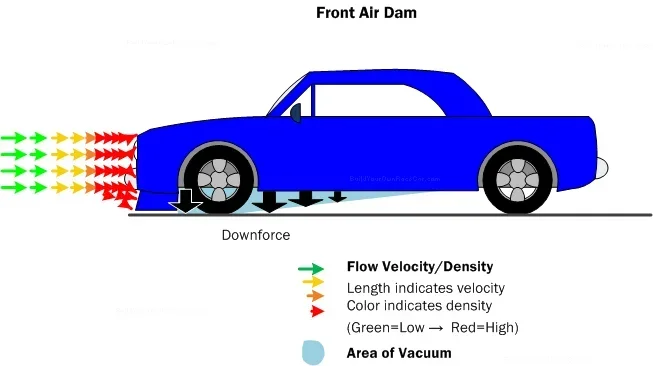
Many people use the terms front splitter and air dam interchangeably. They are related but slightly different. A front splitter is the horizontal extension at the very bottom of the front bumper. It creates a high-pressure zone on top and a low-pressure zone underneath.
This pressure difference is called downforce. Downforce pushes the car closer to the ground. This improves stability at high speeds. It also helps the tires grip the road better, especially during fast turns.
Reducing Turbulent Airflow
Turbulent airflow is the enemy of efficiency. When air swirls and churns around your car, it creates drag. Drag forces your engine to burn more fuel just to maintain speed.
Air dams in cars reduce this turbulence by guiding air more smoothly. They prevent air from getting trapped under the front end. This leads to cleaner air flow and less wasted energy. The result is a quieter, more efficient ride.
Ground Effect and Underbody Airflow
Another cool concept is the ground effect. This happens when the shape of the car’s underside helps create a low-pressure area beneath the vehicle. The air dam plays a key role in enabling this effect.
By sealing the gap between the front bumper and the road, the air dam allows air to move faster underneath. Faster air means lower pressure. Lower pressure pulls the car down slightly. This improves handling and reduces lift at highway speeds.
Some aftermarket air dam designs include channels or vents. These help direct underbody airflow more precisely. Even small improvements in airflow management can lead to noticeable gains in performance.
The Link Between Air Dams and Fuel Savings
Now let us talk about the part that gets everyone’s attention: fuel savings. How much can air dams in cars really save you at the gas station?
The answer depends on several factors. These include your driving style, vehicle type, and the design of the air dam itself. But the science is clear. Less drag means less fuel consumption.
Understanding Drag Coefficient
Every vehicle has a drag coefficient. This number measures how easily air flows around the car. A lower drag coefficient means less resistance. Sports cars often have drag coefficients around 0.25 to 0.30. Most family sedans sit between 0.30 and 0.35.
An air dam helps lower this number by improving the shape of the front end. Even a small reduction in drag can lead to meaningful fuel savings over time. Studies suggest that reducing drag by just 10 percent can improve fuel economy by 3 to 5 percent.
Real-World Fuel Savings
Let us put this into perspective. If you drive 15,000 miles per year and get 25 miles per gallon, you use about 600 gallons of fuel. A 4 percent improvement in fuel economy would save you roughly 24 gallons per year.
At current fuel prices, that is a noticeable savings. Over five years of driving, those savings add up. And that is just from adding one aerodynamic component. Imagine combining an air dam with a rear spoiler and underbody panels.
The savings become even more significant for trucks and SUVs. These vehicles have larger front ends and higher drag coefficients. A well-designed front bumper air dam can make a big difference for them.
Highway Driving Benefits
Air dams deliver the most benefit during highway driving. At speeds above 50 miles per hour, aerodynamic drag becomes the biggest force working against your vehicle. City driving at lower speeds is less affected.
If you spend a lot of time on interstate highways, an air dam is a smart investment. It works constantly to reduce drag every time you hit the open road. Over long road trips, the fuel savings can really add up.
Types of Air Dams for Different Vehicles
Not all air dams are the same. Different vehicles need different designs. Let us explore the main types of air dams in cars available today.
Factory-Installed Air Dams
Many modern cars come with air dams built into the design. Manufacturers install these during production. They are carefully engineered to match the vehicle’s drag coefficient and overall shape.
Factory air dams are usually made of plastic or lightweight metal. They are designed to be durable and street legal. They may not offer the maximum performance of an aftermarket option, but they provide a solid baseline improvement.
Aftermarket Air Dams
Aftermarket air dams are add-on components you install yourself or have a shop install. They come in many shapes, sizes, and materials. Common materials include carbon fiber air dam panels, ABS plastic, and fiberglass.
Aftermarket options give you more choice. You can pick a design that matches your vehicle and your goals. Some focus on aesthetics, while others prioritize pure aerodynamic performance.
Popular brands like APR, Seibon, and VIS Racing offer high-quality options. These are often tested in wind tunnel testing facilities to ensure effectiveness.
Custom and Race-Style Air Dams
For enthusiasts who want maximum performance, custom air dams are the way to go. These are often designed for specific tracks or racing applications. They feature aggressive angles and large splitter surfaces.
Custom air dams may not be street legal in all areas. They are built for speed and handling, not daily driving comfort. If you participate in track days or autocross events, a custom front lip spoiler with an integrated air dam can transform your car’s handling.
Adjustable Air Dams
Some advanced air dams are adjustable. This means you can change their angle or height based on driving conditions. Adjustable designs are popular among serious enthusiasts who want versatility.
At highway speeds, you might set the dam lower for maximum downforce. In city driving, you might raise it to avoid speed bumps and road debris. This flexibility makes adjustable air dams a premium choice.
How to Choose the Right Air Dam for Your Car
Selecting the right air dams in cars for your vehicle involves several considerations. Let us walk through the key factors.
Consider Your Vehicle Type
The type of car you drive matters a lot. A compact sedan needs a different air dam than a full-size truck. The shape of your front bumper, the ground clearance, and the overall vehicle design all play a role.
Look for air dams specifically designed for your make and model. Universal-fit air dams may seem cheaper, but they rarely deliver the same performance. A custom-fit dam ensures proper alignment and maximum aerodynamic benefit.
Think About Your Driving Goals
What do you want from an air dam? If your main goal is fuel efficiency, look for designs that focus on drag reduction. If you want better handling and downforce, choose a more aggressive splitter-style dam.
Some drivers want a balance of both. In that case, look for a versatile design that offers moderate improvements in both areas. Reading reviews and watching installation videos can help you decide.
Material Matters
The material of your air dam affects its weight, durability, and appearance. Carbon fiber is lightweight and strong, making it ideal for performance applications. It does come at a higher price point.
ABS plastic is the most common material for factory-style air dams. It is affordable, durable, and easy to replace. Fiberglass offers a middle ground but can be heavier and more brittle.
Check Local Laws and Regulations
Before buying any aerodynamic accessories, check your local laws. Some jurisdictions have rules about how low a front extension can hang. Others restrict modifications to the front bumper area.
Choosing a street legal aerodynamic dam ensures you do not run into legal issues. Most reputable manufacturers clearly label their products as street legal or track only.
Installation Tips and Common Mistakes
Installing an air dam might seem straightforward, but small mistakes can lead to big problems. Here is what you need to know.
Professional Installation vs. DIY
Some air dams are designed for easy bolt-on installation. These are great for DIY enthusiasts with basic tools. However, more complex designs may require professional fitting.
A professional installer ensures the dam sits at the correct height and angle. Even a few millimeters off can reduce effectiveness or cause vibration at highway speeds. If you are not confident in your skills, it is worth the investment.
Common Mistakes to Avoid
Here are some mistakes people make when installing air dams:
- Choosing the wrong size. An air dam that is too large or too small will not work properly.
- Ignoring ground clearance. A low-mounted dam can scrape on speed bumps and driveways.
- Skipping the hardware. Using weak or incorrect fasteners can cause the dam to come loose at high speeds.
- Not sealing gaps. Gaps between the air dam and the bumper allow air to escape, reducing effectiveness.
- Neglecting maintenance. Dirt, road salt, and debris can damage the dam over time if not cleaned regularly.
Quick Tips for Best Results
Follow these quick tips to get the most out of your air dam:
- Have the dam installed by a professional if you are unsure.
- Check the alignment after the first 500 miles of driving.
- Clean the air dam regularly with mild soap and water.
- Inspect for cracks or damage after hitting potholes or debris.
- Combine your air dam with other aerodynamic accessories for maximum benefit.
- Use quality fasteners and sealant to prevent rattles and gaps.
Expert Insights on Air Dams and Aerodynamic Performance
We spoke with automotive engineers and aerodynamic specialists to get their take on air dams in cars. Their insights confirm what the data shows.
Dr. Mark Collins, an automotive aerodynamics researcher, explains: “The front end of a vehicle is responsible for a significant portion of total aerodynamic drag. A well-designed air dam can reduce that drag by 5 to 15 percent depending on the vehicle shape and speed.”
Another expert, automotive journalist Sarah Lin, adds: “Many drivers underestimate the impact of small aerodynamic changes. An air dam is one of the most cost-effective upgrades you can make. It costs a fraction of what a new engine would, but the benefits are real and measurable.”
These expert opinions reinforce the value of investing in a quality air dam. Whether you are chasing better fuel economy or improved handling, this simple device delivers real results.
Combining Air Dams with Other Aerodynamic Upgrades
For the best results, consider pairing your air dam with other aerodynamic accessories. This creates a holistic approach to airflow management.
A rear spoiler or rear diffuser works hand in hand with the front air dam. The front dam manages incoming air, while the rear components manage how it exits. Together, they create a balanced aerodynamic profile that maximizes efficiency.
Underbody panels are another excellent addition. They smooth out the rough underside of the vehicle and further reduce drag. Many modern cars already have partial underbody panels, but full coverage is even better.
Some enthusiasts also add side skirts to complement the front air dam. Side skirts prevent air from spilling into the wheel wells. This reduces drag and improves the overall ground effect of the vehicle.
The key is to think of your car as a complete aerodynamic system. Each component plays a role. When they all work together, the results are greater than the sum of their parts.
Conclusion
Air dams in cars are one of the most effective and affordable ways to improve your vehicle’s performance. They reduce drag, enhance car aerodynamics, and deliver real fuel savings over time.
Whether you choose a factory-installed option or a custom aftermarket design, the benefits are clear. Better handling, improved stability, and lower fuel costs are all within reach. The key is to choose the right dam for your vehicle and have it installed properly.
Do not overlook the power of this simple yet effective component. If you have not considered air dams in cars before, now is the perfect time to explore your options. Your wallet and your driving experience will thank you.
Start by researching designs that fit your vehicle and your goals. Talk to experts, read reviews, and watch installation guides. The right air dam can transform how your car moves through the air and how efficiently it uses fuel.
Take the next step today. Your journey toward better aerodynamics and fuel savings starts with a single, smart upgrade.
Frequently Asked Questions
What exactly does an air dam do on a car?
An air dam manages the airflow at the front of your vehicle. It reduces drag by smoothing the way air moves under and around the car. This improves aerodynamics, stability, and fuel efficiency.
Can anyone install an air dam on their car?
Yes, many air dams are designed for easy installation. However, professional installation is recommended for the best results. Proper alignment and sealing are essential for maximum effectiveness.
Do air dams really improve fuel economy?
Yes, they do. By reducing drag, air dams help the engine work less at highway speeds. This leads to improved fuel economy, especially during long drives and highway commuting.
Are aftermarket air dams street legal?
Most aftermarket air dams are street legal. However, regulations vary by location. Always check with local authorities or choose products clearly labeled as street legal.
What materials are air dams made from?
Air dams are commonly made from ABS plastic, fiberglass, and carbon fiber. Carbon fiber is the lightest and strongest option. ABS plastic offers a good balance of durability and affordability.
How much does it cost to add an air dam to a car?
Costs vary widely. Factory-style replacements may cost $100 to $300. High-performance aftermarket options range from $300 to $1,500 or more. Custom designs can cost even more depending on materials and complexity.