Does a Toyota Camry Save Gas Compared to Other Cars
The Toyota Camry is one of the most fuel-efficient sedans on the road, offering impressive gas mileage across its engine options. Whether you choose the standard four-cylinder or the hybrid model, the Camry delivers strong MPG numbers that compete well against rivals like the Honda Accord and Hyundai Sonata. Does a Toyota Camry Save Gas? Yes, and here is exactly how and why it outperforms many competitors at the pump.
Let us talk about something every driver cares about: gas mileage. With fuel prices swinging up and down, saving gas at the pump matters more than ever. If you have been shopping for a reliable sedan, you have probably wondered about the Toyota Camry.
Does a Toyota Camry save gas compared to other cars? The short answer is yes. The Camry has built a strong reputation for fuel efficiency over decades. But the full story is more interesting than a simple yes or no. Let us break it all down so you know exactly what to expect.
Whether you are commuting to work or taking a long road trip, your choice of car affects your wallet every single day. The Camry offers several engine options, and each one delivers different MPG numbers. Understanding these numbers helps you make a smart buying decision.
In this article, we will look at real-world fuel economy data, compare the Camry to its closest rivals, and show you how much money you can actually save. We will also explore the hybrid option, which takes gas savings to a whole new level. By the end, you will know if the Camry is the right gas-saving car for you.
Key Takeaways
- Excellent Fuel Economy: The Toyota Camry delivers up to 32 MPG city and 41 MPG highway in its base engine, making it a top-tier gas-saver in the sedan class.
- Hybrid Option Saves Even More: The Camry Hybrid achieves up to 52 MPG combined, significantly reducing fuel costs over time.
- Competitive with Rivals: The Camry holds its own against the Honda Accord, Hyundai Sonata, and Mazda6 in fuel efficiency.
- Real-World Savings Add Up: Driving a Camry can save you hundreds of dollars per year on gas compared to less efficient vehicles.
- Multiple Factors Affect MPG: Driving habits, maintenance, and fuel type all influence how much gas your Camry actually saves.
- Worth the Investment: The upfront cost pays for itself through fuel savings over the life of the vehicle.
📑 Table of Contents
- How Fuel Efficient Is the Toyota Camry?
- Toyota Camry vs. Honda Accord: Which Saves More Gas?
- How Much Money Can You Really Save?
- The Camry Hybrid: Maximum Fuel Savings
- Tips to Maximize Your Camry’s Fuel Savings
- How the Camry Compares to Other Toyota Models
- Does a Toyota Camry Save Gas? Final Verdict
How Fuel Efficient Is the Toyota Camry?
The Toyota Camry stands out in the midsize sedan segment for its fuel efficiency. The base 2.5-liter four-cylinder engine is a proven performer that balances power and economy. It produces about 203 horsepower while still delivering strong miles per gallon numbers.
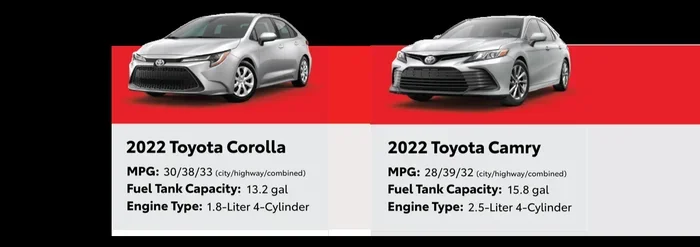
According to EPA estimates, the standard Camry gets up to 28 MPG in the city and 39 MPG on the highway. These numbers are competitive right out of the gate. But the real magic happens when you look at the combined MPG rating, which sits around 32 MPG for the base model.
For those who want even better economy, the Camry Hybrid is a game-changer. It combines a 2.5-liter engine with an electric motor to deliver up to 52 MPG combined. This is remarkable for a car of its size. You are getting a spacious, comfortable sedan that sips fuel instead of guzzling it.
Understanding MPG Ratings
MPG stands for miles per gallon. It tells you how far your car can travel on one gallon of fuel. A higher MPG means better fuel economy. The Camry’s ratings are tested under standardized conditions, so you can trust these numbers when comparing vehicles.
City MPG measures stop-and-go driving, while highway MPG reflects steady cruising. The Camry performs well in both scenarios. This versatility is one reason it remains a top seller year after year.
If you want to learn more about how to evaluate a car’s fuel economy, check out our guide on how to tell if a car is good on gas. It covers the key factors that determine real-world efficiency.
Toyota Camry vs. Honda Accord: Which Saves More Gas?
The Honda Accord is the Camry’s biggest rival. Both are popular midsize sedans with loyal fan bases. When it comes to fuel economy, the comparison is close but the Camry has a slight edge.
The Accord’s base 1.5-liter turbocharged engine gets about 30 MPG combined. The Accord Hybrid reaches around 48 MPG combined. Meanwhile, the standard Camry delivers 32 MPG combined, and the Camry Hybrid hits 52 MPG combined.
On paper, the Camry Hybrid wins this comparison. But the standard Camry also holds its own against the non-hybrid Accord. Both cars are excellent choices for drivers who want to save on fuel.
Here is a quick comparison of the two sedans:
- Toyota Camry (base): 28 MPG city / 39 MPG highway / 32 MPG combined
- Toyota Camry Hybrid: 51 MPG city / 53 MPG highway / 52 MPG combined
- Honda Accord (base): 30 MPG city / 38 MPG highway / 33 MPG combined
- Honda Accord Hybrid: 48 MPG city / 47 MPG highway / 48 MPG combined
The differences are small but meaningful over time. If you drive 15,000 miles per year, the Camry Hybrid could save you roughly $500 to $700 annually compared to the Accord Hybrid. Those savings add up fast.
Want to see how the Camry stacks up against another Toyota model? Read our article on are Toyota Tacomas good on gas to compare truck and sedan fuel economy.
How Much Money Can You Really Save?
Let us talk numbers. Saving gas is great, but how much money does it actually put back in your pocket? The answer depends on a few factors, including your driving habits and local fuel prices.
Assuming you drive 15,000 miles per year and gas costs $3.50 per gallon, here is what a Camry could save you compared to a less efficient vehicle getting 22 MPG:
- Camry base model (32 MPG combined): Uses about 469 gallons per year
- Less efficient car (22 MPG combined): Uses about 682 gallons per year
- Annual fuel cost for Camry: Around $1,641
- Annual fuel cost for less efficient car: Around $2,387
- Annual savings: Approximately $746 per year
Over five years of ownership, that is more than $3,700 in fuel savings. Over the life of the car, the savings become even more significant. This is why does a Toyota Camry save gas is such an important question. The answer has real financial implications.
Also, if you are curious about whether filling your tank completely makes a difference, we have covered that in our piece on is it better to fill a gas tank full or half.
The Camry Hybrid: Maximum Fuel Savings
The Toyota Camry Hybrid deserves its own spotlight. It is not just a regular Camry with a battery slapped in. Toyota engineered the hybrid system specifically for this model. The result is a sedan that delivers luxury-level comfort with remarkable fuel economy.
The hybrid system uses a regenerative braking setup and an electric motor assist to maximize efficiency. When you slow down, the system recaptures energy and stores it in the battery. This energy is then used to power the car at low speeds, reducing the load on the gas engine.
One of the best things about the Camry Hybrid is that it does not feel like a compromise. You still get a smooth ride, plenty of power, and all the tech features you expect from a modern Toyota. The only difference is that you stop at the gas station half as often.
If you are new to hybrid vehicles, our beginner’s guide on how to use a hybrid car for beginners can help you get started with confidence.
Hybrid vs. Gas-Only: Which Is Right for You?
Choosing between the hybrid and gas-only Camry depends on your driving patterns. Here are some quick tips to help you decide:
- Choose the Hybrid if: You drive mostly in the city, where stop-and-go traffic lets the electric motor shine. You also want maximum fuel savings and lower emissions.
- Choose the Gas-Only if: You do mostly highway driving, where the difference in MPG between the two is smaller. You also prefer a lower upfront cost.
Both versions save gas compared to most competitors. The hybrid simply saves more. Think about your daily commute and driving style when making your choice.
Tips to Maximize Your Camry’s Fuel Savings
Buying a fuel-efficient car is only half the battle. How you drive and maintain it also matters. Here are some practical tips to get the most out of your Camry’s gas mileage:
- Keep your tires properly inflated: Underinflated tires create drag, which forces the engine to work harder. Check tire pressure monthly.
- Avoid aggressive driving: Rapid acceleration and hard braking waste fuel. Smooth, steady driving improves MPG significantly.
- Use cruise control on the highway: Maintaining a constant speed helps the engine operate at peak efficiency.
- Remove excess weight: Extra cargo in your trunk makes the car heavier and reduces fuel economy.
- Keep up with maintenance: Regular oil changes, air filter replacements, and spark plug checks keep your engine running efficiently.
- Use the recommended oil: Check your owner’s manual for the right oil weight. Using the correct oil can improve fuel efficiency by up to 2%.
These small changes add up over thousands of miles. They are easy to implement and cost little to nothing. The payoff is better MPG and more money in your bank account.
How the Camry Compares to Other Toyota Models
The Camry is not the only Toyota with good fuel economy. Toyota offers several models with strong MPG ratings. Let us look at how the Camry compares to a few other popular Toyotas.
The Toyota Corolla is a compact sedan that gets even better MPG than the Camry. The base Corolla achieves up to 32 MPG combined, matching the Camry base while using less fuel overall thanks to its smaller engine. However, the Camry offers more interior space and comfort.
The Toyota RAV4, a compact SUV, gets around 30 MPG combined in its base form. The RAV4 Hybrid reaches 40 MPG combined. While these numbers are respectable, the Camry still edges ahead in pure fuel efficiency for the same price range.
If you are considering other Toyota models, our article on how long does a full tank of gas last gives you a practical perspective on range and refueling frequency across different vehicles.
| Toyota Model | Engine Type | Combined MPG |
|---|---|---|
| Camry (base) | 2.5L 4-cylinder | 32 MPG |
| Camry Hybrid | 2.5L Hybrid | 52 MPG |
| Corolla | 2.0L 4-cylinder | 32 MPG |
| Corolla Hybrid | 1.8L Hybrid | 52 MPG |
| RAV4 | 2.5L 4-cylinder | 30 MPG |
| RAV4 Hybrid | 2.5L Hybrid | 40 MPG |
As you can see, the Camry holds its own within the Toyota lineup. It offers a sweet spot between size, comfort, and fuel economy that few competitors can match.
Does a Toyota Camry Save Gas? Final Verdict
So, does a Toyota Camry save gas compared to other cars? Absolutely. The Camry delivers class-leading fuel economy whether you choose the base engine or the hybrid powertrain. Its MPG numbers compete favorably with the Honda Accord, Hyundai Sonata, and Nissan Altima.
Beyond the numbers, the Camry offers reliability, comfort, and low ownership costs. These factors combine to make it one of the best overall values in the sedan market. When you factor in fuel savings over years of driving, the Camry proves its worth again and again.
If you are in the market for a new or used sedan, the Camry should be at the top of your list. It saves gas, saves money, and delivers a driving experience that keeps you coming back. Do your research, test drive one, and see for yourself why millions of drivers trust the Toyota Camry every day.
For more tips on maintaining your vehicle’s fuel efficiency, check out our guide on does the wrench light mean oil change and learn how proper maintenance keeps your car running its best.
Also, if you are curious about how many miles are considered a lot for a Camry, our article on 000 miles a lot for a Toyota Camry provides helpful insights on long-term ownership and mileage expectations.
Frequently Asked Questions
Is the Toyota Camry good on gas compared to other sedans?
Yes, the Toyota Camry is one of the most fuel-efficient sedans in its class. The base model delivers up to 32 MPG combined, and the hybrid version achieves an impressive 52 MPG combined. These numbers rival or beat competitors like the Honda Accord and Hyundai Sonata.
How much gas does a Toyota Camry save per year?
Depending on your driving habits, a Camry can save you between $500 and $800 per year compared to less fuel-efficient vehicles. Over five years, those savings can exceed $3,000, making the Camry a smart financial choice for budget-conscious drivers.
Does the Toyota Camry Hybrid save more gas than the regular Camry?
Yes, the Camry Hybrid saves significantly more gas. While the base Camry gets around 32 MPG combined, the hybrid version achieves 52 MPG combined. This difference is especially noticeable in city driving, where the hybrid system excels at recapturing energy during stops.
What driving habits help a Toyota Camry save more gas?
Smooth acceleration, steady highway speeds, proper tire inflation, and regular maintenance all help maximize your Camry’s fuel economy. Avoiding aggressive driving and removing excess weight from the car also contribute to better MPG over time.
Is a Toyota Camry worth buying if gas prices are high?
Absolutely. The Camry’s strong fuel efficiency makes it an excellent choice during periods of high gas prices. Its reliability and low maintenance costs add to its value, making it one of the most economical sedans you can buy in the long run.
Can I use regular gas in a Toyota Camry?
Yes, the Toyota Camry runs perfectly well on regular unleaded gasoline. You do not need premium fuel to get good performance or fuel economy. Using regular gas saves you money at every fill-up without sacrificing engine health or power.