Florida Window Tint Law Guide Everything You Need to Know
Florida window tint law sets clear rules on how dark you can tint your car windows. The state regulates tint darkness, reflection, and placement to keep drivers safe. Medical exemptions are available for those who need extra sun protection. Knowing the legal limits helps you avoid costly fines and failed inspections. This guide breaks down every rule you need to follow in simple terms.
Living in Florida means sunshine almost every single day. The heat can be intense, and your car can turn into a sauna within minutes. That is exactly why so many car owners look into window tinting. Tinted windows block harmful UV rays, keep your interior cooler, and add a sleek look to your vehicle. But before you roll down the road with fresh tint, you need to know the rules.
The Florida window tint law has specific guidelines that every driver must follow. These rules cover how dark your tint can be, which windows can be tinted, and what exceptions exist. Getting it wrong can lead to a traffic stop, a hefty fine, and even the hassle of having your tint removed. Let us walk through everything you need to know so you stay on the right side of the law.
Key Takeaways
- Windshield tint: Only a non-reflective strip at the top is allowed.
- Front side windows: Must allow more than 28% of light in.
- Back side and rear windows: Can be any darkness level.
- Medical exemption: Available for those with sun sensitivity conditions.
- Tint reflection: Must not be mirrored or reflective on any window.
- Sticker requirement: A legal tint sticker must be placed on the driver’s door.
- Penalties: Tint violations can result in fines and mandatory removal.
📑 Table of Contents
- Understanding Florida Window Tint Law Basics
- Tint Reflection Rules in Florida
- Medical Exemption for Window Tint in Florida
- Tint Sticker and Certification Requirements
- Penalties for Illegal Window Tint in Florida
- Choosing the Right Tint for Your Vehicle
- Frequently Asked Questions
- Final Thoughts on Florida Window Tint Law
Understanding Florida Window Tint Law Basics
The state of Florida regulates car window tinting through the Florida Statutes. These laws focus on visible light transmission, or VLT. VLT measures how much light passes through your window film. The lower the VLT percentage, the darker the tint. For example, a 5% VLT tint lets in only 5% of light, while a 70% VLT tint lets in 70% of light.
Florida groups window tint rules by vehicle type and window location. The rules apply to sedans, SUVs, vans, and all other passenger vehicles. Here is a simple breakdown of what the law allows.
Tint Darkness Rules for Sedans
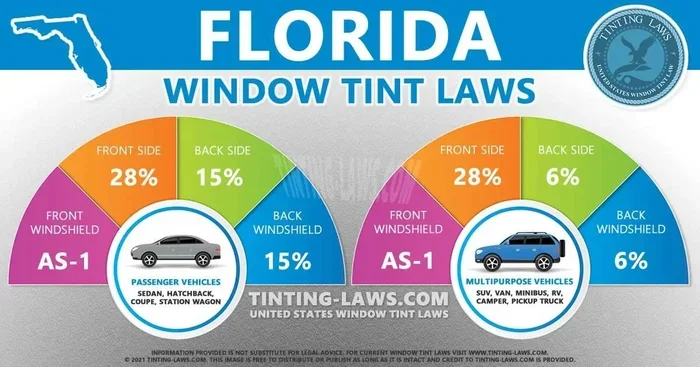
- Windshield: A non-reflective tint strip is allowed above the AS-1 line from the top. This strip cannot extend more than 6 inches down.
- Front Side Windows: Must allow more than 28% of outside light to pass through.
- Back Side Windows: Can be any darkness level. There is no minimum VLT requirement.
- Rear Window: Can also be any darkness level, with no minimum VLT restriction.
Tint Darkness Rules for SUVs and Vans
- Windshield: Same rule as sedans. Non-reflective tint above the AS-1 line only.
- Front Side Windows: Must allow more than 28% of light transmission.
- Back Side Windows: Any darkness is permitted.
- Rear Window: Any darkness is permitted.
The key difference between vehicle types comes down to the front side windows. For all vehicles, the front doors must let in at least 28% of light. This ensures drivers can see clearly, especially at night or in bad weather. The back windows have no such restriction, giving you more freedom to choose a darker shade.
Tint Reflection Rules in Florida
Reflection is another important part of the Florida tint regulations. Reflective tint can reduce glare and heat, but it can also blind other drivers. Florida law limits how reflective your window film can be.
- Front Side Windows: Must not be more than 25% reflective.
- Back Side Windows: Must not be more than 25% reflective.
- Rear Window: Must not be more than 25% reflective.
Mirrored or metallic-looking tint is not allowed on any window in Florida. The goal is to keep windows clear enough for other drivers to see through. If your tint looks like a mirror from the outside, it is too reflective and will fail inspection.
When shopping for automotive tinting films, look for ceramic or carbon options. These materials offer great heat rejection without high reflectivity. They are popular choices among Florida drivers who want comfort without breaking the law.
Quick Tip: Check Your Tint Before Driving
Not sure if your tint is legal? A simple test can help. Hold a piece of white paper against your window from the inside. If you cannot read text printed on the paper through the tinted glass, your tint is likely too dark for the front side windows. This quick check can save you from an unexpected window tint ticket.
Medical Exemption for Window Tint in Florida
Some people need more sun protection than what standard tint allows. Florida law recognizes this and offers a medical exemption tint option. If you have a condition that makes you sensitive to sunlight, you may qualify for a darker tint than the standard legal limits.
Who Qualifies for a Medical Exemption?
- People with lupus or other autoimmune disorders
- Individuals with severe sun allergies
- Patients undergoing photosensitive medical treatments
- Those with a history of skin cancer
How to Get a Medical Exemption
To get an exemption, you need a signed statement from a licensed physician. The statement must explain your condition and why darker tint is medically necessary. You must carry this document in your vehicle at all times.
The exemption allows you to tint the front side windows below the 28% VLT limit. However, you still must follow the reflection rules. The exemption does not override those limits.
Keep in mind that exemption rules can change. Always check with the Florida DMV or a local law enforcement agency for the most current information. Having the proper documentation protects you during traffic stops and inspections.
Tint Sticker and Certification Requirements
Florida requires every legally tinted vehicle to display a sticker. This sticker proves your tint meets state standards. It acts as your proof of compliance if you ever get pulled over.
Where to Place the Tint Sticker
- The sticker goes on the driver’s side door jamb.
- It must be placed between the glass and the weather stripping.
- The sticker should be clearly visible during inspections.
Your window tint installer should provide this sticker when they complete the job. If they do not, ask for it before you leave the shop. Without the sticker, you may be assumed to have illegal tint even if your film is within legal limits.
Tint Certification
Tint manufacturers must certify their products for sale in Florida. Look for certified films when you shop. Certified films come with documentation that proves they meet state standards. This makes the sticker process smoother and keeps you compliant from day one.
Penalties for Illegal Window Tint in Florida
Breaking the Florida window tint law comes with real consequences. The state takes tint violations seriously, and the penalties can add up quickly.
Fines and Penalties
- First offense: A non-moving traffic violation with a fine of around $116.
- Second offense: Fines can increase, and you may face additional court costs.
- Repeated violations: Could lead to higher fines and potential vehicle inspection requirements.
What Happens If You Get Pulled Over?
If an officer determines your tint is too dark, you will receive a citation. You will need to either remove the tint or provide proof of a medical exemption. In most cases, the tint must be removed to bring your vehicle into compliance.
Some drivers try to fix the issue by replacing the tint with a legal shade. Others choose to remove it entirely. Either way, the cost of a tint violation goes beyond just the fine. You will also pay for removal and re-tinting if you decide to do it again the right way.
Common Mistakes That Lead to Tint Violations
- Buying tint online without checking VLT percentages
- Assuming all windows can be tinted the same darkness
- Forgetting to get the compliance sticker
- Using reflective or metallic tint films
- Tinting the windshield below the AS-1 line
Avoiding these mistakes keeps you legal and saves you money. A little research before you tint goes a long way.
Choosing the Right Tint for Your Vehicle
Now that you know the legal limits, you might be wondering what kind of tint to choose. The good news is there are plenty of great options that keep you within the law.
Types of Window Tint Films
- Dyed Film: The most affordable option. It blocks some heat and glare but can fade over time.
- Metalized Film: Offers better heat rejection. However, it can interfere with cell phone and GPS signals.
- Carbon Film: A great middle-ground option. It does not fade and has a matte finish that looks sleek.
- Ceramic Film: The premium choice. It blocks the most heat, does not interfere with electronics, and offers excellent clarity.
For Florida’s hot climate, ceramic window tint is a popular choice. It provides superior heat rejection while staying within legal VLT limits. Many drivers also prefer carbon film for its durability and natural look.
VLT Chart: Quick Reference
Here is a simple chart to help you understand tint darkness levels at a glance.
- 5% VLT (Limousine tint): Very dark. Only allowed on back windows of SUVs and vans.
- 20% VLT: Dark tint. Allowed on back windows of all vehicle types.
- 35% VLT: Medium tint. Legal on all windows when combined with a 28%+ front side window VLT.
- 50% VLT: Light tint. Legal on all windows and offers good heat rejection.
- 70% VLT: Very light tint. Meets the front side window requirement easily.
When you visit a tint shop, ask them to show you the VLT of each film option. A reputable installer will be happy to provide this information and help you choose a legal shade.
Expert Insight: What Florida Inspectors Look For
According to local law enforcement, the most common violations involve front side windows being too dark. Inspectors use a VLT meter to measure light transmission during traffic stops and inspections. If your front side windows read below 28%, you will likely receive a citation.
Another frequent issue is tint on the windshield below the AS-1 line. Even if the tint is light, placing it too low on the windshield is a violation. Always make sure your installer follows the placement rules carefully.
Frequently Asked Questions
Can I tint my windshield in Florida?
Yes, but only a non-reflective strip at the top. This strip must be above the AS-1 line and cannot extend more than 6 inches down. No other part of the windshield can be tinted.
What happens if I get a window tint ticket in Florida?
You will receive a non-moving traffic violation citation. The fine is typically around $116 for a first offense. You will need to either remove the illegal tint or provide proof of a valid medical exemption.
Is 5% tint legal in Florida?
5% tint, also known as limousine tint, is only legal on the back side windows and rear window of SUVs and vans. It is not legal on sedans or on any front side windows. Always check the VLT percentage before purchasing.
Do I need a medical exemption if I have a darker tint?
Yes, if you want to tint your front side windows below 28% VLT, you need a medical exemption. This requires a signed statement from a licensed physician explaining your condition. Carry this document in your vehicle at all times.
Can I tint my rear window if I have side mirrors?
Yes, you can tint your rear window to any darkness level. However, Florida law requires dual side mirrors if the rear window is tinted. This ensures you have adequate visibility when backing up and changing lanes.
How much does legal window tint cost in Florida?
The cost varies depending on the type of film and your vehicle. A basic dyed film can cost between $100 and $200. Ceramic film, which offers the best performance, can range from $200 to $500 or more. Always choose a licensed and reputable installer for the best results.
Final Thoughts on Florida Window Tint Law
Understanding the Florida window tint law is essential for every car owner in the Sunshine State. The rules are clear and straightforward once you know what to look for. Stick to the legal VLT limits for your front side windows, avoid reflective films, and always get your compliance sticker. If you need darker tint for medical reasons, the exemption process is simple and well worth it.
Choosing the right window tinting film can make a huge difference in your driving comfort. You stay cooler, protect your interior from sun damage, and reduce glare on bright Florida days. Just make sure your choice falls within the legal limits so you avoid fines and headaches.
Take the time to research your options, ask questions at the tint shop, and keep your documentation in order. A little effort upfront saves you time, money, and stress down the road. Stay cool, stay legal, and enjoy the ride in your beautifully tinted Florida car.