How Do You Fix Low Brake Pressure And Restore Safety
Low brake pressure is a serious safety issue that demands immediate attention. This guide walks you through the most common causes of weak brakes, how to diagnose the problem yourself, and practical fixes you can do at home or with a mechanic. By the end, you will know exactly how to bring your brake pressure back to safe levels and keep your car stopping reliably.
Your brakes are the most important safety system in your car. When brake pressure drops, your stopping power drops too. That means longer stopping distances, unpredictable braking, and a real risk of an accident. If you have noticed that your brake pedal feels soft, spongy, or sinks to the floor, you are dealing with low brake pressure. And you need to fix it now.
This guide breaks down everything you need to know about fixing low brake pressure. We will cover the root causes, how to diagnose the problem, and the exact steps to restore safe braking. Whether you are a DIYer or just want to understand what your mechanic is talking about, this article has you covered. Let us get your brakes back to full strength.
Key Takeaways
- Air in the brake lines is one of the most common causes of low brake pressure and can be fixed by bleeding the brakes.
- A worn master cylinder can cause a steady loss of hydraulic pressure and must be replaced promptly.
- Brake fluid leaks anywhere in the system reduce pressure and compromise your safety on the road.
- Regular brake fluid flushes prevent moisture buildup and keep your braking system performing at its best.
- Spongy brakes are a clear warning sign that should never be ignored or delayed.
- Professional diagnosis is recommended if you are unsure about any step in the repair process.
📑 Table of Contents
What Causes Low Brake Pressure?
Understanding the cause is the first step to fixing low brake pressure. Your braking system relies on hydraulic pressure to push the brake pads against the rotors. When something disrupts that pressure, your brakes feel weak or unresponsive. Here are the most common culprits.
Air in the Brake Lines
Air is compressible, but brake fluid is not. When air gets into your brake lines, it creates a spongy feel on the pedal. This happens most often after brake pad replacement, a brake fluid change, or a leak repair. Even a small amount of air can significantly reduce your brake pressure and make your pedal feel mushy.
Brake Fluid Leaks
A leak anywhere in the braking system will cause a drop in pressure. Common leak points include the brake lines, calipers, wheel cylinders, and the master cylinder. You might notice a puddle of fluid under your car or a spongy pedal that gets worse over time. Brake fluid is usually clear or light yellow, so look for that telltale color.
Worn Master Cylinder
The master cylinder is the heart of your brake system. It generates the hydraulic pressure that pushes fluid through the lines to each wheel. Over time, the seals inside the master cylinder wear out. When they do, the cylinder cannot maintain proper pressure. A worn master cylinder often causes the pedal to slowly sink to the floor even when you are holding steady pressure.
Contaminated Brake Fluid
Brake fluid is hygroscopic, meaning it absorbs moisture from the air over time. Moisture in the fluid lowers its boiling point and can cause internal corrosion in the brake lines and calipers. Contaminated fluid does not flow as efficiently, which leads to a gradual loss of brake pressure. This is one of the most overlooked causes of weak brakes.
Faulty Brake Booster
The brake booster uses engine vacuum to multiply the force you apply to the pedal. If the booster fails, you will need much more effort to stop the car. A bad brake booster does not always cause low pressure in the traditional sense, but it makes the pedal feel hard and unresponsive. This is a different problem than hydraulic pressure loss, but it still affects your braking performance.
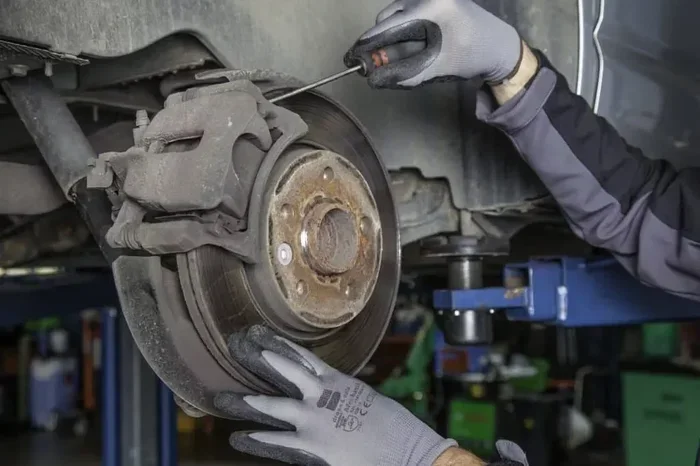
Worn Brake Pads or Calipers
Worn brake pads can contribute to a soft pedal feel, especially if the pads have worn down significantly. Sticking calipers can also prevent even pressure distribution across all four wheels. If you notice that one side of the car pulls during braking, the calipers may be the issue. You can learn more about pad replacement timing in our article on Do You Need To Change All 4 Brake Pads At Once.
How To Diagnose Low Brake Pressure
Before you start any repair, you need to confirm that you actually have low brake pressure. Here is a simple diagnostic process you can follow at home.
Step 1: Check the Brake Pedal Feel
Start the engine and press the brake pedal. Does it feel firm or spongy? A healthy brake pedal should feel firm and resist pressure consistently. If the pedal feels soft, sinks slowly, or goes to the floor, you likely have a pressure problem.
Step 2: Inspect the Brake Fluid Reservoir
Open the hood and locate the brake fluid reservoir. Check the fluid level. If it is low, top it off with the correct type of fluid listed in your owner’s manual. A low fluid level often indicates a leak somewhere in the system. After topping off, watch the reservoir over the next few days. If the level drops again, you have an active leak.
Step 3: Look for Visible Leaks
Get under the car and look at the brake lines, calipers, and wheel cylinders. Check for wet spots, drips, or corroded lines. Also inspect the area around the master cylinder, which is located on the driver’s side of the engine bay. Any sign of fluid leakage points to the source of your brake pressure problem.
Step 4: Check for the Brake Warning Light
Your dashboard brake warning light can signal low fluid, a parking brake issue, or a problem with the ABS system. If the light is on, do not ignore it. Use a diagnostic scanner to check for error codes if you have one available. The codes can point you toward the specific component causing the issue.
Step 5: Test Drive with Caution
If you feel comfortable doing so, take a slow test drive in a safe area. Pay attention to how the car stops. Does it pull to one side? Does the pedal feel different from normal? Note any vibrations or grinding sounds. These observations will help you or your mechanic pinpoint the exact problem.
Remember, if you are ever unsure about your diagnosis, it is better to visit a trusted mechanic. You can also check whether your local dealership offers car inspections to get a professional assessment of your braking system.
Step-by-Step Fixes For Low Brake Pressure
Once you have identified the cause, you can start the repair. Some fixes are simple enough for a weekend DIY project. Others require professional tools and expertise. Here is a breakdown of the most common repairs.
Fix 1: Bleed the Brake Lines
If air is trapped in your brake lines, bleeding the system will remove it. You will need a helper, a wrench, clear tubing, and a container for old fluid. Here is how to do it:
- Start with the wheel farthest from the master cylinder (usually the right rear).
- Have your helper press the brake pedal slowly and hold it.
- Open the bleeder valve on the caliper or wheel cylinder.
- Fluid and air will flow out through the tubing.
- Close the valve before your helper releases the pedal.
- Repeat until no air bubbles appear in the fluid.
- Move to the next wheel in order: left rear, right front, left front.
Bleeding the brakes restores proper hydraulic pressure and gives you a firm pedal. This is one of the most effective fixes for spongy brakes.
Fix 2: Replace Leaking Components
If you found a leak during your inspection, the affected component needs to be replaced. Common replacements include brake lines, calipers, wheel cylinders, or the master cylinder. Here is what to expect:
- Brake line replacement: Usually straightforward. Cut the damaged section and install a new line with proper fittings.
- Caliper replacement: Remove the old caliper, slide out the pads, and install the new unit. Remember to bleed the lines afterward.
- Master cylinder replacement: This is more complex. The new cylinder must be bench-bled before installation, and the entire system must be bled afterward.
Always use OEM-quality or higher replacement parts. Cheap parts can fail quickly and leave you with the same brake pressure problem.
Fix 3: Flush and Replace Brake Fluid
If your brake fluid is dark, dirty, or has absorbed too much moisture, a full fluid flush will restore proper system performance. Here is the process:
- Locate the brake fluid reservoir and remove the old fluid using a turkey baster or pump.
- Refill the reservoir with fresh, correct-specification brake fluid.
- Bleed each wheel starting from the farthest from the master cylinder.
- Top off the reservoir with new fluid as you go.
- Check for air bubbles and continue bleeding until the pedal feels firm.
A brake fluid flush is one of the best preventive maintenance jobs you can do. It removes contaminants and ensures your hydraulic pressure stays consistent. Most manufacturers recommend a fluid flush every two years or 30,000 miles.
Fix 4: Replace the Brake Booster
If your brake booster is faulty, you will need to replace it. The booster sits between the master cylinder and the brake pedal. To replace it:
- Disconnect the battery for safety.
- Remove the vacuum hose from the booster.
- Unbolt the booster from the firewall.
- Disconnect the master cylinder and remove it.
- Install the new booster and reconnect the master cylinder.
- Bleed the entire brake system after installation.
A new brake booster restores the vacuum assist that makes braking easy and responsive. Without it, you will still have brake pressure, but the pedal will require much more effort.
Preventing Low Brake Pressure In The Future
The best way to deal with low brake pressure is to prevent it from happening in the first place. Regular maintenance and good driving habits go a long way toward keeping your braking system in top shape.
Follow a Regular Brake Maintenance Schedule
Stick to the maintenance intervals outlined in your owner’s manual. This includes regular brake fluid flushes, pad inspections, and rotor checks. A consistent maintenance schedule catches small problems before they become big, expensive ones.
Use the Right Brake Fluid
Not all brake fluids are the same. Your car requires a specific type, usually DOT 3, DOT 4, or DOT 5. Using the wrong fluid can cause seal degradation, corrosion, and a loss of brake pressure. Always check the owner’s manual or the reservoir cap for the correct specification.
Listen to Your Brakes
Your car tells you when something is wrong. Pay attention to warning signs like grinding noises, a pulling sensation during braking, or a brake pedal that feels different than usual. Catching these signs early can prevent a complete brake failure.
Avoid Riding the Brakes
Resting your foot on the brake pedal while driving causes unnecessary wear on the pads and overheating of the braking system. Over time, this can lead to warped rotors and reduced braking performance. Keep your foot off the pedal unless you are actively slowing down or stopping.
Monitor Brake Fluid Levels Regularly
Make it a habit to check your brake fluid level once a month. A sudden drop in fluid level is often the first sign of a leak. Catching a leak early means you can fix it before it leads to a dangerous loss of brake pressure.
When To See A Professional Mechanic
Some brake repairs are well within the scope of a skilled DIYer. But others require professional tools, experience, and expertise. You should see a mechanic if:
- You have tried bleeding the brakes and the pedal still feels spongy.
- You cannot locate the source of a brake fluid leak.
- The brake warning light stays on after you top off the fluid.
- Your pedal goes to the floor and the car does not stop effectively.
- You are not comfortable working under the car or handling hydraulic systems.
Brake work is not the place to cut corners. A professional mechanic has the tools and experience to diagnose and fix complex brake pressure issues safely. If you are unsure, get a second opinion. Your safety and the safety of others on the road depend on it.
Also, remember that driving with compromised brakes can have legal consequences. If you are wondering about the rules around vehicle safety and insurance, check out our article on Can I Drive With Low Tire Pressure for related driving safety guidance.
Key Takeaways On Restoring Brake Pressure
Restoring low brake pressure comes down to identifying the root cause and applying the right fix. Whether it is air in the lines, a leaking caliper, or a worn master cylinder, each problem has a clear solution. The key is to act quickly and not ignore the warning signs. A firm brake pedal is your first line of defense on the road.
Regular maintenance, quality parts, and attentive driving habits will keep your braking system working reliably for years to come. Do not wait until the pedal goes soft or the warning light comes on. Stay proactive and keep your car stopping safely.
Final Thoughts
Low brake pressure is not something to take lightly. It is a direct threat to your safety and the safety of everyone around you. The good news is that most causes of low brake pressure are fixable, and many of the repairs are straightforward. Whether you bleed the brakes yourself, replace a leaking component, or flush the fluid, the effort is well worth the peace of mind you gain.
Start by diagnosing the problem using the steps in this guide. If you are confident in your diagnosis, gather the right tools and parts, and get to work. If anything feels beyond your skill level, take the car to a trusted mechanic. Your brakes are not the place to experiment.
Stay on top of your brake maintenance, listen to your car, and never ignore the signs of a pressure problem. A well-maintained braking system gives you confidence every time you press the pedal. Drive safe, stop safe, and enjoy the peace of mind that comes with reliable brakes.
Frequently Asked Questions
What are the first signs of low brake pressure?
The first signs include a spongy or soft brake pedal, a pedal that sinks to the floor, a brake warning light on the dashboard, and longer stopping distances. You might also notice a hissing sound when you press the pedal or see brake fluid pooling under the car. These symptoms mean your braking system is not holding proper pressure and needs immediate attention.
Can I drive with low brake pressure?
You should not drive with low brake pressure. It significantly increases your stopping distance and makes your brakes unreliable. In an emergency, weak brakes may not stop the car in time. If you notice any signs of pressure loss, address the problem before driving the vehicle. If you must move the car, do so slowly and with extreme caution.
How much does it cost to fix low brake pressure?
The cost depends on the cause. Bleeding the brakes typically costs between $70 and $150 if done at a shop. Replacing brake pads runs $150 to $300 per axle. A new master cylinder can cost $300 to $600 including parts and labor. Caliper replacements range from $300 to $700 per wheel. Always get a detailed quote before authorizing any repair work.
How often should I bleed my brakes?
Most manufacturers recommend bleeding the brakes every two to three years or during any brake system service that involves opening the lines. You should also bleed the system anytime you replace brake components, notice a spongy pedal, or top off the brake fluid. Regular bleeding keeps air out and maintains strong brake pressure.
What type of brake fluid should I use?
Check your owner’s manual for the correct specification. Most modern cars use DOT 3 or DOT 4 brake fluid. DOT 5 is silicone-based and is used in some specific applications. Never mix different types of brake fluid, as this can cause chemical reactions that damage seals and reduce brake pressure. Always use fresh, sealed fluid from a reputable brand.
Can low brake fluid cause the ABS light to come on?
Yes, low brake fluid can trigger the ABS warning light. The ABS system relies on proper hydraulic pressure to function correctly. When fluid levels drop, the system detects a problem and illuminates the warning light. If your ABS light is on, check the brake fluid level first and inspect for leaks. Resolving the fluid issue usually turns the light off and restores normal ABS system operation.