How Do You Know When to Change Your Car Key Battery
Knowing when to change your car key battery saves you from frustrating lockouts and unexpected breakdowns. You will learn the clear warning signs, simple testing methods, and a step-by-step replacement guide. This article covers everything you need to keep your key fob battery working reliably.
Your car key battery is a small but mighty component. It powers the remote functions that let you lock, unlock, and start your vehicle with a push. When that battery weakens, you might notice frustrating delays or complete failure. Ignoring the signs can leave you stranded outside your own car. This guide walks you through every detail, from early warning signs to a simple DIY replacement.
Many drivers overlook their key fob until it stops working entirely. A dead car key battery can cause a lot of stress, especially when you are in a hurry. The good news is that most key fob batteries are cheap and easy to swap. You will learn how to spot the problem early, test the battery, and replace it in minutes. I will also share tips to make your key fob battery last longer. By the end, you will feel confident handling this common maintenance task yourself.
We will cover everything you need to know. You will discover the subtle signs that your battery is dying. I will show you how to check the voltage with a simple tool. You will also see a step-by-step guide to opening your key fob and popping in a new cell. Plus, I will explain when it makes sense to visit a dealership instead of doing it yourself. Let us dive in and keep your remote key working perfectly.
Key Takeaways
- Early Warning Signs: Reduced range, delayed response, and dashboard alerts tell you your car key battery is dying before it fails completely.
- Simple Testing: You can check battery health with a multimeter or a quick test method using just your body as a signal amplifier.
- Easy DIY Replacement: Most drivers can swap a key fob battery in under five minutes with a CR2032 coin cell and a tiny screwdriver.
- Professional Options: Dealerships can replace the battery for free on some newer models, and any dealership can handle key fob battery replacement if you prefer not to DIY.
- Longevity Tips: Storing your fob away from extreme heat and cold, and replacing the battery promptly, extends its life significantly.
- Know When to Seek Help: Water damage, cracked casings, or programming issues need a professional technician, not just a new battery.
📑 Table of Contents
Why Your Car Key Battery Matters
Your car key battery is the heart of your remote key fob. Without it, you lose the convenience of keyless entry and push-button start. Many modern vehicles rely on a key fob battery to communicate with the car’s computer. When the battery weakens, that communication breaks down. You might still be able to use a physical key, but the remote functions will fail.
Understanding how your car key battery works helps you stay ahead of problems. Most key fobs use a small coin cell battery, often a CR2032. These batteries are inexpensive and widely available. They typically last between two and four years. However, extreme temperatures and frequent use can shorten that lifespan. Keeping an eye on your battery health saves you from unexpected lockouts.
How a Key Fob Works
A key fob sends a low-energy radio signal to your car. The car’s antenna receives this signal and unlocks the doors or starts the engine. The battery powers this tiny transmitter. When the battery voltage drops, the signal weakens. You may notice that you need to stand closer to the car for the fob to work. In some cases, the car simply does not respond at all.
The signal strength depends directly on the battery’s ability to deliver steady voltage. A fresh battery sends a strong, clear signal that the car’s computer reads instantly. A weak battery sends a faint signal that may be missed by the antenna. This is why you sometimes have to press the button multiple times or stand right next to the door. The key fob battery is the weak link in that electronic chain.
The Role of the Battery
The battery provides steady power for the key fob’s internal electronics. It also maintains the memory of your remote settings. A low battery can cause intermittent glitches. You might get one successful unlock followed by two failed attempts. This inconsistency is a clear sign that the battery needs attention. Replacing it early prevents complete failure.
Many people think a car key battery just dies one day. In reality, it gives you plenty of warning. The signal degrades gradually. You might first notice that the trunk release does not work from across the parking lot. Then the unlock function becomes unreliable. Finally, the fob stops working altogether. Catching the early stages means you never have to deal with a total lockout.
Quick Tip: Keep a spare key fob battery in your glove box. A CR2032 coin cell costs less than two dollars and takes up no space. This small preparation saves you from buying a replacement in a panic at a gas station.
Warning Signs Your Car Key Battery Is Dying
Spotting the early symptoms of a weak car key battery can save you a lot of trouble. Do not wait until the fob stops working entirely. Here are the most common warning signs to watch for.
Reduced Range and Weak Signal
One of the first signs is a shorter working range. You used to unlock your car from twenty feet away. Now you must stand right next to the door. If you find yourself pointing the fob directly at the car, the battery is likely weak. This reduced range often happens gradually, so you might not notice it at first.
Think of it like a flashlight with dying batteries. The beam starts bright and slowly dims. Your remote key works the same way. The radio signal loses strength as the battery voltage drops. You might still get the car to unlock if you stand within three feet, but that is not normal. A healthy fob should work from ten to fifteen feet away.
Intermittent Function or Delayed Response
A healthy key fob responds instantly. If you press the button and wait for a second, something is wrong. Intermittent function means the fob works sometimes but not others. You might unlock the driver’s door but not the passenger door. These delays indicate that the battery cannot deliver a consistent signal.
Delayed response is another red flag. You press the lock button and the car takes a full second to react. In the past, it was instantaneous. This lag happens because the battery voltage sags under load. The fob tries to send a strong enough signal but the dying cell cannot keep up. This is a clear sign that battery replacement is needed soon.
Dashboard Alerts and Warning Lights
Many modern cars display a warning message on the dashboard. You might see a key icon with a battery symbol. Some vehicles show a “Key Not Detected” alert. These warnings often appear when the key fob battery is low. Check your owner’s manual for the specific symbol. Do not ignore these alerts, as they point directly to a battery issue.
Some cars have a more subtle warning. The instrument cluster might flash a message saying “Replace Key Fob Battery.” This is the vehicle’s way of telling you exactly what is wrong. If you see this message, do not put it off. The car key battery is already low and will fail soon if you do not act.
Key Not Recognized by the Car
The most obvious sign is when the car completely ignores the fob. You press the start button, but the engine does not turn over. The doors will not unlock remotely. In this case, you will need to use the physical mechanical key. If you experience this, replace the battery immediately. A completely dead car key battery will not recover on its own.
Some drivers mistake this for a larger electrical problem. They think the car’s computer has failed. Before you panic, try the mechanical key. If the physical key works but the fob does not, the issue is almost certainly the battery. A key fob not working situation is rarely an emergency, but it is an inconvenience you can fix in minutes.
Common Mistakes: Many people try to charge their key fob battery or leave it in the sun to “revive” it. These tricks do not work. A coin cell battery is a disposable cell. Once it is dead, it must be replaced. Do not attempt to open and recharge it, as this can cause leakage and permanent damage.
How to Check and Replace Your Car Key Battery
Checking your key fob battery is simple and takes just a few minutes. You do not need advanced mechanical skills. I will show you two easy methods, followed by a full replacement guide.
Using a Multimeter
A digital multimeter gives you an accurate voltage reading. Set the dial to the DC voltage setting. Touch the red probe to the positive side of the battery and the black probe to the negative side. A fresh CR2032 battery should read around 3 volts. If the reading drops below 2.5 volts, it is time for a replacement. This method works well if you already own a multimeter at home.
If you do not have a multimeter, you can still test the battery. The next method uses nothing but your car and your body. Both approaches are reliable and give you a clear answer about your key fob battery health.
The Test Method Without Tools
You can also test the battery without any equipment. Press the fob button while standing close to your car. If the signal reaches the car from a normal distance, the battery is likely fine. Another trick is to hold the fob against your head. Your body acts as a conductor and can amplify the weak signal. If the car responds better when the fob is near your head, the battery is weak. This simple test gives you a quick answer.
This trick works because your body is mostly water, and water conducts radio waves. The fob pressed against your head effectively creates a larger antenna. The signal reaches the car more easily. If you notice a dramatic difference in range when the fob is near your head versus when it is just in your hand, the battery replacement is overdue.
When to Replace the Battery
Replace the battery as soon as you notice consistent warning signs. Do not wait for a complete failure, especially if you rely on remote start. A key fob battery replacement is cheap and easy. Most drivers can do it in under five minutes. Keep a spare battery in your glove box, so you are always prepared.
I recommend replacing the battery at the first sign of reduced range. Waiting until the fob stops completely means you might get locked out. A proactive approach keeps your car key battery in top shape and avoids the stress of a lockout situation.
Tools You Will Need
You only need a few household items to change your car key battery. Here is a quick list:
- A replacement CR2032 battery (or the type specified in your owner’s manual)
- A small flathead screwdriver or a thin plastic pry tool
- A clean, dry cloth
- Your owner’s manual for battery type and orientation
You can buy a CR2032 at any grocery store, pharmacy, or auto parts shop. The cost is typically under three dollars. Choose a name-brand battery for the best results. Cheap off-brand batteries sometimes leak and can damage the key fob’s internal contacts.
Opening the Key Fob
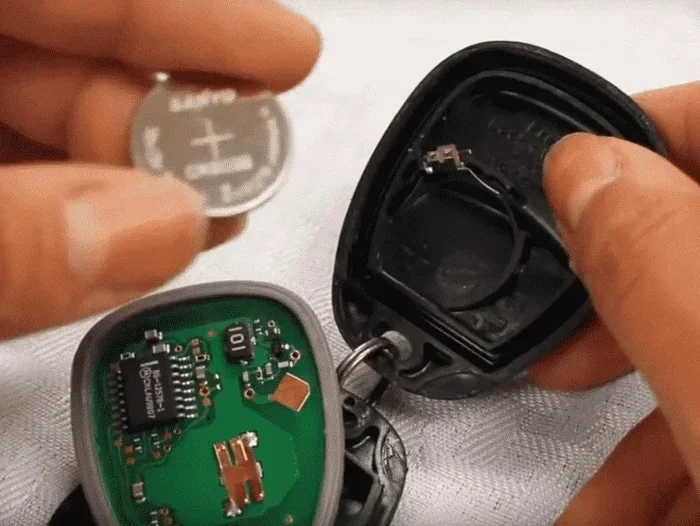
First, remove any physical key from the fob. Look for a small release button or a sliding latch. Use the flathead screwdriver to gently pry open the casing. Work slowly around the seam to avoid cracking the plastic. Some key fobs have a screw holding the two halves together. Remove the screw first, then separate the halves carefully.
Take your time with this step. The plastic clips are fragile. If you force the fob open, you can crack the casing. A cracked fob lets moisture in, which causes corrosion and short circuits. Gentle pressure and patience are all you need. If you are unsure how your specific fob opens, check our guide on Can You Replace A Key Fob Battery Yourself for model-specific instructions.
Replacing the Battery
Once the fob is open, you will see the old battery. Note the positive and negative side. The battery usually sits in a small metal tray. Use the screwdriver to gently pop out the old battery. Insert the new battery with the correct orientation. The positive side typically faces up. Press the battery firmly into the tray until it clicks into place.
Make sure the battery sits flat and secure. A loose battery will not make proper contact, and the fob will not work. If the metal tray has corrosion, clean it gently with a dry cloth. Corrosion prevents the electrical connection and can make a new battery seem dead. After placing the new cell, give it a gentle press to confirm it is seated correctly.
Testing the New Battery
Snap the key fob back together. Stand near your car and test all the buttons. Try locking, unlocking, and opening the trunk. If the car responds immediately, the replacement was successful. If not, double-check the battery orientation. A reversed battery will not work. Also, make sure the contacts are clean and free of corrosion.
If the fob still does not work after a correct battery swap, the problem may be deeper than a dead cell. The fob could have internal damage, or the car’s receiver might need reprogramming. In those cases, you may need professional help. See our section on when to seek professional assistance for more guidance.
Expert Insight: Many drivers ask if they can use any coin cell battery. The answer is yes, as long as it is the correct size and voltage. CR2032 is the most common, but some fobs use CR2025 or CR2016. Always check your owner’s manual. Using the wrong thickness can cause the fob to not close properly or make poor contact.
DIY vs. Dealership: Who Should Change the Battery?
Now that you know how to replace the battery yourself, you might wonder if you should do it at home or visit a dealership. Both options have their merits. Let us compare them so you can choose the best path for your situation.
DIY vs. Dealership Replacement
Replacing the battery yourself is fast, free, and convenient. You do not need to drive anywhere or wait for an appointment. The process is the same for most key fobs, whether you drive a Toyota, Honda, or Ford. If you are comfortable with basic tasks, DIY is the clear winner. You can also refer to our guide on Can You Replace A Key Fob Battery Yourself for more detailed instructions and troubleshooting tips.
On the other hand, some drivers prefer professional service. You might worry about damaging the key fob or losing the programming. Dealerships have trained technicians who can handle any key fob model. They also have the correct tools and replacement parts. If you are not confident in your DIY skills, a dealership visit gives you peace of mind.
Cost Considerations
The cost of a DIY battery replacement is just the price of the battery, usually under five dollars. A dealership might charge a service fee on top of the battery cost. However, some dealerships offer free battery replacement for newer vehicles. Check our article on Do Dealerships Replace Key Fob Batteries For Free to see if your dealer provides this service. It can save you both time and money.
Keep in mind that if your key fob still does not work after a battery swap, the problem might be deeper. The fob could have water damage, a broken circuit, or a faulty transmitter. In those cases, professional diagnosis is the right move. Do not force the fob open repeatedly, as this can crack the casing and cause further damage.
| Factor | DIY Replacement | Dealership Replacement |
|---|---|---|
| Cost | Battery price only (under $5) | Battery plus service fee ($20-$50) |
| Time | 5 minutes at home | Wait for appointment (1-3 days) |
| Convenience | Do it anytime | During business hours only |
| Risk | Low if careful | None |
| Programming | Usually not needed | Technician handles programming |
For most drivers, the DIY approach is the clear winner. The process is straightforward, and the cost is minimal. Just be gentle when opening the fob, and you will be fine. If you do break the casing, a dealership can repair or replace it, but that is rare.
How Long Does a Car Key Battery Last?
The lifespan of a car key battery depends on several factors. Most coin cell batteries last between two and four years. However, your usage habits and environment play a big role. Understanding these factors helps you plan replacements and avoid surprises.
Average Lifespan
A standard CR2032 battery in a key fob typically lasts about three years. If you use your remote start frequently, the battery may drain faster. Conversely, a fob that sits unused in a drawer can last much longer. The key is to monitor the symptoms we discussed earlier. Do not wait for a dead battery to test the voltage.
Some drivers get five years out of a single battery. Others need a replacement every eighteen months. It all comes down to how often you use the fob and what conditions it endures. The more you press the buttons, the more current the battery delivers. Over time, this repeated discharge reduces the overall lifespan.
Factors That Affect Battery Life
Several things shorten or extend the life of your key fob battery. Cold weather is a major factor. Low temperatures reduce the battery’s ability to deliver power. If you live in a cold climate, you might need to replace the battery more often. High humidity and exposure to moisture can also corrode the battery contacts. Frequent use of remote start and proximity sensors draws more current, draining the battery faster.
Extreme heat is another enemy. Leaving your fob on the dashboard in direct sunlight can bake the battery and shorten its life. The chemical reactions inside the cell accelerate in high heat, causing the battery to drain prematurely. Store your fob in a cool, dry place when you are not using it. A simple habit like this can add months to the battery’s life.
Extending Battery Life
You can take simple steps to make your car key battery last longer. Store the fob away from extreme heat and cold. Do not leave it on the dashboard in direct sunlight. When the battery is low, replace it promptly. A fully drained battery can leak acid and damage the fob’s internal components. Also, clean the battery contacts with a dry cloth every time you open the fob. These small habits add up and keep your remote working reliably.
Another tip is to remove the battery if you will not use the fob for an extended period. If you have a spare fob that sits in a drawer, take the battery out. This prevents slow drainage and potential leakage. When you need it again, pop in a fresh battery and you are good to go.
When to Seek Professional Help
Most battery replacements are simple and safe. But there are times when you should call in a professional. Knowing the difference between a dead battery and a deeper problem saves you frustration and money.
Key Fob Damage or Water Exposure
If your key fob has been dropped in water or hit hard, the battery might not be the issue. Water can short-circuit the internal electronics. A cracked fob will let moisture in and damage the circuit board. In these situations, a new battery will not fix the problem. You need professional repair or a full fob replacement. Visit your dealership or a qualified locksmith to assess the damage.
Water damage often shows up as intermittent function even after a battery swap. The fob might work for a day and then stop again. This is a sign that corrosion has set in. A technician can clean the circuit board and replace damaged components. Do not keep using a wet fob, as it can ruin the internal electronics completely.
Programming and Sync Issues
Sometimes a car key fob loses its programming after a battery change. The car no longer recognizes the remote. This is more common in newer vehicles with advanced security systems. You can often re-sync the fob yourself by following the steps in your owner’s manual. However, if the re-sync process fails, you will need a technician. They have the diagnostic tools to reprogram the key fob correctly.
If you are unsure whether the battery is the problem or if your fob needs programming, it is wise to seek help. You can also check if any local dealership can assist with battery replacement. Our guide on Can Any Dealership Replace A Key Fob Battery explains which service centers can handle this task. They will test the fob, replace the battery, and re-program it if needed.
Expert Insight: Some modern fobs use a rechargeable battery instead of a disposable coin cell. These fobs charge through contact with the car when you insert the key. If you have a rechargeable fob, you cannot simply swap a CR2032. You must charge it or replace the entire unit. Check your owner’s manual to see which type your vehicle uses.
Conclusion
Changing your car key battery is one of the easiest maintenance tasks you can do. It costs just a few dollars and takes only a few minutes. By watching for the warning signs, you can replace the battery before you get locked out. Use a multimeter to confirm the voltage, or try the simple test method. Follow the step-by-step replacement guide, and you will have your fob working again in no time.
Remember to keep a spare battery in your glove box. This small preparation saves you from unexpected trouble. If you are not comfortable with DIY, your dealership is always ready to help. Many dealers even replace the battery for free on newer models. With the right knowledge and a fresh battery, your key fob battery will continue to work reliably for years to come. Stay proactive, and never let a dead battery leave you stranded again.
Frequently Asked Questions
What kind of battery does my car key fob use?
Most car key fobs use a CR2032 coin cell battery, which is a 3-volt lithium battery. Some models use CR2025 or CR2016, which are thinner versions of the same battery. Always check your owner’s manual to confirm the exact type and orientation before purchasing a replacement.
How do I know if my car key battery is dead?
The most obvious sign is when the fob stops working completely. You will not be able to lock, unlock, or start the car remotely. The dashboard may also show a key battery warning light. If you still can use the physical mechanical key but the remote functions fail, the battery is almost certainly dead and needs replacement.
Can I drive my car if the key fob battery dies?
Yes, in most cases you can still drive the car using the physical mechanical key. The fob battery only affects the remote functions and push-button start. If your car has a traditional ignition slot, insert the physical key to start the engine. However, you will not have keyless entry or remote start until you replace the battery.
How long does it take to change a car key battery?
A battery replacement takes about three to five minutes once you have the right replacement cell and a small screwdriver. Opening the fob, swapping the old battery for the new one, and snapping the casing back together is a very quick process. Most drivers find it easier than changing a watch battery.
Will a new car key battery need to be programmed?
In most cases, no. Simply replacing the battery does not erase the fob’s programming. The car should recognize the fob immediately after the swap. If the car does not recognize the fob, try holding the fob close to the start button for a few seconds. If that fails, consult your owner’s manual for a re-sync procedure or visit a dealership for assistance.
Where can I get my car key battery replaced for free?
Some dealerships offer free battery replacement for newer vehicles as part of their customer service. You can also check if any local locksmith or auto parts store will replace the battery for a small fee. Our guide on Do Dealerships Replace Key Fob Batteries For Free lists the options available and helps you find a free or low-cost replacement near you.