How Do I Know If My Mazda Has i-ELOOP Regen Feature
Finding out if your Mazda has i-ELOOP is easier than you think. You can check your dashboard for the i-ELOOP indicator light, look up your vehicle’s trim level in the owner’s manual, or search your Mazda’s model year and trim online. The i-ELOOP regenerative braking system is a smart fuel-saving feature that captures kinetic energy and turns it into electricity for your car’s accessories.
You just bought a Mazda, or maybe you are thinking about buying one. And someone told you it might have this cool thing called i-ELOOP. But what exactly is it? And more importantly, how do you know if your Mazda actually has it?
The i-ELOOP regenerative braking system is one of Mazda’s smartest engineering moves. It captures energy you normally waste when you slow down and uses it to power your car’s electrical systems. This means your engine spends less work on things like the air conditioning, stereo, and lights. The result? Better fuel economy and a smoother ride.
But here is the thing. Not every Mazda comes with i-ELOOP. It depends on the model year, the trim level, and the specific vehicle you are driving. In this guide, I am going to walk you through every way you can find out if your Mazda has this feature. Whether you already own the car or are shopping around, this article has you covered.
By the end, you will know exactly what to look for, where to check, and what the i-ELOOP dashboard indicator looks like. Let us get into it.
Key Takeaways
- Dashboard Light: The i-ELOOP indicator on your dash is the fastest way to confirm the system is active.
- Owner’s Manual: Your Mazda’s manual lists all features by trim level and model year.
- Trim Level Matters: i-ELOOP is typically standard on higher trims and optional on base models.
- Capacitor-Based System: Unlike hybrid batteries, i-ELOOP uses a capacitor to store recovered energy.
- Fuel Economy Boost: The system improves gas mileage by reducing engine load on electrical components.
- Model Coverage: i-ELOOP is available on select Mazda3, Mazda6, CX-5, and CX-9 models.
- Visual Cues: A smart keyless entry button with i-ELOOP branding can also confirm the feature.
📑 Table of Contents
- What Is Mazda i-ELOOP and Why Does It Matter?
- How to Check if Your Mazda Has i-ELOOP
- Which Mazda Models and Years Come with i-ELOOP?
- What Does i-ELOOP Look Like in Action?
- Common Issues and Questions About i-ELOOP
- How to Maintain Your i-ELOOP System
- Does i-ELOOP Really Make a Difference in Fuel Economy?
- Can You Add i-ELOOP to a Mazda That Does Not Have It?
- Final Thoughts on Identifying i-ELOOP in Your Mazda
What Is Mazda i-ELOOP and Why Does It Matter?
Before we dive into how to check for i-ELOOP, let us talk about what it actually is. The name stands for Intelligent Energy Loop. It is Mazda’s version of kinetic energy recovery. Here is how it works in plain English.
When you take your foot off the gas pedal or hit the brakes, your car generates energy. Normally, that energy just turns into heat and disappears. But with i-ELOOP, your Mazda captures that energy and stores it in a capacitor. A capacitor is like a battery, but it charges and discharges much faster. The stored energy then powers things like your headlights, infotainment system, and climate controls.
Why does this matter? Because your engine no longer has to work as hard to power all those electrical parts. Less engine load means better fuel efficiency. Studies and real-world tests show that i-ELOOP can improve gas mileage by about 5 to 10 percent in city driving. That adds up over time, especially if you commute every day.
How i-ELOOP Differs from a Hybrid Battery
Some people confuse i-ELOOP with a hybrid battery. They are not the same thing. A hybrid battery stores energy for propulsion. It actually helps move the car. The i-ELOOP capacitor only stores energy for electrical accessories. Your Mazda still runs on gasoline alone.
If you want to learn more about how hybrid battery health works in general, you can check out our guide on how to check your hybrid battery health. It covers the basics of energy storage systems in modern cars.
How to Check if Your Mazda Has i-ELOOP
Okay, now for the part you have been waiting for. How do you actually confirm whether your specific Mazda has i-ELOOP? There are several methods, and I recommend trying them in order. Some are faster than others.
Method 1: Check the Dashboard for the i-ELOOP Indicator
The quickest way to know if i-ELOOP is active is to look at your dashboard. When you start your Mazda, the system performs a self-check. If your car has i-ELOOP, you will see a brief icon light up on the instrument cluster.
The i-ELOOP dashboard indicator looks like a small battery or capacitor symbol with the letters “i-ELOOP” next to it. It usually appears for just a second during startup. If you see it, your car has the system.
Once you are driving, the light may come on again when the capacitor is actively storing energy. You will typically see it when you are coasting or decelerating. If you never see the light at all, your Mazda might not have i-ELOOP. But do not panic yet. There are other ways to confirm.
Method 2: Look Up Your Vehicle Trim Level
The next thing you should do is check your trim level. i-ELOOP availability depends heavily on which trim your Mazda came in. Here is a general breakdown:
- Mazda3: i-ELOOP is often standard on higher trims like the Grand Touring and Signature. Base trims like the 2.0 S may not include it.
- Mazda6: Most Mazda6 trims include i-ELOOP, especially in later model years. It is more commonly standard on Touring and above.
- CX-5: The CX-5 often includes i-ELOOP on mid-to-upper trims. Base LX trims might not have it.
- CX-9: The CX-9 SUV almost always comes with i-ELOOP across its trim lineup.
If you are not sure what trim you have, check your registration documents, the door jamb sticker, or the window sticker if you still have it. The trim level will be listed clearly.
Method 3: Consult Your Owner’s Manual
Your owner’s manual is one of the most underrated resources for car owners. Open it up and search for “i-ELOOP” in the table of contents or index. If your Mazda has the system, the manual will have a dedicated section explaining how it works, where the capacitor is located, and how to read the indicator light.
If you cannot find the manual, you can download a free PDF from Mazda’s official website. Just enter your VIN (Vehicle Identification Number) and model year. The digital manual will list every feature your specific vehicle includes.
Method 4: Check the Smart Keyless Entry Button
This is a sneaky but effective trick. On some Mazda models with i-ELOOP, the smart keyless entry button has a small i-ELOOP logo printed on it or near it. When you press the button to unlock the car, look closely at the surrounding area. If you see the i-ELOOP branding, your vehicle has the system.
This method works best on Mazdas from the mid-2010s onward. Earlier models may not have this branding on the key fob.
Method 5: Search Your VIN or Model Year Online
If all else fails, go online. Enter your Mazda’s VIN into a decoder tool or search for your specific model year and trim on Mazda’s website or automotive forums. Many resources list standard and optional features by trim. You can also ask a Mazda dealership. They can look up your VIN and tell you exactly what features came with your vehicle.
Which Mazda Models and Years Come with i-ELOOP?
Not every Mazda on the road has i-ELOOP. The system was introduced around 2012 and became more widespread in later years. Here is a general overview of which models typically include it.
| Model | Approximate Years with i-ELOOP | Availability |
|---|---|---|
| Mazda3 | 2014–Present | Standard on higher trims, optional on base |
| Mazda6 | 2014–Present | Standard on most trims |
| CX-5 | 2017–Present | Standard on mid-to-upper trims |
| CX-9 | 2016–Present | Standard across most trims |
| MX-5 Miata | Not Available | i-ELOOP not offered |
Keep in mind that these are general guidelines. Always double-check with your specific VIN or owner’s manual. Trim levels change from year to year, and Mazda sometimes adjusts which features are standard versus optional.
Want to know if your Mazda is also good on gas overall? Check out our article on how to tell if a car is good on gas. It covers fuel economy tips that work for any vehicle, including those with i-ELOOP.
What Does i-ELOOP Look Like in Action?
You might be wondering what the i-ELOOP system actually feels like while driving. The great news is that it is completely seamless. You do not need to press any extra buttons or change how you drive. The system works automatically in the background.
Here is what happens during a typical drive:
- You take your foot off the gas pedal and begin to coast or decelerate.
- The i-ELOOP system activates and starts capturing kinetic energy.
- Energy flows into the capacitor, which charges up quickly.
- The stored energy powers your car’s electrical systems.
- Your engine uses less fuel because it does not have to generate extra electricity.
You might notice the i-ELOOP indicator light on your dash glowing softly when the capacitor is charging. This is completely normal. The light usually dims or goes off once the capacitor is fully charged.
One thing to keep in mind: i-ELOOP works best in stop-and-go traffic or during gentle coasting. If you are highway cruising at a steady speed, the system does not have much opportunity to capture energy. But even then, it still contributes to your overall fuel efficiency.
Common Issues and Questions About i-ELOOP
Like any car feature, i-ELOOP can sometimes raise questions or concerns. Here are a few common ones.
Does i-ELOOP Affect the Regular Car Battery?
No, i-ELOOP and your regular 12-volt battery work together but serve different purposes. The capacitor handles quick bursts of energy for electrical accessories. The standard battery still starts the engine and provides baseline power. They complement each other. If you notice your check engine light or battery warning light, it could be unrelated to i-ELOOP. Always get it checked by a mechanic.
Can i-ELOOP Be Turned Off?
In most Mazdas, i-ELOOP cannot be manually turned off. It operates automatically whenever the conditions are right. However, the system will not charge the capacitor if the battery is low or if there is a malfunction. This is a safety feature to protect your electrical system.
What Happens When the i-ELOOP Capacitor Fails?
A failing i-ELOOP capacitor is rare but possible. Symptoms include the i-ELOOP warning light staying on constantly, reduced electrical accessory performance, or a slight decrease in fuel economy. If you suspect a problem, visit a Mazda dealership or a qualified mechanic. They can run a diagnostic scan to check the capacitor and the system’s wiring.
If you are curious about what regular maintenance costs look like, you might wonder how much mechanics make per hour. Understanding labor rates can help you budget for any repairs, including potential i-ELOOP issues.
How to Maintain Your i-ELOOP System
The good news is that i-ELOOP requires very little maintenance. The capacitor is a durable component designed to last the life of the vehicle. However, there are a few things you can do to keep the system running smoothly.
- Keep your battery healthy: A weak battery can put extra strain on the i-ELOOP system. Have your battery tested regularly, especially if your Mazda is over five years old.
- Check for warning lights: If the i-ELOOP indicator stays on or flashes abnormally, do not ignore it. Have it diagnosed early.
- Follow your maintenance schedule: Regular oil changes and electrical system checks help everything run better, including i-ELOOP.
- Where you get service matters: If you are wondering whether you can take your Mazda anywhere for service, check out our guide on whether you can get your Mazda serviced anywhere. It covers your options for keeping your car in top shape.
Taking care of your car’s electrical system also helps i-ELOOP perform at its best. Make sure your alternator is functioning properly and that all connections are clean and tight. A well-maintained electrical system means the capacitor can charge and discharge efficiently.
Does i-ELOOP Really Make a Difference in Fuel Economy?
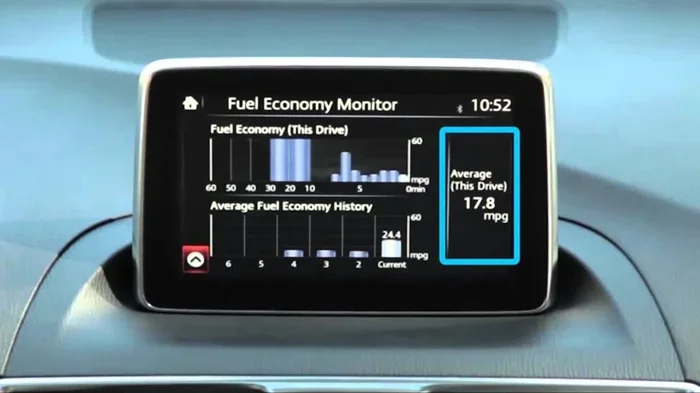
This is a question a lot of Mazda owners ask, and the answer is yes, but with some nuance. i-ELOOP is not going to turn a gas-guzzler into a hybrid. What it does is shave off a few percentage points from your fuel consumption, particularly in city driving.
Here is a realistic breakdown:
- City Driving: i-ELOOP can improve fuel economy by 5 to 10 percent because of frequent deceleration and coasting.
- Highway Driving: The benefit is smaller, maybe 2 to 4 percent, since there is less stopping and starting.
- Overall: Over a year of average driving, those savings can add up to a few tanks of gas.
If you want to compare your Mazda’s fuel economy to other vehicles, the best approach is to track your mileage over time. Keep a log of your fill-ups and calculate your average miles per gallon. You might be surprised at how much i-ELOOP contributes over the long haul.
For a deeper dive into fuel economy, our article on how to tell if a car is good on gas has practical tips for any driver looking to maximize their MPG.
Can You Add i-ELOOP to a Mazda That Does Not Have It?
This is a question that comes up a lot. The short answer is no. i-ELOOP is an integrated system that involves the capacitor, wiring, dashboard indicator, and the car’s overall electrical architecture. It is not something you can bolt on after the fact.
Retrofitting i-ELOOP would require extensive rewiring and computer programming. It would likely cost more than the fuel savings it would ever generate. If your Mazda does not have i-ELOOP, the best thing you can do is focus on other fuel-saving habits. Gentle acceleration, maintaining proper tire pressure, and keeping up with regular maintenance all help improve gas mileage.
Final Thoughts on Identifying i-ELOOP in Your Mazda
So, how do you know if your Mazda has i-ELOOP? The answer is that there are multiple ways to find out, and most of them are easy. Start with the dashboard indicator. Check your trim level and model year. Flip through the owner’s manual. Look at the smart key fob. And if you are still unsure, contact a Mazda dealership with your VIN.
The i-ELOOP regen feature is a genuinely useful technology. It makes your Mazda more fuel-efficient without any extra effort from you. Once you know your car has it, you can appreciate the system every time you see that little capacitor light glow on your dash during a slow roll through an intersection.
Whether your Mazda has i-ELOOP or not, taking care of your car is what matters most. Regular maintenance, smart driving habits, and staying informed about your vehicle’s features will keep your Mazda running strong for years to come.
If you are curious about other Mazda-specific questions, feel free to explore more of our guides. We cover everything from warranty work to lease options to understanding your car’s technology. The more you know about your Mazda, the better equipped you are to take care of it.
Frequently Asked Questions
What does the i-ELOOP light look like on a Mazda dashboard?
The i-ELOOP indicator looks like a small battery or capacitor symbol with the letters “i-ELOOP” next to it. It usually appears briefly during startup and may glow softly while the capacitor is charging during deceleration. If the light stays on constantly, it could indicate a system issue that needs diagnosis.
Is i-ELOOP the same as a hybrid system?
No, i-ELOOP is not a hybrid system. It does not propel the car using electric power. Instead, it captures energy during braking and stores it in a capacitor to power electrical accessories. Your Mazda still runs entirely on gasoline for propulsion.
Can I drive my Mazda if the i-ELOOP system malfunctions?
Yes, you can still drive your Mazda safely if the i-ELOOP system malfunctions. The capacitor failure does not affect the engine or transmission. However, your fuel economy may decrease slightly, and electrical accessories will rely more on the standard battery and alternator.
Which Mazda models have i-ELOOP as standard?
Most Mazda6 and CX-9 models include i-ELOOP as standard across their trims. The Mazda3 and CX-5 often have it standard on higher trims like Grand Touring and Signature. Always check your specific model year and trim to confirm.
Does i-ELOOP work when the battery is dead?
No, i-ELOOP requires a functional 12-volt battery to operate. If your battery is dead or severely weak, the system will not charge the capacitor. This is a safety measure to prevent further drain on an already compromised electrical system.
How long does the i-ELOOP capacitor last in a Mazda?
The i-ELOOP capacitor is designed to last the lifetime of the vehicle. It is a solid-state component with no moving parts, which makes it very reliable. In rare cases, a capacitor may fail due to age or electrical issues, but this is uncommon and typically covered under warranty.
=== CONCLUSION ===
Knowing whether your Mazda has i-ELOOP is straightforward once you know where to look. The dashboard indicator, owner’s manual, trim level, and smart key fob are all reliable ways to confirm the feature. The i-ELOOP regenerative braking system is a clever piece of engineering that improves your fuel economy without requiring any change in how you drive.
If your Mazda has i-ELOOP, take advantage of it. The system works silently in the background, capturing energy every time you slow down. Over time, those small gains add up to real savings at the pump. And if your Mazda does not have it, now you know that too. There are plenty of other ways to get the most out of your Mazda, from proper maintenance to smart driving habits.
Stay curious about your vehicle. The more you understand about its features, the better you can maintain it, troubleshoot issues, and enjoy every mile you drive.