How Does a Hydrogen Cell Engine Work and Why It Matters
A hydrogen cell engine converts hydrogen gas into electricity through an electrochemical reaction, producing only water vapor as a byproduct. This technology powers fuel cell vehicles with zero harmful emissions, fast refueling times, and impressive range. Understanding how a hydrogen cell engine works gives you valuable insight into the future of clean transportation and alternative fuel vehicles.
A hydrogen cell engine is one of the most exciting innovations in modern automotive engineering. If you have ever wondered how a hydrogen cell engine actually works, you are in the right place. This technology promises zero emissions driving while delivering the range and convenience that drivers expect from a full tank. Understanding how these engines function helps you appreciate where the automotive industry is headed.
A hydrogen fuel cell converts hydrogen gas into electricity through a quiet, efficient electrochemical reaction. Unlike traditional engines that burn fuel, a fuel cell engine combines hydrogen and oxygen to produce electricity, water, and heat. The result is a powertrain technology that powers vehicles without harmful exhaust fumes. This guide breaks down every aspect of how a hydrogen cell engine works and why it is gaining attention worldwide.
The global push toward alternative fuel vehicles has put hydrogen technology in the spotlight. Car manufacturers are investing billions in hydrogen-powered car development. Governments are building hydrogen infrastructure to support refueling stations. As this technology evolves, more drivers will encounter fuel cell vehicles on the road. Learning how these engines work gives you a clear advantage in understanding the future of driving.
Key Takeaways
- Hydrogen fuel cells generate electricity without combustion: The electrochemical process combines hydrogen and oxygen to produce power, water, and heat.
- A hydrogen cell engine offers zero emissions driving: The only byproduct is water vapor, making it one of the cleanest propulsion technologies available.
- Fuel cell vehicles deliver fast refueling and long range: Most models travel 300 to 400 miles on a single tank and refuel in just a few minutes.
- Key components include the fuel cell stack, storage tank, and electric motor: Each part plays a vital role in converting hydrogen into usable power.
- Challenges remain around infrastructure and cost: Expanding hydrogen refueling stations and reducing vehicle prices are ongoing priorities.
- Green hydrogen production is the future: Using renewable energy to produce hydrogen will make fuel cell vehicles truly sustainable.
- Hydrogen technology benefits many vehicle types: From passenger cars to heavy-duty trucks, fuel cells offer a versatile path to clean transportation.
📑 Table of Contents
What Is a Hydrogen Cell Engine?
A hydrogen cell engine is a propulsion system that uses hydrogen gas to generate electricity. This electricity then powers an electric motor that turns the wheels. The process is different from a gasoline engine, which relies on hydrogen combustion or burning fossil fuels. Instead, a fuel cell creates energy through a silent, efficient chemical process that requires no moving parts in the energy conversion stage.
The most common type of hydrogen fuel cell used in vehicles is the proton exchange membrane fuel cell, or PEM. A PEM fuel cell uses a special membrane to separate hydrogen molecules into protons and electrons. The electrons flow through a circuit, creating electrical current. The protons pass through the membrane and combine with oxygen to form water. This is the only emission from a hydrogen cell engine — pure water vapor.
Many people confuse hydrogen fuel cells with traditional hydrogen engines. A hydrogen combustion engine burns hydrogen gas directly, similar to how a gasoline engine burns fuel. A fuel cell engine, however, does not involve combustion. It uses an energy conversion process that is much more efficient. This distinction matters because fuel cell vehicles offer better fuel economy and lower emissions than hydrogen combustion engines.
How Does a Hydrogen Fuel Cell Work?
The core of a hydrogen cell engine is the fuel cell stack. This stack contains many individual fuel cells layered together. Each cell has a positive electrode (cathode), a negative electrode (anode), and the PEM membrane in between. Here is how the process unfolds step by step.
Step 1: Hydrogen Gas Enters the Anode
Hydrogen gas stored in the hydrogen storage tank flows into the anode side of the fuel cell. A catalyst, usually made of platinum, splits the hydrogen molecules into protons and electrons. This electrochemical reaction is the heart of the entire process. Without the catalyst, the reaction would not occur at a useful rate. Think of the catalyst as a matchmaker that brings hydrogen molecules together in just the right way to release their energy.
Step 2: Electrons Flow Through a Circuit
The electrons cannot pass through the membrane. They must travel through an external circuit to reach the cathode. This flow of electrons is electricity. The electricity generated powers the electric motor that drives the vehicle. This is what makes a hydrogen-powered car move. The electricity can also charge a small battery that assists during acceleration. This battery acts like a reserve tank for quick bursts of energy.
Step 3: Protons Pass Through the Membrane
While the electrons take the long way around, the protons pass directly through the PEM membrane. On the other side, they meet oxygen from the air. The protons and oxygen combine to form water molecules. This is why the only emission from a fuel cell vehicle is water vapor. It is a remarkably clean energy conversion process that happens silently and efficiently.
Step 4: Water and Heat Exit the System
The water produced exits the engine as steam or liquid vapor. Some fuel cell vehicles also use the waste heat for cabin heating. This is a clever way to improve overall vehicle efficiency. The entire process is quiet, smooth, and free of harmful pollutants. Drivers get a refined experience while helping the environment at the same time.
Understanding this process helps explain why a hydrogen cell engine is so efficient. Traditional gasoline engines waste a lot of energy as heat. A fuel cell converts over 60 percent of the hydrogen energy into usable electricity. That is nearly double the efficiency of a combustion engine. When you consider how long a full tank of gas lasts compared to a hydrogen tank, the efficiency advantage becomes even more clear.
Key Components of a Hydrogen Cell Engine
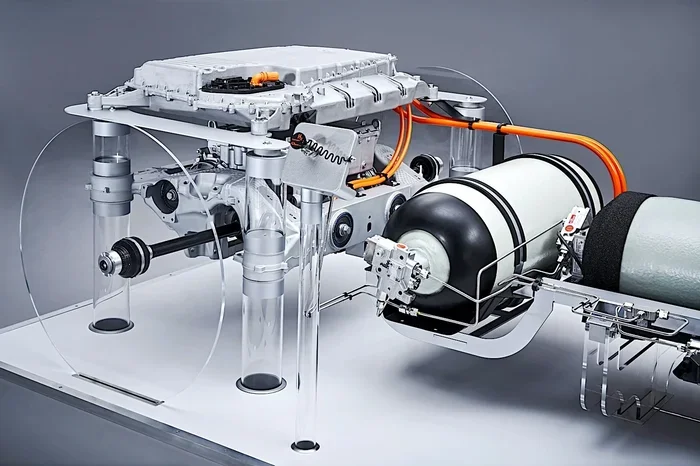
A hydrogen cell engine system has several important parts that work together. Each component plays a specific role in the energy conversion process. Let us look at the main parts that make this technology possible.
Hydrogen Storage Tank
The hydrogen storage tank holds compressed hydrogen gas, typically at 700 bar of pressure. These tanks are made from lightweight, strong materials like carbon fiber. They are designed to be safe even in collision situations. The tank size determines how much hydrogen the vehicle can carry, which directly affects vehicle range. A larger tank means more fuel and longer trips between refueling stops. Safety testing ensures these tanks can withstand extreme conditions on the road.
Fuel Cell Stack
The fuel cell stack is the brain of the system. It contains hundreds of individual cells that generate electricity. The stack is the most expensive component of a fuel cell vehicle. Researchers are working to reduce platinum usage and lower costs. As hydrogen infrastructure expands, the cost of fuel cell stacks continues to decline. Each cell in the stack contributes a small voltage, and stacking them together creates enough power to drive the vehicle.
Electric Motor
The electric motor converts electrical energy into mechanical motion. Fuel cell vehicles use permanent magnet motors that are highly efficient. The motor delivers instant torque, which means smooth and responsive acceleration. This is one reason why driving a hydrogen-powered car feels so refined. Unlike gasoline engines that need to build up RPMs, the electric motor provides power immediately. This makes city driving and highway merging feel effortless.
Battery Pack
Most fuel cell vehicles include a small lithium-ion battery. This battery stores energy recovered through regenerative braking. It also provides extra power during acceleration. The battery helps smooth out the power delivery from the fuel cell. It is a key part of the overall powertrain technology in a fuel cell vehicle. The battery is much smaller than those in pure electric vehicles because the fuel cell serves as the primary energy source.
Hydrogen Refueling Port
The refueling port looks similar to a gasoline filler cap. Drivers connect a hose from a hydrogen refueling station to fill the tank. Refueling a fuel cell vehicle takes about the same time as filling a gasoline tank. This is a major advantage over battery electric vehicles, which can take much longer to charge. The availability of hydrogen refueling stations is growing, though it still lags behind gasoline stations. Finding a station near you is easier in some regions than others, but the network is expanding rapidly.
Hydrogen Cell Engine vs. Traditional Engines
Comparing a hydrogen cell engine to traditional engines highlights the advantages of this technology. Let us look at the key differences between these powertrain options.
| Feature | Hydrogen Fuel Cell | Gasoline Engine | Battery Electric |
|---|---|---|---|
| Emissions | Water vapor only | CO2 and pollutants | Zero tailpipe emissions |
| Refueling Time | 3-5 minutes | 3-5 minutes | 20-60 minutes |
| Range | 300-400 miles | 300-500 miles | 200-350 miles |
| Efficiency | 60% | 20-30% | 85-90% |
| Fuel Source | Hydrogen gas | Gasoline | Electricity |
One of the biggest advantages of a hydrogen cell engine is the fast refueling time. You can fill up in minutes, just like gasoline. This makes fuel cell vehicles practical for long trips. When considering how many miles can a hydrogen car go on a single tank, most models offer 300 to 400 miles of range. That is comparable to gasoline vehicles and often better than battery electric cars.
However, the hydrogen infrastructure is still developing. There are far fewer hydrogen refueling stations than gasoline stations or charging points. This limits where you can drive a fuel cell vehicle today. As investments in hydrogen infrastructure grow, this limitation will shrink. Several countries are building national networks of refueling stations to support hydrogen-powered car adoption.
When you compare a hydrogen cell engine to a gasoline engine, the environmental benefit is clear. A gasoline engine produces carbon dioxide, nitrogen oxides, and particulate matter. A fuel cell engine produces only water. This makes hydrogen technology a key player in the push toward zero emissions vehicle goals.
It is also worth noting that some car manufacturers offer hybrid vehicles that combine hydrogen with battery technology. These dual-system vehicles can offer a competitive payback period compared to traditional hybrids. The combination of fuel cell and battery technology may represent the best of both worlds for clean transportation. For drivers exploring their options, understanding the payback timeline helps make a smart investment decision.
Another practical consideration is the total cost of ownership over time. While fuel cell vehicles may have a higher upfront price, their lower maintenance costs and fuel economy can offset this over the life of the vehicle. With fewer moving parts than a gasoline engine, there is less wear and tear. No oil changes, no spark plugs, and no transmission repairs mean savings at the service shop.
Benefits and Challenges of Hydrogen Technology
Like any automotive technology, a hydrogen cell engine comes with both advantages and challenges. Understanding both sides helps you make informed decisions about alternative fuel vehicles and whether a fuel cell vehicle fits your lifestyle.
Benefits
- Zero Emissions Driving: A fuel cell engine produces no harmful pollutants. The only emission is water vapor. This makes hydrogen vehicles excellent for clean transportation and urban air quality. Cities with strict emission standards are particularly interested in this technology.
- Fast Refueling: Filling a hydrogen tank takes just a few minutes. This is much faster than charging a battery electric vehicle. For drivers who frequently travel long distances, this convenience is a major advantage. It eliminates the range anxiety that many electric vehicle drivers experience.
- Long Range: Hydrogen vehicles offer competitive range. Most fuel cell cars can travel over 300 miles on a single tank. This rivals or exceeds many gasoline and electric vehicles. Road trips become just as easy with a fuel cell vehicle as with a traditional car.
- Energy Efficiency: Fuel cells convert energy more efficiently than combustion engines. Less energy is wasted as heat. This means better fuel economy from a well-to-wheel perspective. Every kilogram of hydrogen goes further than a similar amount of gasoline.
- Quiet Operation: Fuel cell engines run almost silently. The electric motor produces minimal noise. This contributes to a more comfortable driving experience and less noise pollution. Neighborhoods and city centers benefit from the quieter operation of fuel cell vehicles.
Challenges
- Limited Infrastructure: Hydrogen refueling stations are still rare in most areas. This limits the practicality of fuel cell vehicles for many drivers. Expanding hydrogen infrastructure requires significant investment from both public and private sectors.
- High Vehicle Cost: Fuel cell vehicles are currently more expensive than comparable gasoline or electric models. The cost of fuel cell stacks and hydrogen storage systems drives this price premium. As production scales up, prices are expected to come down.
- Hydrogen Production: Most hydrogen today is produced from natural gas, which generates emissions. Green hydrogen production using renewable energy is cleaner but still expensive and limited in scale. Transitioning to green hydrogen is essential for maximizing the environmental benefits.
- Storage and Transport: Hydrogen is a tricky gas to store and transport. It requires high-pressure tanks or cryogenic temperatures. These challenges add cost and complexity to the supply chain. Engineers are developing new materials and methods to make hydrogen storage safer and cheaper.
- Engine Durability: Fuel cell stacks can degrade over time, especially in cold climates. The platinum catalyst is also sensitive to contaminants in the hydrogen supply. Manufacturers are working to improve engine durability and reduce maintenance needs. Understanding what can go wrong helps drivers stay prepared.
Despite these challenges, the future of hydrogen cell engine technology looks promising. Advances in green hydrogen production are making fuel cells more sustainable. Improvements in fuel cell durability are extending vehicle lifespans. And growing investment in hydrogen infrastructure is making refueling more convenient for everyday drivers.
It is also worth noting that proper maintenance matters for any engine type. While a fuel cell engine has fewer moving parts than a gasoline engine, it still requires care. For example, understanding what your car insurance covers is important for any vehicle. Car insurance coverage for engine damage can protect you from unexpected repair costs, regardless of whether you drive a fuel cell, hybrid, or gasoline vehicle. Staying informed about your coverage ensures you are prepared for any situation on the road.
The Future of Hydrogen Cell Engines
The automotive industry is at a turning point. Hydrogen-powered car technology is maturing rapidly. Several factors will shape the future of this technology and determine how quickly it reaches mainstream adoption.
First, government policies are driving investment in clean transportation. Many countries have set ambitious targets for zero emissions vehicle adoption. Hydrogen fuel cells are a key part of these plans, especially for heavy-duty trucks and commercial vehicles. The energy conversion efficiency of fuel cells makes them attractive for applications where battery weight is a concern. A hydrogen truck can carry more cargo than a battery-powered truck because the fuel cells are lighter for the same energy content.
Second, the cost of fuel cell technology is falling. As manufacturing scales up, the price of fuel cell stacks decreases. This trend mirrors what happened with battery technology over the past decade. Lower costs will make fuel cell vehicles more accessible to average consumers. What was once a luxury technology is steadily becoming more affordable.
Third, green hydrogen production is expanding. Electrolysis powered by wind and solar energy can produce truly clean hydrogen. As renewable energy costs drop, green hydrogen becomes more competitive. This could solve one of the biggest challenges facing hydrogen technology today. A truly clean hydrogen ecosystem depends on clean production methods.
Fourth, the hydrogen ecosystem is growing. Automakers, energy companies, and governments are collaborating to build refueling networks. More stations mean more drivers can consider fuel cell vehicles. This creates a positive cycle of investment and adoption. Early adopters today are helping build the foundation for a hydrogen-powered transportation future.
For drivers today, a hydrogen cell engine offers a compelling alternative to gasoline and diesel. It combines the range and convenience of a traditional fuel with the environmental benefits of electric propulsion. As the technology continues to improve, hydrogen vehicles will play an increasingly important role in how we move people and goods. The transition will not happen overnight, but the direction is clear.
Conclusion
A hydrogen cell engine works by converting hydrogen gas into electricity through an electrochemical process. The fuel cell stack, electric motor, and battery work together to deliver clean, efficient power. The technology offers impressive range, fast refueling, and zero harmful emissions. While challenges like infrastructure and cost remain, the trajectory is clearly positive. As green hydrogen production scales up and hydrogen infrastructure expands, fuel cell vehicles will become a practical choice for more drivers. Understanding how a hydrogen cell engine works gives you valuable insight into the future of driving and the transition toward sustainable clean transportation. Whether you are a curious driver or considering a fuel cell vehicle, this technology represents an exciting step forward for the automotive industry.
Frequently Asked Questions
What is the main difference between a hydrogen cell engine and a gasoline engine?
A gasoline engine burns fuel to create energy, which wastes a lot of heat. A hydrogen cell engine uses an electrochemical reaction to convert hydrogen directly into electricity. This process is much more efficient and produces only water as a byproduct, making it far cleaner than gasoline combustion.
How far can a hydrogen car travel on a full tank?
Most fuel cell vehicles offer a range of 300 to 400 miles on a single tank. To learn more about hydrogen vehicle range and how far these vehicles can actually go on one fill-up, check out detailed range comparisons for hydrogen models.
Is hydrogen fuel expensive compared to gasoline?
Hydrogen fuel currently costs more per mile than gasoline in most markets. However, prices are expected to drop as hydrogen infrastructure expands and production scales up. The overall cost of ownership also benefits from lower maintenance, since fuel cell engines have fewer moving parts than traditional engines.
Can you refuel a hydrogen car at home?
Home refueling is possible but requires specialized and expensive equipment. Most drivers rely on public hydrogen refueling stations for convenience. As the refueling network grows and becomes more widespread, accessibility will improve significantly for fuel cell vehicle owners.
Are hydrogen cell engines safe in accidents?
Yes, hydrogen storage tanks are engineered to withstand collisions and extreme conditions. The gas is stored under high pressure but is lighter than air, so it disperses quickly in the event of a leak. Fuel cell vehicles undergo rigorous safety testing before they reach the market, ensuring driver and passenger protection.
How does green hydrogen production work?
Green hydrogen is produced by splitting water into hydrogen and oxygen using renewable electricity. This process, called electrolysis, creates truly clean fuel with no carbon emissions. As renewable energy becomes cheaper, green hydrogen production will play a bigger role in building a sustainable hydrogen ecosystem for transportation.