Why Is My Car Not Responding to the Key Turn Anymore
When your car is not responding to the key turn, it can be frustrating and confusing. Several issues could be behind this problem, from a simple dead battery to a worn ignition switch or a locked steering column. This guide walks you through every likely cause and gives you clear, step-by-step fixes to try at home or with a mechanic. Understanding what is going on under the hood saves you time, money, and unnecessary stress.
You slide the key into the ignition. You turn it. Nothing happens. No engine rumble. No dashboard lights. Just silence. It is one of the most unsettling moments a driver can face. The car simply does not respond to the key turn, and you are left standing in a driveway or a parking lot wondering what went wrong.
The good news is that this problem is more common than you might think. In most cases, the fix is simpler than you expect. Whether you drive a modern vehicle with a push-button start or a classic car with a traditional metal key, the reasons behind a non-responsive ignition fall into a few clear categories. This article breaks them all down for you.
We will cover everything from the simplest fix, like replacing a key fob battery, to more complex issues like a faulty ignition cylinder or a failing starter motor. By the end, you will know exactly what to check, what to avoid, and when to call a professional. Let us get into it.
Key Takeaways
- A dead key fob battery is the most common reason a car will not respond to the key turn.
- A locked steering wheel can physically prevent the ignition from turning.
- A faulty ignition switch or cylinder disrupts the electrical connection needed to start the car.
- Worn or damaged keys fail to engage the ignition mechanism properly.
- The immobilizer system may block the engine if it does not recognize the key.
- Starter motor and relay problems can mimic key-turn issues even when the key turns freely.
- Regular maintenance and key care prevent most of these problems before they start.
📑 Table of Contents
- Common Reasons Why Your Car Is Not Responding to the Key Turn
- Electrical Issues That Prevent the Key Turn From Working
- How to Diagnose the Problem Yourself
- When to Call a Professional Mechanic
- Quick Tips to Prevent Key Turn Problems in the Future
- Comparison: Common Ignition Problems and Their Fixes
- Expert Insights on Ignition Problems
- Key Takeaways
- Conclusion
Common Reasons Why Your Car Is Not Responding to the Key Turn
The moment your car ignores the key in the ignition, your mind races through a list of possibilities. Before you panic, take a breath. Most causes are well-known and easy to diagnose. Here are the top reasons your car won’t start when you turn the key.
Dead Key Fob Battery
If you use a smart key or a push-button ignition system, the key fob sends a signal to the car. When the fob battery dies, the car cannot detect the key. You may think the key turns fine, but the vehicle simply does not receive the signal to start. This is the number one cause of “car not responding” complaints among modern drivers.
Replacing the fob battery is cheap and easy. Most key fobs use a small CR2025 or CR2032 coin battery. You can swap it out in under five minutes with a small flathead screwdriver. Keep a spare battery in your glove box so you are never caught off guard.
Steering Wheel Lock
This one catches almost everyone at least once. When you turn off the car and the steering wheel is slightly turned, the steering lock mechanism engages. It is a built-in anti-theft feature designed to prevent theft. The problem is that it also locks the ignition cylinder in place.
You cannot turn the key when the steering wheel is locked. The fix is simple but not obvious. Wiggle the steering wheel left and right while gently trying to turn the key. The wheel will release, and the key will turn freely. This tiny trick solves the problem for thousands of drivers every week.
Worn or Damaged Key
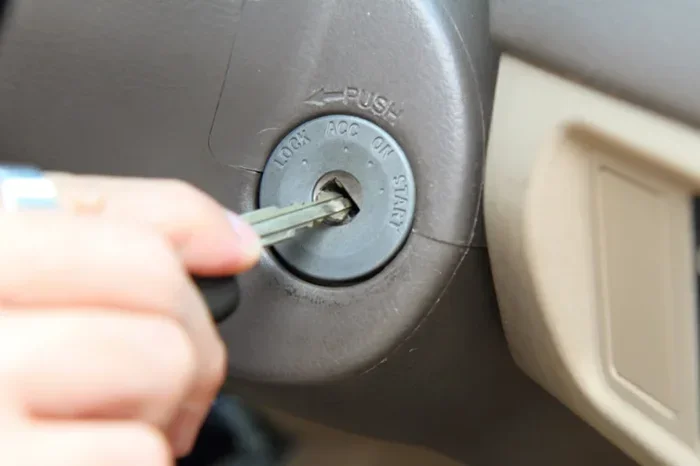
Keys wear out over time. The ridges on a metal key can become smooth from repeated use. A worn key simply cannot engage the pins inside the ignition cylinder correctly. You might feel the key slide in but not click into place, or it turns loosely without starting the engine.
Similarly, broken keys are a real possibility. If part of the key snaps off inside the ignition, you will not be able to turn it at all. This happens more often than you would think, especially with older keys or keys that have been duplicated many times. A locksmith can extract a broken key and cut a new one on the spot.
Faulty Ignition Switch
The ignition switch is the electrical component behind the key cylinder. It reads the key position and sends signals to the car’s computer. When the switch fails, the car may not recognize that the key has been turned to the “on” or “start” position.
Signs of a bad ignition switch include flickering dashboard lights, the engine stalling shortly after starting, or the key turning but nothing happening electrically. This is a repair best left to a qualified mechanic, as it involves accessing the steering column and dealing with electrical wiring.
Ignition Lock Cylinder Problems
The ignition lock cylinder is the actual mechanism the key slides into. Over years of use, internal pins and springs wear down. Debris, dust, and even moisture can get inside and cause the cylinder to stick or jam.
You might notice the key is hard to insert or remove. Sometimes the key feels like it is going in too deep or not going in far enough. A mechanic can clean, lubricate, or replace the cylinder. In some cases, the entire lock assembly needs to be swapped out.
Immobilizer System Not Recognizing the Key
Modern cars come equipped with an immobilizer system. This is an anti-theft feature that ensures only the correct coded key can start the engine. If the car’s computer does not recognize the transponder chip inside your key, it will not allow the engine to crank.
This can happen if the transponder chip is damaged, if the key is not programmed correctly, or if the car’s antenna ring around the ignition is faulty. The dashboard usually flashes a security light when this is the issue. A dealer or automotive locksmith can reprogram or replace the key.
Electrical Issues That Prevent the Key Turn From Working
Your car is essentially a complex electrical machine. When the electrical system has a problem, the ignition process can fail even if the key itself is perfect. Understanding these issues helps you narrow down the root cause quickly.
Dead Car Battery
A dead car battery is one of the most frequent reasons a car will not start. Without power, the dashboard lights stay dark, and the engine makes no sound when you turn the key. Batteries last three to five years on average, but extreme temperatures can shorten their lifespan significantly.
If you suspect a dead battery, try turning on the headlights. If they are dim or do not come on at all, the battery is likely the culprit. Jump-starting the car with jumper cables or a portable jump starter can get you back on the road immediately. Then you can decide whether to recharge or replace the battery.
Starter Motor Failure
The starter motor is the electric motor that cranks the engine when you turn the key. If the starter goes bad, you might hear a single click or nothing at all when you turn the ignition. The key turns, the electrical system activates, but the engine does not spin over.
Starter motors fail due to worn brushes, a bad solenoid, or electrical corrosion. Replacement costs vary by vehicle but typically range from $200 to $500 including labor. This is a repair that almost always requires a professional mechanic.
Bad Starter Relay
The starter relay acts as a switch that sends power from the battery to the starter motor. When the relay fails, the signal never reaches the starter. The result is the same as a bad starter motor — the key turns but the engine does not crank.
Relay failure is often caused by electrical surges, corrosion, or simple wear and tear. Replacing a relay is inexpensive and relatively easy, but it requires opening the fuse box and identifying the correct relay. Check your owner’s manual for the relay location.
Corroded Battery Terminals
Corrosion on battery terminals creates resistance that can prevent enough power from reaching the ignition system. You might notice a white or greenish crusty buildup on the battery posts. Even if the battery is fully charged, corrosion can block the connection.
A quick fix is to disconnect the terminals, clean them with a baking soda and water solution, and reconnect them. Wearing gloves and eye protection is important during this process. If the terminals are severely corroded, replacement is the safer option.
How to Diagnose the Problem Yourself
Before you call a mechanic, there are some simple diagnostic steps you can take at home. These checks can save you time and money by helping you identify the exact cause of the issue.
Step 1: Check the Dashboard Lights
When you insert the key and turn it to the “on” position, do the dashboard lights come on? If yes, the electrical system is receiving power. If no, you are likely dealing with a battery problem or a wiring issue.
Look for warning lights on the dashboard. A battery light, a security light, or an engine light can give you clues about what is going wrong. Write down any lights you see and share them with your mechanic.
Step 2: Listen for Clicks or Sounds
Turn the key to the “start” position and listen carefully. A single loud click usually points to a starter motor or relay issue. Rapid clicking often means the battery is low but not completely dead. Silence with no sounds at all suggests a dead battery or a bad ignition switch.
Step 3: Wiggle the Key While Turning
Sometimes a worn ignition cylinder is the issue. Try wiggling the key gently while turning it. If the key is worn down, a slight adjustment in angle might allow it to make proper contact with the cylinder pins. This is a temporary fix, but it confirms a worn key or cylinder.
Step 4: Try the Spare Key
This sounds too simple, but it works. If your spare key starts the car, your primary key is the problem. It could be worn, damaged, or have a faulty transponder chip. Get the key cut or reprogrammed and you are back in business.
Step 5: Check for Steering Wheel Lock
Try wiggling the steering wheel while turning the key. If the wheel releases and the key turns smoothly, you were dealing with a steering lock. This is the easiest fix on this entire list and costs absolutely nothing.
When to Call a Professional Mechanic
Not every ignition problem is a DIY fix. Some issues require specialized tools, diagnostic equipment, or professional expertise. Knowing when to call for help saves you from making the problem worse.
Call a mechanic if the key turns but the engine does not crank and you have confirmed the battery is good. Call a mechanic if you smell burning plastic or electrical insulation near the steering column. Call a mechanic if the immobilizer light stays on and the car refuses to recognize any key. Call a mechanic if the ignition cylinder feels loose or if the key gets stuck and will not come out.
A professional mechanic can run a full diagnostic scan on the car’s computer system. This scan reads error codes that point directly to the failing component. It is the fastest way to get a definitive answer and the right repair solution.
Quick Tips to Prevent Key Turn Problems in the Future
Prevention is always better than repair. A few simple habits can keep your ignition system working smoothly for years to come.
- Replace your key fob battery every two years, even if it seems to be working fine. This prevents sudden failures.
- Keep your key clean and dry. Moisture and dirt can damage the transponder chip and the metal ridges.
- Do not force the key into the ignition. If it does not go in smoothly, stop and check for debris or a bent key.
- Turn the steering wheel to the center before removing the key and shutting off the engine. This prevents the steering lock from engaging.
- Have your ignition cylinder inspected during regular maintenance visits. A mechanic can spot early wear before it becomes a problem.
- Carry a spare key at all times. A spare key can save you from a costly locksmith visit on a bad day.
- Avoid hanging heavy keys or keychains on the ignition key. Extra weight puts stress on the ignition cylinder and accelerates wear.
Comparison: Common Ignition Problems and Their Fixes
Not sure what is causing your issue? This table breaks down the most common problems and their corresponding solutions.
- Dead key fob battery — Replace the coin battery inside the fob. Cost: under $5.
- Steering wheel lock — Wiggle the wheel and turn the key. Cost: $0.
- Worn key — Get a new key cut by a locksmith or dealer. Cost: $10 to $50.
- Broken key stuck in ignition — Call a locksmith for extraction. Cost: $50 to $150.
- Faulty ignition switch — Replace the switch behind the cylinder. Cost: $150 to $300.
- Damaged ignition lock cylinder — Replace the entire cylinder assembly. Cost: $200 to $400.
- Immobilizer not recognizing key — Reprogram or replace the key. Cost: $50 to $300.
- Dead car battery — Jump-start or replace the battery. Cost: $100 to $250.
- Starter motor failure — Replace the starter motor. Cost: $200 to $500.
- Bad starter relay — Replace the relay. Cost: $20 to $80.
Expert Insights on Ignition Problems
Automotive experts agree that most key-turn problems come down to a handful of root causes. The steering wheel lock and the dead key fob battery are the two most common culprits combined. These two issues alone account for more than half of all “car not responding to key” service calls.
Experts also emphasize the importance of not ignoring early warning signs. If your key becomes harder to turn over time, if the dashboard flickers occasionally, or if the engine hesitates before starting, these are signals that something is wearing out. Addressing small problems early prevents the big, expensive repairs down the road.
Another expert recommendation is to always use the correct key for your vehicle. Aftermarket keys that are not properly programmed can cause immobilizer errors and prevent the car from starting. Stick with OEM keys or have aftermarket keys professionally programmed to match your car’s system.
Key Takeaways
- A dead key fob battery is the most common reason a car will not respond to the key turn.
- A locked steering wheel can physically prevent the ignition from turning.
- A faulty ignition switch or cylinder disrupts the electrical connection needed to start the car.
- Worn or damaged keys fail to engage the ignition mechanism properly.
- The immobilizer system may block the engine if it does not recognize the key.
- Starter motor and relay problems can mimic key-turn issues even when the key turns freely.
- Regular maintenance and key care prevent most of these problems before they start.
Conclusion
Dealing with a car that is not responding to the key turn is stressful, but it is almost always fixable. The causes range from incredibly simple, like a dead fob battery or a locked steering wheel, to more complex issues like a faulty ignition switch or a failing starter motor. The key is to stay calm, work through the diagnostics step by step, and know when to call for help.
By understanding the common reasons your car won’t start and taking preventive steps, you can avoid most ignition problems entirely. Keep your keys in good shape, replace batteries on schedule, and pay attention to early warning signs. Your ignition system is designed to last the life of the vehicle, and with a little care, it will.
Next time the key turns and nothing happens, you will know exactly what to check and what to do. You will not be stranded, confused, or overwhelmed. You will be prepared. And that confidence makes all the difference when you are standing in front of a car that just will not start.
Frequently Asked Questions
Why does my car not respond to the key turn even with a new battery?
The issue is likely not the battery but the ignition system itself. A faulty ignition switch, a worn key, or a locked steering wheel are common causes even when the battery is fresh. Check the steering wheel lock first, as it is the easiest fix and costs nothing.
Can a worn key cause the car not to start?
Yes, absolutely. A worn key cannot properly engage the pins inside the ignition cylinder. If the key feels loose or does not turn smoothly, it may be time to get a new key cut. This is a quick and inexpensive fix at any locksmith or dealership.
How do I know if my ignition switch is bad?
Signs of a bad ignition switch include flickering dashboard lights, the engine stalling shortly after starting, and the key turning but the engine not cranking. A mechanic can run a diagnostic scan to confirm the issue and recommend the right repair.
What should I do if the key breaks off in the ignition?
Do not try to extract the broken piece yourself unless you have experience. Push the key in as far as it will go and try to turn it gently. If that does not work, call a locksmith. They have specialized tools to remove broken keys without damaging the ignition cylinder.
Is it safe to drive with an immobilizer warning light on?
No, it is not safe. The immobilizer light means the car’s computer does not recognize the key. The engine may cut out while driving. Have the key reprogrammed or replaced as soon as possible to avoid getting stranded.
How often should I replace my key fob battery?
Replace your key fob battery every two years as a preventive measure. Even if the fob seems to be working, a weakening battery can cause intermittent starting problems. Keeping a spare battery in your car ensures you are never caught off guard.