How Long Does It Take to Fully Charge a Nissan Ariya
The Nissan Ariya takes roughly 13 hours to charge fully on a Level 2 home charger and about 30 minutes to reach 80% on a DC fast charger. Charging time depends on your charger type, battery size, and starting charge level. This guide covers every charging option so you can plan your trips with confidence.
The Nissan Ariya is a sleek, modern electric SUV that has turned heads since its launch. But one question keeps coming up from buyers and curious shoppers alike: how long does it take to fully charge a Nissan Ariya?
The answer is not a single number. It depends on several factors, including the type of charger you use, the battery capacity you choose, and even the weather outside. In this article, we break down every charging scenario so you know exactly what to expect.
Whether you are considering the Ariya as your daily commuter or your weekend adventure vehicle, understanding charging times helps you plan your life around the car instead of the other way around. Let us dive into everything you need to know about Nissan Ariya charging time and what it means for your everyday routine.
Key Takeaways
- Level 1 charging is the slowest option and can take over a day to fully charge the Ariya.
- Level 2 home charging is the most practical setup for daily use, taking roughly 13 hours for a full charge.
- DC fast charging gets you to 80% in about 30 minutes, making road trips much easier.
- Battery size matters — the Ariya comes in 63 kWh and 87 kWh options, affecting charge times.
- Temperature and battery health can influence actual charging speeds in real-world conditions.
- Public charging stations are expanding rapidly, making long-distance travel more convenient.
- Charging at home overnight is the most cost-effective and convenient method for daily drivers.
📑 Table of Contents
- Understanding the Nissan Ariya Battery Options
- Charging at Home: Level 1 and Level 2
- DC Fast Charging: The Road Trip Solution
- Factors That Affect Charging Speed
- Comparing Charging Options: A Quick Reference
- Cost of Charging the Nissan Ariya
- Tips to Maximize Your Charging Experience
- Is the Nissan Ariya Right for Your Lifestyle?
- Conclusion
Understanding the Nissan Ariya Battery Options
Before we talk about charging speeds, it helps to understand the battery you are working with. The Nissan Ariya comes in two main battery configurations. Each one affects how long it takes to charge and how far you can drive on a full charge.
63 kWh Battery Pack
The smaller battery option offers a respectable electric range for most daily commutes. It is lighter, which means slightly better efficiency and handling. Charging this pack takes less time simply because there is less energy to push into the cells.
87 kWh Battery Pack
The larger battery gives you more range and more flexibility for longer trips. However, it also takes longer to charge. If you are debating between the two, think about your driving habits. Do you mostly drive short distances, or do you need the extra range for road trips?
Both battery packs use a lithium-ion technology that supports fast DC charging. This is a big advantage for owners who want the convenience of quick top-ups on the go.
Charging at Home: Level 1 and Level 2
Home charging is where most Ariya owners will plug in every day. Understanding the two home charging levels helps you set realistic expectations.
Level 1 Charging (Standard Outlet)
Level 1 charging uses a regular 120-volt household outlet. It is the slowest method and comes standard with every electric vehicle. You do not need any special equipment beyond the charging cable that comes with the car.
Here is what you can expect from Level 1 charging on a Nissan Ariya:
- Full charge time: 24 to 30+ hours depending on battery size
- Range added per hour: About 3 to 5 miles
- Best for: Emergency top-ups or plug-in hybrids with smaller batteries
Honestly, Level 1 is not ideal for the Ariya. The battery is simply too large to wait a full day or more for a charge. You might consider Level 1 only if you have no other option temporarily.
Level 2 Charging (Home Charging Station)
Level 2 charging is the sweet spot for home ownership. You install a 240-volt charging station in your garage or driveway, and the Ariya charges much faster.
Here is what Level 2 looks like in practice:
- Full charge time: Approximately 13 hours for the 63 kWh pack, about 18 hours for the 87 kWh pack
- Range added per hour: Roughly 25 to 30 miles
- Best for: Daily overnight charging for commuters and families
The beauty of Level 2 charging is that you plug in when you get home from work and wake up to a full battery every morning. It is incredibly convenient. If you want to explore more about how electric vehicles fit into everyday life, check out our guide on how to use a hybrid car for beginners for tips that also apply to EV ownership.
DC Fast Charging: The Road Trip Solution
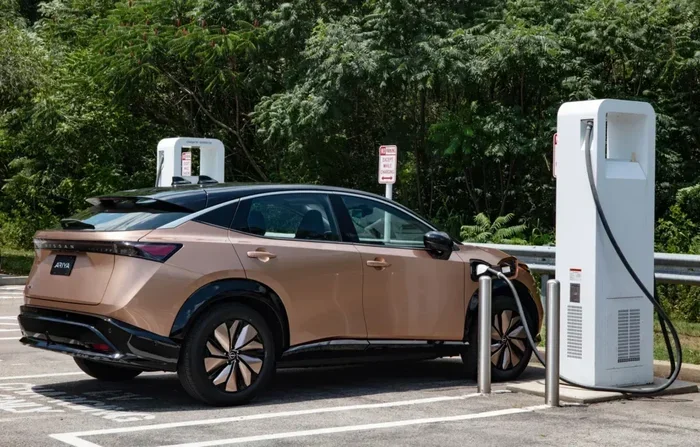
DC fast charging is where electric vehicles really shine for long-distance travel. Instead of waiting hours, you can get a significant charge in under an hour.
How DC Fast Charging Works
DC fast chargers bypass the car’s onboard converter and deliver power directly to the battery. This means much faster charge rates. The Ariya supports DC fast charging at up to 130 kilowatts on compatible public chargers.
Real-World DC Fast Charging Times
Here is what you can expect when stopping at a public DC fast charger:
- 10% to 80% charge: About 25 to 35 minutes on a 130kW charger
- 10% to 50% charge: Roughly 15 to 20 minutes
- Charging slows after 80%: The rate drops significantly to protect battery health
Most drivers stop at 80% because the last 20% takes almost as long as the first 80%. This is a standard behavior across all electric vehicles and is part of battery management strategy.
For comparison, refueling a gas tank takes about 5 minutes. Fast charging is not quite that fast yet, but it is getting closer every year. The Nissan Ariya charging time on a fast charger makes it practical for road trips and weekend getaways.
Factors That Affect Charging Speed
Several real-world factors can change how fast your Ariya actually charges. Understanding these helps you avoid frustration and plan better.
Temperature and Weather
Cold weather slows down charging. When temperatures drop, the battery chemistry resists fast charging to protect itself. In winter, you might notice that your DC fast charging times are 10 to 20% longer than in summer. Preconditioning the battery while driving to a charger helps mitigate this.
Battery State of Charge
Charging speed depends heavily on where the battery is when you start. Going from 10% to 80% is much faster than going from 50% to 100%. This is why most EV owners top up frequently rather than waiting for a full drain.
Charger Power Output
Not all DC fast chargers are the same. A charger rated at 50kW will charge slower than one rated at 130kW. The Ariya takes the maximum power the charger can provide, up to its 130kW limit. If you are using a charger rated at only 50kW, your charging time will be noticeably longer.
Cable and Connection Quality
Using the correct charging cable and making sure the connection is clean and secure matters. A loose connection or a damaged cable can reduce charging speed or cause interruptions.
Comparing Charging Options: A Quick Reference
Let us put all the charging scenarios side by side so you can see the full picture at a glance.
- Level 1 (120V household outlet): 24–30+ hours for full charge. Best as a backup option.
- Level 2 (240V home charger): 13–18 hours for full charge. Ideal for overnight daily charging.
- DC Fast Charger (50kW): 40–60 minutes to reach 80%. Good for public stops.
- DC Fast Charger (130kW): 25–35 minutes to reach 80%. The fastest practical option available.
For most Ariya owners, the routine looks like this: charge at home overnight using a Level 2 station, and use DC fast charging on road trips for quick pit stops. This combination keeps the car ready to go without much effort.
If you are curious how electric range compares to a traditional gas tank, you might find it interesting that a full tank of gas lasts much longer per fill-up in terms of time spent refueling, but the Ariya offers the convenience of charging at home every night.
Cost of Charging the Nissan Ariya
Charging time is only one part of the equation. Charging cost matters too, especially if you are budgeting for daily use.
Home Charging Costs
Charging at home is the cheapest option by a wide margin. The average electricity rate in the United States is about $0.15 per kilowatt-hour. Here is a quick estimate:
- 63 kWh battery: About $9.45 for a full charge
- 87 kWh battery: About $13.05 for a full charge
Compare that to filling up a gas SUV, and the savings add up quickly over months and years.
Public Charging Costs
Public DC fast charging costs more per kilowatt-hour, typically ranging from $0.30 to $0.60. Some networks charge by the minute instead. Expect to pay roughly $15 to $25 for a fast charge session that gets you to 80%.
Over time, many Ariya owners find that even with occasional public charging, their fuel costs are dramatically lower than what they paid for gas. The long-term savings are one of the biggest benefits of electric vehicle ownership.
Tips to Maximize Your Charging Experience
A few simple habits can make your Ariya charging experience smoother and more efficient.
- Charge overnight at home. Level 2 charging while you sleep means you never have to think about it.
- Keep your battery between 20% and 80% for daily use. This reduces wear and speeds up your regular charging sessions.
- Precondition the battery in cold weather. The car can warm the battery before you arrive at a fast charger, improving speed.
- Use the NissanConnect app. It helps you locate chargers, monitor charging status, and schedule charging during off-peak electricity hours.
- Keep your charging port clean. A quick wipe before plugging in ensures a solid connection and consistent speeds.
These small steps make a big difference in both charging speed and battery longevity over the life of your Ariya.
Is the Nissan Ariya Right for Your Lifestyle?
The Ariya is an excellent electric SUV for people who have access to home charging. If you can plug in every night, the slow daytime charging is never a problem. You wake up every morning with a full battery and plenty of range.
If you do not have home charging access, the Ariya still works, but you will rely more on public fast chargers. This is doable but requires more planning. Think about your living situation and daily driving patterns before making a decision.
For those weighing the Ariya against a hybrid option, it is worth noting that the payback period for electric vehicles can be shorter than many people expect. If you want to explore the economics, our article on how long it takes for a hybrid to pay for itself offers useful financial perspective that applies broadly to alternative fuel vehicles.
The Nissan Ariya charging time fits well into a lifestyle where convenience and cost savings matter. With home charging handling your daily needs and fast charging covering longer trips, the Ariya offers a practical and enjoyable electric driving experience.
Conclusion
So, how long does it take to fully charge a Nissan Ariya? At home on a Level 2 charger, expect about 13 to 18 hours. On a DC fast charger, you can reach 80% in roughly 25 to 35 minutes. The right answer depends on where and how you charge.
The best strategy for most owners is a combination of overnight home charging and fast charging on road trips. This keeps the battery healthy, costs low, and ensures you always have the range you need. The Nissan Ariya is a compelling electric SUV, and understanding its charging behavior helps you get the most out of it from day one.
Take some time to plan your charging setup, and you will find that owning an electric vehicle is simpler and more rewarding than you might have expected.
Frequently Asked Questions
How long does it take to charge a Nissan Ariya at a Tesla Supercharger?
The Ariya cannot use Tesla Superchargers directly without an adapter, and Nissan does not officially support this combination. The Ariya uses a CCS charging port, so you will need to use non-Tesla DC fast chargers or adapters that may not be widely available yet.
Can I charge my Nissan Ariya with a regular household outlet?
Yes, you can. Level 1 charging uses a standard 120V outlet, but it is very slow. A full charge can take 24 hours or more. It is fine for emergencies but not practical for daily use.
How much does it cost to fully charge a Nissan Ariya at home?
At an average electricity rate of $0.15 per kWh, a full charge costs about $9.45 for the 63 kWh battery and $13.05 for the 87 kWh battery. Costs vary based on your local electricity rates.
Does cold weather affect Nissan Ariya charging speed?
Yes, cold weather can slow down DC fast charging by 10 to 20 percent. The battery management system reduces charge rates in low temperatures to protect battery health and longevity.
Should I charge my Ariya to 100% every night?
It is generally better for battery health to charge to 80 or 90 percent for daily use. Charging to 100% regularly can put more stress on the battery over time. Reserve full charges for occasions when you need maximum range.
What is the fastest way to charge a Nissan Ariya?
The fastest way is using a 130kW DC fast charger, which can take the Ariya from 10% to 80% in about 25 to 35 minutes. This makes it practical for quick stops during longer trips.